
A logo that looks right in the artwork file and wrong on the garment is almost always a decoration problem rather than a design problem. Placement drifts a few millimetres, an embroidery stitch count is reduced to save time, a print is cured at the wrong temperature and washes out on the third cycle. None of these is visible in an approval photograph, and all of them are decided long before bulk: in the artwork file, the digitised stitch file and the sample that was signed off.
Custom Logo Clothing Manufacturer: what to confirm before you send a tech pack
Decoration specifications fail when the file and the garment are treated as separate conversations. Before a logo programme is quoted, four things should be fixed: the decoration method and why it was chosen, the placement in millimetres from a named reference point, the colour references for each element, and the durability standard the decoration has to meet.
Two inputs decide most of the outcome. The artwork file should be vector for print and, for embroidery, supplied in a form the digitising team can work from rather than a raster image of a finished logo. And the garment itself should be confirmed, because the same logo behaves differently on a brushed fleece, a fine jersey and a stretch fabric. A specification that names the method, the placement and the fabric removes most of the variation that buyers experience as inconsistent quality.
| Decoration method | Best suited to | What decides its durability |
|---|---|---|
| Embroidery | Logos on fleece, terry and heavier knits | Stitch count, backing and how the fabric is stabilised |
| Screen print | Flat areas, few colours, longer runs | Ink type, cure and the underbase on a dark garment |
| Heat transfer | Fine detail and multi-colour artwork on lighter fabrics | Application temperature, pressure and the carrier film |
| Direct print | Short runs and photographic artwork on cotton | Pre-treatment, ink and the wash regime specified |
Reading the table as a ranking is the usual mistake. Each method is the correct answer to a different brief, and the specification question is which one survives the care regime the garment is sold with. A decoration brief that names the method, the position and the colour count gives the factory enough to cost the work and enough to be held to the result.
Payment, deposit and sample-fee terms worth agreeing early on knit apparel
Decoration programmes carry two cost structures that do not behave like garment costs. A setup charge for screen printing, embroidery digitising or a print plate is incurred once, and a decoration position added later is a new setup rather than an amendment. And embroidery pricing often depends on stitch count, which means the price changes if the artwork is redrawn after quoting.
The terms worth agreeing early are therefore the ones that prevent re-quotation: how many decoration positions are included, whether setup is charged per colour or per order, who owns the plate or the digitised file, and what happens if the artwork changes after the sample is approved. A deposit structure that treats decoration and garment as one line makes those changes expensive to unpick later.
Payment structure and decoration cost also interact in a way that is easy to miss. Where a programme runs several decoration positions, the setup charges can represent a meaningful share of the first order and a negligible share of a reorder, so the effective cost per unit falls sharply on the second run. Buyers planning a single test order should establish whether setup is charged again on the reorder, because that answer changes the economics of testing.
How to write a knit apparel specification the factory cannot misinterpret
Decoration is where a specification earns its keep, because placement is the element most easily interpreted. A specification that says “centred on the chest” will produce a different result at every factory and, on a size range, a different result on every size. Placement has to be expressed as a distance from a named reference — the neckline seam, the armhole, the centre front — with a stated tolerance, and with instructions on how the position grades across sizes.
The same discipline applies to the other decoration variables. Colour references should be given as a physical standard rather than a screen colour. Stitch counts or print dimensions should be stated as ranges with limits. And the specification should state the wash or wear standard the decoration must survive, so that durability is a requirement rather than an expectation. Buyers can use published material and testing frameworks for the substrate side: OEKO-TEX Standard 100 is the common baseline for harmful-substance testing on apparel textiles, and testing houses such as Intertek’s textiles and apparel service publish the scope they apply to decorated goods.
Labelling obligations sit alongside the decoration rather than outside it, because the care label has to describe the decorated garment. The US Federal Trade Commission’s business guidance covers labelling obligations for the US market, and the European Commission’s textiles and clothing framework covers the EU position, including fibre naming. Where a decoration method affects care instructions, the label text should be reviewed after the method is confirmed rather than before.
Packaging and carton planning for knit apparel sold through retail and marketplaces
Decorated garments are more expensive to replace than plain ones, so the packing stage matters more. A print that is packed before it is fully cured can transfer to the polybag; a heavy embroidery can mark the adjacent garment in a tightly packed carton. Both problems are created by packing rather than by decoration, and both are avoidable with a stated packing standard.
The carton plan should state the fold, the bag specification, whether garments are interleaved, and the piece count or weight limit per carton. For marketplace channels the requirement usually extends to a scannable label on the outside of the carton and a defined unit-level identifier, which is a packaging decision rather than a decoration one and therefore easy to leave until too late.
Curing time is the practical link between decoration and packing. A printed garment that is folded and bagged before the ink has fully cured can transfer onto the film, and the fault is discovered by the end customer rather than in inspection. The packing standard should state the settling time required after decoration, and the production calendar should allow for it rather than treating it as spare capacity.
Capacity and seasonality: how to read a knit apparel factory calendar
Decoration capacity is the constraint buyers most often miss. Embroidery heads and print lines are finite, and a factory that can sew a garment in a known number of days may need additional days for a multi-position decoration programme. Peak season compresses that availability further, because everyone in a market places orders against the same calendar.
The useful questions are about the specific process, not the factory in general: how many decoration positions can run in parallel, whether the embroidery or print capability sits in-house or with a subcontractor, and when the capacity for the coming season is booked up. A factory that subcontracts decoration has a second calendar to manage, and that second calendar is invisible unless the buyer asks for it.
Which knit apparel options a factory genuinely supports in-house, and which it subcontracts
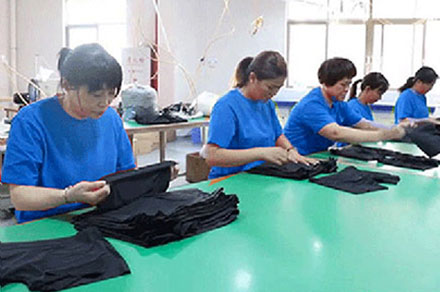
The honest answer differs by process. Cutting and sewing are normally in-house in a garment factory; embroidery and specialised printing are frequently not, and the same holds for dyeing and for some finishing operations. Subcontracting is not a defect, but it changes who is accountable and how much visibility the buyer has over the decoration stage.
Buyers should ask for a written statement of which processes are performed on site, which are subcontracted, and who inspects the subcontracted work. The answer determines where a quality problem will be solved. It also determines whether the sample approved by the buyer was produced by the same team that will run bulk, which is the single most useful question to ask before placing a decorated order.
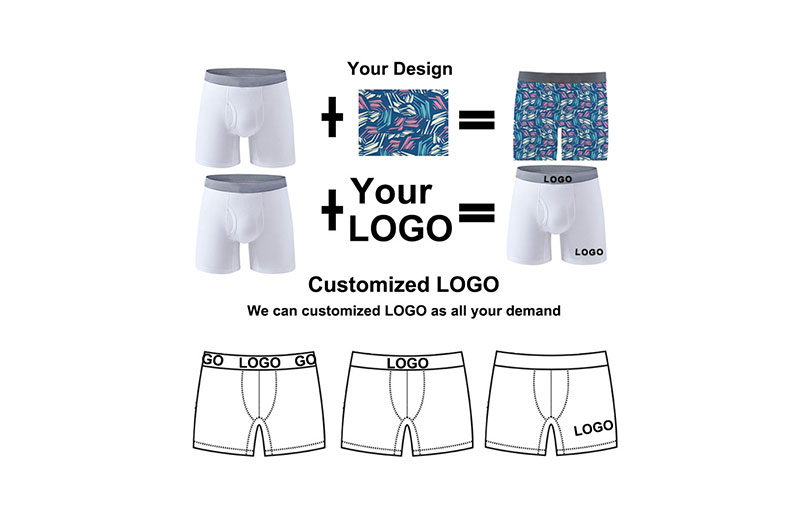
How do I make my own clothing brand logo?
Design it for the decoration method you will use.
A logo for apparel works when it survives the smallest size it will appear at and the coarsest method it will be made with, so test it as embroidery before finalising it.
The practical test is reproduction, not aesthetics. A logo with fine lines, gradients or small text that prints acceptably on a large surface will lose detail when embroidered at a small size or screen printed on a textured fabric. Designers who know the intended method from the start can simplify the mark so it holds at the smallest application, which is usually the chest or the waistband rather than the back.
Once the mark is fixed, the brand should hold the production files itself: a vector source file for print, a colour reference for each element, and a copy of the digitised embroidery file. A brand that cannot obtain its digitised file depends on one supplier for every future run of a product it believes it owns. Where the logo is protected as a trademark, the registration route runs through trademark registries; the WIPO trademark information service explains the international framework, and the supply agreement is a separate matter.
How can I find a manufacturer to make my own clothing?
Shortlist by category, then test with a decorated sample.
Find factories that already produce your garment category, send the same specification to several, and judge them on the sample and the questions they ask rather than on the quotation.
Category experience is the filter that removes most candidates. A factory that produces knit basics has the machinery, the fabric relationships and the finishing routines your garment needs; a factory that is strong in woven outerwear will usually subcontract the parts of your order it cannot run. Buyers should confirm category depth before discussing price, because price quoted by a supplier who cannot produce the garment is not a comparable number.
The second filter is behaviour during the enquiry. A supplier that asks about fabric weight, placement references and the intended market is reading the brief; one that quotes immediately without a specification is guessing. Knitwear Base produces knit categories including underwear, undershirts, T-shirts, hoodies, loungewear, compression and sportswear, which is the range a buyer should expect a category specialist to demonstrate before a first order.
Conclusion
Logo programmes are decided by three documents: the artwork file, the placement specification and the approved decorated sample. Durability follows from the same three, because the method, the colour reference and the wash standard are all fixed before bulk begins. Buyers who specify placement from a named reference, agree how decoration setup and changes are charged, and confirm which processes the factory actually runs on site get consistent results across sizes and across orders. Buyers who approve a photograph of a single sample get a result that varies with the operator and the season.
FAQ
Should placement be graded across sizes?
It depends on the position. A centre-chest logo usually stays centred but may move with the neckline on larger sizes, while a sleeve or hem position may need scaling. The specification should state whether the placement is fixed from a reference point or graded, and it should include a tolerance.
Who owns the digitised embroidery file?
The buyer should. The digitised file is production tooling for the brand’s artwork, and a brand that does not hold it cannot move the order without paying to have the logo digitised again, which may also produce a slightly different stitch result.
How do we test decoration durability before bulk?
State the standard on the specification, then test the pre-production sample against it. Wash or abrasion testing on the decorated sample answers the question before tooling and material are committed, and it is the last point at which the method can be changed cheaply.
Can one supplier handle print and embroidery together?
Often yes, but not always in-house. Ask which of the two is performed on site, which is subcontracted, and who inspects the subcontracted work. Where both are outsourced, the factory is managing two external calendars on your behalf.
Next step. If you are planning a decorated programme, send the artwork and the intended placement. The team can confirm which method suits the garment and the quantity, how the position should be specified, and what the sample needs to prove before bulk.
