

Short answer: briefs are the men’s underwear style with no leg extension, so they use the least fabric of the core styles. For men who prefer minimal fabric, the useful choices are a lower rise, a higher leg cut, reduced back coverage, a lighter fabric and a narrower or softer waistband. Each of those also removes some of the margin that keeps the garment in place, which is why briefs are the hardest men’s style to fit and grade well. This page covers both sides: the coverage choices and what a briefs manufacturer has to control to make them work.
If you are choosing between styles, see briefs, trunks or boxer briefs first. For longer-leg styles, see boxer briefs and trunks; for grading across all men’s underwear, see men’s underwear fit blocks and grading.
How briefs differ from trunks and boxer briefs
| Style | Leg | Coverage | What the fit depends on most |
|---|---|---|---|
| Briefs | No leg; leg opening sits at or above the thigh crease | Least fabric | Leg-line height and shape, pouch, waistband |
| Trunks | Short leg | Moderate | Leg hem position and grip |
| Boxer briefs | Longer leg on the thigh | Most | Leg length, inseam and ride-up |
Coverage choices on a brief
“Minimal fabric” is not one specification. These are the separate decisions, each with a trade-off that should be written into the brief rather than left to the sample:
| Decision | Less fabric means | Trade-off to check |
|---|---|---|
| Rise (low, mid, high) | Waistband sits lower on the hips | Band must grip hips rather than waist; more chance of rolling or slipping |
| Leg-cut height | Leg opening cut higher toward the hip | Leg elastic carries more load; more risk of marks or riding in |
| Back coverage | Narrower or more angled back panel | Seat must stay in place when sitting and bending |
| Side width | Narrower side seam between band and leg | Less fabric to absorb grading changes at the ends of the range |
| Pouch | Flatter, smaller pouch | Support and comfort; pouch still needs shape, not just less area |
| Fabric weight | Lighter, finer jersey or mesh | Opacity when stretched, durability, elastic attachment |
| Waistband | Narrower or covered/soft-edge band | Less hold; check rolling and slippage |
There is no single right combination. A low-rise, high-leg brief in a fine modal jersey and a mid-rise, full-back brief in cotton-elastane are both briefs; they suit different customers. Decide the combination with your customer in mind, then fix it in the specification so the factory is not guessing. Whether to add a fly is a separate decision covered in fly front or plain front briefs.
Fabric and weight for briefs
Common choices are cotton-elastane jersey (more structure, easy care), modal or viscose with elastane (softer, more fluid), micro-polyester or nylon with elastane (smooth, quick drying) and open meshes for very light styles. The comparison between cotton-spandex and modal on briefs is set out in which briefs fabric resists bagging.
- Weight is not the whole answer. A lighter fabric reduces bulk, but opacity, stretch and recovery depend on yarn and knit structure as much as on grams per square metre. Check opacity on the lightest colour, stretched as it will be worn.
- Elastane matters more on a brief. With little fabric, the garment relies on recovery to stay in place. Measure stretch and recovery (for example by ASTM D2594) and re-check after washing.
- Shrinkage shows at the waist. Waist tightening after a hot wash can be fabric shrinkage or elastic change; see cotton briefs tighter after washing.
Waistband and leg elastic
On a low-rise brief the band sits on the hips, so its width, tension and attachment decide whether it stays put. Specify the elastic reference, finished width, cut length and how it is attached (exposed, covered, folded or bonded) before the fit sample, because changing the band after fit approval changes the fit. Leg elastic on a high-cut brief carries more load; if it is too tight it leaves marks, too loose and it rides. See briefs leg elastic leaving red marks.
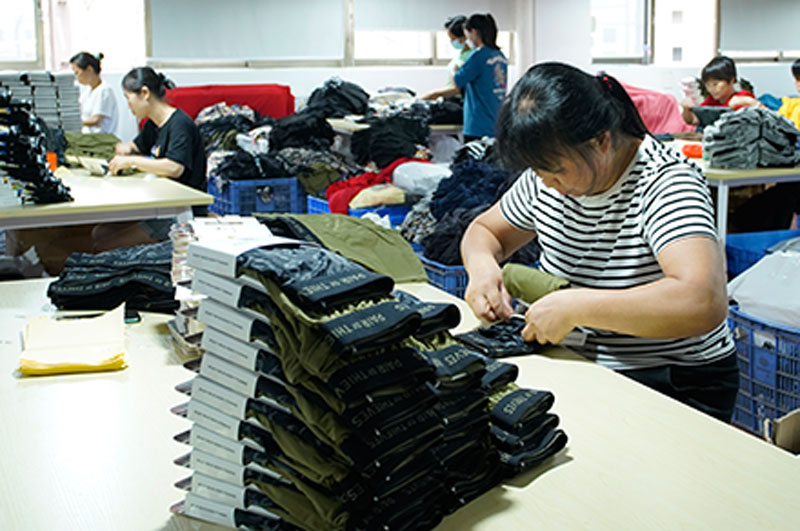
The fit block and grading
The brief block is built around the front rise, the pouch, the leg-line shape and the waistband position. When grading, the pouch position and depth have to move with the size, not just the circumference. A grade that adds waist width without moving the pouch or reshaping the leg line produces a brief that fits at the band but not on the body, and it usually shows only at the smallest and largest sizes. The less coverage the design has, the less room there is to hide this.
| Point of measure | Why it matters on a brief |
|---|---|
| Waist relaxed and extended (method stated) | Hold and comfort; reproducible only if the extension method is defined |
| Front rise and back rise | Where the band sits; especially critical on low rise |
| Side seam height | Sets the leg-cut height and overall coverage |
| Leg opening relaxed and extended | Marks, ride-in and gaping |
| Pouch depth and width | Support and comfort across sizes |
| Back panel width at seat | Back coverage and whether it stays in place |
Ask the manufacturer for the grade rules and a size set (base size plus the smallest and largest) in the production fabric and elastic, and have it worn by people who fit those sizes, sitting, bending and walking.
Minimums and components
Minimums are usually per style and colour, with the fabric dye lot often the highest threshold. Because a brief uses little fabric, a dye-lot minimum can dominate the cost of a small order, and a custom jacquard waistband or printed label may have a minimum larger than the garment order. Ask for component minimums and lead times at quotation. Pack and size-ratio planning is covered in underwear size assortments and how MOQs work.
Fact, advice and uncertainty
Fact: briefs have no leg extension, so leg-line height, rise and back coverage define how much fabric they use. Advice: write each coverage choice into the specification, then check hold and comfort on a worn size set after washing. Uncertainty: comfort with minimal coverage is personal; wear trials on your own customers are the only reliable guide.
Knitwear Base makes men’s briefs to buyers’ specifications. See the briefs products and the briefs factory page, or send your coverage, fabric and size range through the contact page.
Sources and further reading
- ASTM D2594/D2594M, Stretch Properties of Knitted Fabrics Having Low Power
- AATCC TM135, Dimensional Changes of Fabrics after Home Laundering
- ISO 6330:2021, Domestic washing and drying procedures for textile testing
- ISO 5077:2007, Determination of dimensional change in washing and drying
- ISO 8559-1:2017, Size designation of clothes: anthropometric definitions for body measurement
- eCFR, 16 CFR 423.6, Care labeling of textile wearing apparel
- eCFR, 16 CFR Part 303, Rules under the Textile Fiber Products Identification Act
Rules and standards are summarised from their official pages for general guidance; this is not legal advice. Check the current version and the requirements of your own market before you rely on them.
