
Trunks sit in the most competitive part of the men’s underwear market and in the narrowest technical space. The style is defined by a short leg that finishes somewhere between a brief and a boxer brief, and a few millimetres decide which of the three the customer thinks they bought. Because the leg is short, the hem finish and the leg-opening tension carry more weight than they do on a longer style, and both are set before the first sample.
Men’s Trunks Manufacturer: what to confirm before you send a tech pack
The brief for a trunks programme should fix the block, the leg finish and the waistband before it fixes anything decorative. Specifically: the rise, the inseam of the short leg, the leg-opening dimension and the finish applied to it, the waistband type and width, and the fabric family. On a trunk each of these is a fit decision rather than a styling one, and each needs a tolerance stated in the specification.
It should also state where the style sits in the range, because a trunk and a short boxer brief can occupy the same visual space. If the brand sells both, the two blocks should be differentiated deliberately rather than by whatever inseam each factory defaults to. Fixing that boundary in the brief is what prevents two styles in the same range from competing with each other.
Two further items are worth settling at the same stage. The first is the fold the garment will be presented in, because a short leg folds differently from a brief and the fold feeds into the carton count. The second is the size range the style has to cover, since a trunk that has to serve six sizes needs a grade that keeps the hem and the rise proportionate across all of them rather than at the centre alone.
Men’s trunks fit blocks and grading: the specifications that differ from women’s
The men’s trunk block carries a pouch and a defined front rise, with a short leg that has to stay in place without gripping. Grading therefore has to move the pouch position as the circumference increases and adjust the leg-opening dimension so the hem sits consistently across the size range. That is a different operation from grading a women’s brief, where the dimensions distribute across the hip rather than around a pouch and a short leg.
Three measurements carry most of the risk: the inseam of the leg, the leg-opening dimension in both relaxed and stretched states, and the front rise. A grade that lengthens the leg without adjusting the hem tension produces a trunk that reads as a boxer brief at the larger sizes, which is a market positioning problem rather than a fit complaint. Buyers should ask to see the measurements at the smallest and largest sizes rather than only at the centre. The pack decisions that follow from the grade are covered in this guide to underwear size assortment for wholesale packs.
| Inseam | Fit outcome | Where it sells |
|---|---|---|
| Short | Least fabric on the thigh and the closest leg line | Fashion-led ranges where the leg line is the point |
| Mid | A balance of coverage and freedom of movement | The mainstream retail choice for everyday programmes |
| Long | More coverage and less contact between the thighs | Sport and daily-wear programmes where chafing matters |
Inseam is the specification that most often changes between two ranges that look identical on a flat drawing, because it alters the block, the fabric consumption and the leg-opening position at the same time. Fixing it before the fit round keeps those three changes from arriving at once and being resolved by taste rather than by measurement.
MOQ structure for custom men’s trunks: how minimums work per style, colour and size
Minimums in this category are normally set per style and per colour, with a size effect that becomes significant when the range is wide. A trunk consumes little fabric, so spreading a modest order across six or seven sizes produces very small quantities at the extremes and reduces the efficiency of the cutting lay. A ratio weighted towards the middle sizes is cheaper to produce than an even spread.
Buyers should ask the minimum per colour, the minimum per size within a colour, and whether mixed sizes count towards a single threshold. Where the waistband carries branding, its minimum should be asked at the same time, because a made-to-order band can set the entry quantity for the whole programme. The mechanics behind these thresholds are explained in this guide to clothing factory MOQ for wholesale buyers.
How the minimum changes when a new colour or fabric enters a custom men’s trunks programme
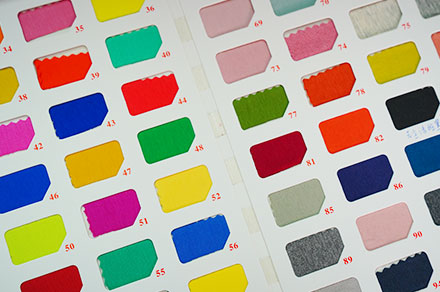
A new colour introduces a dye lot with its own minimum and lead time, and the lab dip has to be approved before bulk dyeing starts. That approval step is easy to overlook on a small order, where three colours may mean three separate dye lots rather than one shared commitment, and the minimum attaches to each of them individually.
A new fabric changes more. Because the trunk’s hem has to hold its position without gripping, the leg-opening behaviour depends on the fabric’s weight and stretch; the same pattern cut in a lighter knit will sit differently. A fabric substitution after the fit approval is therefore a new fit evaluation, and if the composition changes the care label text changes with it, so the component orders should follow the composition decision rather than precede it.
There is also a commercial effect that catches small programmes. Because a trunk uses relatively little fabric, the dye lot minimum can represent a large share of the material cost on a modest order, and a launch palette of three colours can mean three separate minimums rather than one. Planning a two-colour launch and adding the third on the reorder is usually cheaper to test and gives a clearer read on demand before the range is widened.
Sampling sequence for custom men’s trunks: what the fit sample and the PP sample each lock
The fit sample locks the block, the inseam and the hem behaviour. The pre-production sample locks the fabric, elastic, colour, labels and finish that bulk will use. Because the leg-opening behaviour is a function of tension rather than a dimension, the fit approval should be based on wear as well as measurement, with observations recorded against named construction points.
Both approvals should be documented against references and retained, with a measurement record stating the base size and the tolerance for each critical dimension. The documentation practice is described in this sample approval protocol for wholesale orders. Where the style is sold as a pack, the pre-production approval should include the folded pack, because the fold determines the presentation and the carton count.
Where the range is wide, the fit sample should be worn by more than one tester. A single wearer at the centre size confirms the block works for one body; a second wearer at an extreme confirms the grade does. Recording both sets of observations against the same construction points is what makes the approval useful on the next order, when the same questions come back and nobody remembers the answers.
Decoration and branding on custom men’s trunks: print, embroidery, labels, hangtags and packaging
Branding on a trunk concentrates on the waistband, the inner label and the packaging. The waistband element is both decoration and function, so a band chosen for its appearance has to be checked against the width and elasticity the block was built around. The care and composition label depends on the fibre being locked first, and the packaging print depends on the pack specification.
Where printed decoration is added, the substrate is a stretch knit and tolerates some methods better than others. Testing the print on the production fabric before bulk is the cheapest way to find the limit. Testing houses publish the scope they apply to garments, as Intertek’s textiles and apparel testing range illustrates, and the ASTM standards programme for textiles provides the neutral vocabulary for describing the property under test.
Component lead times deserve the same attention as the garment lead time. A made-to-order waistband or a printed inner label can take longer to produce than the garment itself and comes in a minimum quantity that may exceed the number of garments ordered, so both should be quoted at the same time as the garment and ordered against the production calendar rather than the shipping date.
QC checkpoints that decide whether a custom men’s trunks bulk order ships clean
Inspection should concentrate on the specifications the customer feels: inseam length, leg-opening dimension relaxed and stretched, hem flatness after the elastic is attached, waistband recovery, and pouch position against the specification. Each should carry a stated tolerance so the check is a comparison rather than an opinion.
The checks belong where correction is still possible, which for hem behaviour means at the machine rather than at final inspection. Where material testing is required, OEKO-TEX Standard 100 is the common apparel baseline for harmful-substance testing, and where a social audit is required, amfori administers the BSCI framework many European buyers reference. Delivery terms belong in the same conversation, because a quotation without a named term cannot be compared with another; the ICC Incoterms rules give both parties the standard vocabulary, and the European Commission’s textiles and clothing framework covers the EU labelling position for the finished garment.
Conclusion
A men’s trunk is defined by a short leg and judged by how that leg behaves. The inseam positions the style against the brief and the boxer brief, the hem tension decides whether the garment stays in place, and the waistband decides whether it survives repeated washing. All three are fixed before the first sample, and the fabric choice then determines how each one performs. Buyers who fix the block, the range and the palette first, and who validate the grade at the extremes rather than the centre, get a programme that repeats predictably. Buyers who approve on appearance tend to discover the hem behaviour in wear testing, after the pattern has already been cut.
FAQ
How do we differentiate a trunk from a short boxer brief in the same range?
Deliberately, in the specification. Fix the inseam and the leg-opening behaviour for each style and state them separately, rather than letting each default to whatever the factory produces. Without that, the two styles converge at the larger sizes and compete with each other.
What decides whether the hem stays in place?
The elastic type and width, the tension applied when it is attached, and the finished leg-opening dimension relaxed and stretched. It is a manufacturing setting rather than a pattern dimension, which is why the specification has to state the behaviour and the in-line check has to verify it.
Does the fabric choice affect the grade?
It affects how the block behaves rather than the measurements themselves. A lighter or less elastic knit will sit differently at the hem, so a fabric substitution after the fit approval should be treated as a new evaluation rather than a change order.
Should we launch with three colours or two?
Two is usually cheaper to test, because each additional colour outside the factory’s stocked range carries its own dye lot minimum. Adding the third colour on the reorder also produces better information about which colour actually sells through.
Next step. If you are developing a trunks range, send the inseam and the hem behaviour you are aiming for. The team can confirm which waistband and elastic options are available, how the grade behaves at the extremes, and where the minimums sit per colour and per size.
