

Short answer: there is no single best underwear material. Bamboo viscose is very soft and drapey and feels cool against the skin; cotton is more structured and easier to keep in shape; modal sits close to viscose in softness but is defined as a stronger fibre when wet. Which is “best” depends on whether you value hand-feel, shape retention or easy care most, and on the blend and construction, which matter as much as the fibre. What is not a matter of taste is the label: in the U.S. and the EU, most “bamboo” underwear has to be labelled as viscose or rayon.
This page is written for brands working with a bamboo underwear manufacturer. For a fibre-neutral specification guide covering all three materials, see bamboo viscose, modal or cotton underwear; for modal programmes specifically, see modal clothing manufacturing.
What “bamboo” fabric usually is
Bamboo reaches underwear fabric in two very different ways. Almost all soft bamboo jersey is a regenerated cellulose fibre: bamboo is pulped, dissolved and spun into a new fibre, usually by the viscose process (sometimes by a lyocell-type process). The plant is the raw material; the fibre is viscose, rayon or lyocell. Mechanically processed bamboo (a bast fibre) exists but is coarse and rarely used for underwear. Ask the manufacturer and mill which route your fabric took, because it decides both how the fabric behaves and what you may call it.
Bamboo viscose vs cotton vs modal
| Point | Bamboo viscose | Cotton (incl. combed) | Modal |
|---|---|---|---|
| Hand-feel | Very soft, smooth, fluid drape | Softer when combed or compact-spun; more body | Very soft and smooth, close to viscose |
| Shape and recovery | Drapes and can grow at band and legs unless blended with elastane and well constructed | Holds structure; can bag at the seat without elastane | Similar to viscose; elastane still needed for recovery |
| Strength when wet | Standard viscose is weaker when wet; gentle washing helps | Strong wet | Defined in EU rules as high wet modulus, i.e. stronger when wet than standard viscose |
| Moisture | Absorbent, feels cool | Absorbent, slower to dry | Absorbent, feels cool |
| Shrinkage | Can shrink if not stabilised; test after washing | Can shrink if not pre-shrunk | Generally more stable than viscose; still test |
| Label name (U.S.) | Rayon or viscose, e.g. “viscose made from bamboo” | Cotton | Modal is accepted as a generic name via ISO 2076 |
The table describes typical tendencies of the fibre types, not results for any particular fabric. Yarn count, knit structure, finishing, the elastane percentage and the garment’s construction can move every row. If you need a number, get it from a named test on your fabric.
What the label and product page may say
- United States. Under the Textile Act rules, fibres must be named by their generic name (16 CFR 303.6). Regenerated cellulose is “rayon”; the FTC also accepts ISO 2076 names such as “viscose” and “lyocell” (16 CFR 303.7). Words that imply a fibre that is not present must not be used (16 CFR 303.18), which is why “100% bamboo” on a viscose garment is a problem. Wording such as “viscose made from bamboo” or “rayon from bamboo” names the fibre and the source. In 2022 the FTC settled with two large retailers, who paid a combined $5.5 million, over rayon products marketed as bamboo and over related environmental claims.
- European Union. Regulation (EU) No 1007/2011 lists the fibre names that may be used on labels. Viscose, modal and lyocell are listed; “bamboo” is not a listed fibre name, so the composition has to use the listed name.
- Environmental claims. Bamboo grows quickly, but that does not make a chemically processed viscose fabric “eco-friendly”. General environmental claims need specific, substantiated qualification under the FTC Green Guides, and the EU’s Directive 2024/825 restricts generic environmental claims.
- Antibacterial claims. Do not assume a property of the plant survives the viscose process. A claim that the fabric is antibacterial needs evidence for the finished fabric, and in the U.S. an added antimicrobial treatment brings EPA treated-article rules into play.
The composition text on the care label is set when the fibre is chosen, so lock the fibre before labels are ordered. Related questions: what to call bamboo on a label and whether the waistband elastic has to be listed. This page summarises official sources for guidance; it is not legal advice.
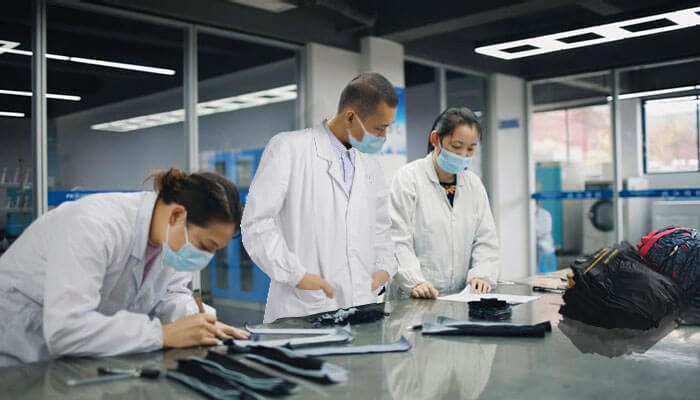
Blends a bamboo underwear manufacturer will offer
| Blend direction | What it is for | What to verify |
|---|---|---|
| Bamboo viscose with elastane | Recovery at waistband and leg; the usual underwear base | Stretch and recovery after washing, not stretch alone |
| Bamboo viscose with cotton | More structure, less drape | Shrinkage and shape after washing |
| Bamboo viscose with modal | Smoothness and colour | Hand-feel consistency across lots |
| Bamboo viscose with a synthetic (e.g. polyester or nylon) | Durability, quicker drying | Composition accuracy on the label; feel against the skin |
Construction: where bamboo programmes fail
A soft, drapey knit stretches where a firmer one does not, so the waistband, pouch and leg openings carry more of the fit. Specify the band and leg elastic by type, width and relaxed and extended dimensions, then confirm the behaviour by wearing and washing samples, not by approving a flat sample. Elastic loss over months of wear is discussed in why underwear elastic goes loose, and fine holes near the band in soft cellulosic knits in holes below the waistband.
Tests to ask for before bulk
| What to check | Example methods | Why on bamboo |
|---|---|---|
| Dimensional change after home laundering | AATCC TM135 (fabric), AATCC TM150 (garment), ISO 6330 with ISO 5077 | Regenerated cellulose can shrink or grow |
| Stretch and recovery | ASTM D2594 (low-power knits) | Drapey knits can grow at band and legs |
| Pilling | ISO 12945-2 or ASTM D3512 | Soft spun yarns can pill at the seat and thighs |
| Colour fastness to washing and perspiration | ISO 105-C06, ISO 105-E04 | Worn next to skin and washed often |
| Fibre content | Lab fibre analysis against the label | Label must match the delivered fabric |
Agree the care regime first and test to it. If the only way to pass is a gentler care instruction, decide whether that instruction suits your customer; the care label has to state what ordinary care the product needs (16 CFR 423.6).
Minimums, colours and sampling
Bamboo jersey is less widely stocked than cotton, so a colour or weight outside the mill’s range usually means a dye lot with its own minimum and lead time. Decide the palette before sampling. A change of fabric weight after fit approval is a new fit check, and a change of blend changes the label text. See how clothing MOQs work and the sample approval protocol.
Fact, advice and uncertainty
Fact: most bamboo underwear fabric is viscose or rayon and must be labelled with that generic name in the U.S.; “bamboo” is not an EU fibre name. Advice: choose bamboo viscose for hand-feel, then design the blend, elastic and construction for shape, and test after washing. Uncertainty: durability and comfort vary by fabric, so comparisons in this page are tendencies; only tests on your fabric settle them.
Knitwear Base makes bamboo viscose, modal and cotton underwear. See the underwear product range and underwear programme page, or send your blend and target market through the contact page.
Sources and further reading
- eCFR, 16 CFR 303.6, Generic names of fibers to be used
- eCFR, 16 CFR 303.7, Generic names and definitions for manufactured fibers
- eCFR, 16 CFR 303.18, Terms implying fibers not present
- eCFR, 16 CFR 423.6, Care labeling of textile wearing apparel
- EUR-Lex, Regulation (EU) No 1007/2011 on textile fibre names and labelling
- eCFR, 16 CFR 260.4, FTC Green Guides: general environmental benefit claims
- EUR-Lex, Directive (EU) 2024/825 on empowering consumers for the green transition
- U.S. EPA, Consumer Products Treated with Pesticides (treated articles exemption)
- AP News, Walmart, Kohl’s settle over “eco-friendly” rayon products (FTC settlements, 2022)
- AATCC TM135, Dimensional Changes of Fabrics after Home Laundering
- AATCC TM150, Dimensional Changes of Garments after Home Laundering
- ISO 6330:2021, Domestic washing and drying procedures for textile testing
- ISO 5077:2007, Determination of dimensional change in washing and drying
- ASTM D2594/D2594M, Stretch Properties of Knitted Fabrics Having Low Power
- ISO 12945-2:2020, Fabric propensity to surface pilling, fuzzing or matting: modified Martindale method
- ISO 105-C06:2010, Colour fastness to domestic and commercial laundering
- ISO 105-E04:2013, Colour fastness to perspiration
Rules and standards are summarised from their official pages for general guidance; this is not legal advice. Check the current version and the requirements of your own market before you rely on them.
