
Blank garments are bought on availability and judged on consistency. A decorator can live with a plain blank; what it cannot live with is the same blank arriving in a different shade, a different hand-feel or a slightly different measurement three months later, because the printed stock already in the catalogue no longer matches. Sourcing blanks is therefore a supply-chain decision rather than a product decision, and it is decided by stock depth and lot control rather than by price per piece.
Wholesale Blank T Shirt Supplier: what to confirm before you send a tech pack
Even a blank order needs a specification, and the shortest useful one covers five items: the fabric weight, the yarn preparation, the fibre composition, the neck rib, and the size set with tolerances. A blank without a written specification cannot be reordered identically, which is the whole point of buying blanks rather than finished garments.
Two further items belong in the brief because they affect the decoration business. The first is the shade standard: the colour reference the blanks are matched to, given as a physical standard rather than as a screen colour, since a decorator’s reprints must match the stock already on the shelf. The second is the packing format, because a bagged blank and a loose blank are handled differently in a print shop, and the pack format affects both the count and the labour.
Blank programmes for T-shirts: stock depth, lot consistency and decoration compatibility
Stock depth determines how fast a reorder can be filled, and lot consistency determines whether the reorder will match. These are separate problems with separate checks. Depth is a question of how much of the specified fabric and colour the supplier actually holds and can release; consistency is a question of how tightly the supplier controls shade and weight between production lots.
Decoration compatibility is the third leg and the one buyers most often discover late. A blank intended for direct-to-garment printing needs a surface that accepts the ink and a pre-treatment routine; one intended for screen printing needs a stable weave and enough body to hold the print without sinking; one intended for embroidery needs enough structure at the placement point. The blank specification should therefore name the intended decoration method.
Air freight availability belongs in the same conversation for buyers who sell against short windows. Where a reorder has to arrive inside a season, the freight mode becomes part of the supply specification rather than a separate logistics decision; the International Air Transport Association’s cargo programme publishes the documentation and handling standards that apply to air consignments.
| Check | What it protects | How to verify it |
|---|---|---|
| Stock depth | Ability to fill a reorder quickly | Ask what is held as finished stock versus fabric |
| Shade consistency | Reprints matching the printed stock | Compare lots against a physical shade standard |
| Weight consistency | Hand-feel and print coverage | Test weight against a tolerance on delivery |
| Measurement consistency | Sizing across reorders | Check measurements at the base size per lot |
| Decoration fit | Yield and print quality | Test the intended method on the specified blank |
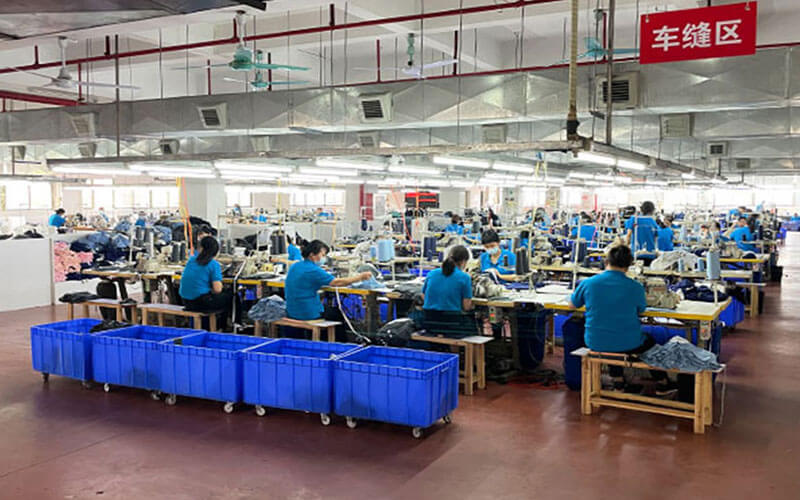
MOQ structure for blank T-shirts: how minimums work per style, colour and size
Blank minimums behave differently from finished-garment minimums because the constraints sit on the fabric rather than on the decoration. A colour that is stocked can be released in smaller quantities; a colour outside the range requires a dye lot with its own minimum and lead time. Size spread matters too: a wide range in a modest total order reduces the cutting efficiency and increases the cost per piece.
Buyers should ask the minimum per colour, the minimum per size, and whether mixed sizes count towards one threshold. They should also ask what is held as finished stock, because a supplier that holds stock can often fill a smaller top-up order than the production minimum would allow. The mechanics behind the production thresholds are explained in this guide to clothing factory MOQ for wholesale buyers.
How the minimum changes when a new colour or fabric enters a blank T-shirts programme
A new colour in a blank programme is a dye lot plus a shade approval, and because blanks are bought for decoration, the shade standard has to be agreed before dyeing rather than assessed afterwards. A colour that drifts slightly between lots is more disruptive in a blank programme than in a finished one, because the customer may be reprinting an existing design.
A new fabric changes consumption, the neck rib specification and the print behaviour. A blank moved from a mid-weight jersey to a heavy one needs a different rib to hold the collar, and the decoration method may have to be re-tested on the new surface. Where the fibre composition changes, the care label text changes with it, so the label order should follow the fabric decision rather than precede it.
Sampling sequence for blank T-shirts: what the fit sample and the PP sample each lock
Blanks are rarely sampled in the way a developed style is, and the equivalent approvals are a shade standard and a production reference. The first confirms the colour against a physical standard; the second confirms the weight, the measurements, the neck rib and the finish of the production lot the buyer will receive. Both matter more in a blank programme than in a finished one, because the buyer’s customer may reorder against the same reference months later.
Where a blank is being used as the base for a brand’s own range, a production reference garment should be retained by both parties, and the measurement record should state the base size and the tolerance for each critical dimension. The documentation practice is described in this sample approval protocol for wholesale orders.
Decoration and branding on blank T-shirts: print, embroidery, labels, hangtags and packaging
Most blanks are sold unbranded, which makes the packaging the brand-facing element rather than the garment. A decorator needs a predictable pack format, a scannable identifier and consistent piece counts, because the blank is an input to a production process rather than a finished product. Where the blank carries the supplier’s own label, the buyer should establish whether it can be removed or covered without damaging the garment.
For brands using blanks as the base of their own range, the branding layer is the label set and the packaging. The care and composition text has to match the blank’s actual fibre, which is why the fabric decision gates the label order. Material references are worth naming at the same stage: OEKO-TEX Standard 100 is the common apparel baseline for harmful-substance testing, and testing houses publish the scope they apply to garments, as Intertek’s textiles and apparel testing range illustrates.
QC checkpoints that decide whether a blank T-shirts bulk order ships clean
Inspection on blanks concentrates on consistency rather than decoration. Weight against the stated tolerance, shade against the physical standard, measurements at the base size, neck rib recovery, and piece counts and pack format against the specification. The ASTM standards programme for textiles provides neutral vocabulary for the properties under test, which matters when two parties are agreeing what a passed check means.
Lot-to-lot checks are the ones that protect a decorator’s business, and they should be applied to each delivery rather than only to the first. A single delivery that is within tolerance on its own but visibly different from the previous lot creates a mismatch in the printed stock, and the correction cost falls on the buyer rather than the supplier unless the standard was written down. Delivery terms also belong in the same agreement: the ICC Incoterms rules define where cost and risk transfer.
Where can I find a supplier of blank clothing?
Where depth and lot control can be evidenced.
Look for a supplier that holds stock in your specified weight and colour, can show a shade standard per lot, and will state what is finished stock versus fabric on hand.
Blank supply is a logistics business dressed as a garment business. A supplier that holds finished stock can fill a top-up order that would be uneconomic to produce, while one that holds only fabric requires a production run whether or not the quantity justifies it. Asking what is actually held, in which colours and sizes, answers the availability question directly rather than through a lead-time estimate.
The second question is about lot control. A supplier that can describe how it matches shade and weight between lots, and can provide a physical standard, is a supplier a decorator can reprint against. Knitwear Base’s T-shirt programme produces the category, and buyers comparing suppliers should apply the same two questions to each.
Where can I find a bulk supplier of t-shirts?
From a manufacturer, if the volume justifies a run.
Distributors suit small top-ups and mixed styles; a manufacturer suits a consistent programme where the weight, colour and measurements can be fixed and repeated.
The distinction is about repeatability. A distributor is convenient when the buyer needs several styles in small quantities and will accept whatever specification is in stock. A manufacturer is the right route once the buyer has settled on a specification that must not change, because the manufacturer can hold that specification across production runs and provide the shade and weight references that make a reorder match.
Buyers planning a decorated programme should also decide the decoration method before choosing the blank, because the surface requirements differ between methods and a blank chosen for price alone may not print well. Development support for that decision is described in this overview of apparel design and development.
FAQ
What matters more in a blank: price or consistency?
Consistency, because a decorator’s printed stock has to match on the next reprint. A marginally cheaper blank that varies in shade or weight between lots creates mismatched stock and rework, which costs more than the saving on the garment.
How do we check that a reorder will match our earlier stock?
Compare each delivery against a retained physical shade standard and against the recorded weight and base-size measurements, rather than against the previous delivery. Recording the reference when the first order is approved is what makes the comparison possible later.
Does the decoration method affect which blank we should choose?
Yes. Direct-to-garment, screen printing and embroidery each need different surface and structure characteristics, and a blank selected on price alone may not print or embroider cleanly. Name the intended method in the blank specification and test it on the specified fabric.
Can blanks be bought in smaller quantities than the production minimum?
Sometimes, if the supplier holds finished stock in that weight and colour. Ask what is held as stock rather than assuming the production minimum applies, because a stocked colour can often be released in quantities a fresh dye lot could not support.
Next step. If you are sourcing blanks for a decoration programme, send the weight, colour and decoration method you need. The team can confirm what is held as stock, how shade and weight are controlled between lots, and where the minimums sit.
