
Pajamas are bought as a set and judged in bed, which makes two things decisive. The first is whether the garment is knit or woven, because that choice changes how the set drapes, how it washes and which market it suits. The second is how the set is assembled and packed, because a pajama set is frequently given as a gift and the presentation is part of the product. Neither decision is usually recorded in the brief, and both are difficult to change once the order is placed.
Pajama Manufacturer China: what to confirm before you send a tech pack
Confirm the set composition, whether the fabric is knit or woven, the waistband and neckline treatment, the season the range sells into, and the minimum per fabric. Those five answers decide the construction route, the fabric booking and the packaging before a sample is worth cutting.
The brief should state the set composition and the construction route before anything else: which pieces make up the set, whether the fabric is knit or woven, the waistband and neckline treatment, and the season the range is sold into. Those four answers determine the pattern work, the fabric family and the packaging, and in this category they are interdependent rather than sequential.
Two further items are worth stating explicitly. The size range the set has to cover, because the top and bottom are graded separately but bought together. And the presentation format, because a boxed set changes the folded dimensions and therefore the carton plan. Buyers who leave the presentation until after the garment is approved tend to reorder packaging that had already been produced.
It is also worth naming the market, because sleepwear labelling obligations differ between destinations and are stricter for some consumer groups than for others. Establishing the destination in the brief means the label and packaging text is designed once, rather than corrected after the artwork has been signed off.
Knit versus woven pajamas on knit pajamas programmes: construction, drape and market fit
The knit-or-woven decision is the first fork in a pajama programme, and it is not a stylistic preference. Knit pajamas are made from jersey, interlock or ribbed fabric, so they stretch and recover and suit a close, comfortable fit. Woven pajamas are cut from a flat fabric with little or no stretch, so the pattern has to provide the ease and the garment holds a crisper line. The two routes need different machinery, different pattern work and different sizing assumptions.
| Consideration | Knit construction | Woven construction |
|---|---|---|
| Stretch and fit | Stretches and recovers; suits a closer fit | Little stretch; ease comes from the pattern |
| Drape and appearance | Softer, more relaxed line | Holds a crisper, more tailored line |
| Shrinkage behaviour | Varies by knit structure and finishing | Often more movement in length; test is essential |
| Where it sells | Everyday and casual sleepwear, warm climates | Gift and traditional sleepwear, cooler markets |
| What to verify | Recovery and shape retention after washing | Shrinkage, seam slippage and crease behaviour |
The practical consequence is that a brand cannot simply switch between them. A knit block does not transfer to a woven fabric, because the ease that a knit provides through stretch has to be built into the woven pattern instead. Brands planning both routes in one range should expect two development tracks rather than one. The fabric options within the knit route are compared in this guide to pajama fabrics for wholesale programmes.

Gift-ready packaging and set assembly on knit pajamas programmes: how a pajama set is packed for retail
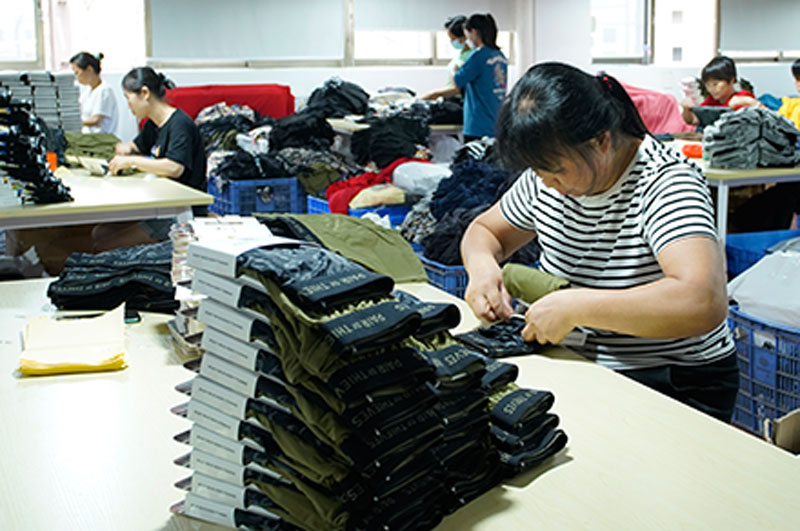
Pajama sets are often bought as gifts, so the packing stage carries more commercial weight here than in most categories. Three decisions define the presentation: how the set is folded, whether it is banded, bagged, boxed or sleeved, and whether the pieces are presented together as a unit or as two separately wrapped garments inside one pack. Each changes the carton dimensions and each may carry its own minimum.
Two practical points follow. A box or sleeve is made to order, so its tooling and minimum should be established before the order size rather than after the garment is approved. And the folded dimensions of both pieces have to be confirmed against the packaging, because a set that fits the body correctly can still fail to fold into the intended box. The packing specification should therefore be approved as a packed unit rather than as two loose garments.
Freight follows the packaging decision rather than preceding it. A sleeved set occupies more volume than a folded one, so the carton count changes with the presentation and the freight estimate changes with the carton count. Buyers planning a gift range should therefore treat the presentation as a cost decision and not only as a merchandising one, and should confirm the carton dimensions before the order size is fixed.
MOQ structure for knit pajamas: how minimums work per style, colour and size
Minimums in this category are expressed per style and per colour, with the set multiplication layered on top: a set consumes fabric twice over, and a colour outside the stocked range raises the material commitment relative to a single-piece style. Where the presentation uses a box or sleeve, that component may carry its own minimum and become the binding threshold.
Buyers should ask the minimum per colour expressed in sets, the minimum per size, and the minimum for each made-to-order component including the packaging. Where a brand uses one label specification across several set styles, a single component order can cover the range. The mechanics behind the garment thresholds are explained in this guide to clothing factory MOQ for wholesale buyers.
How the minimum changes when a new colour or fabric enters a knit pajamas programme
A new colour is a dye lot with its own minimum and lead time, and in a set it applies to both garments. The lab dip approval sits before bulk dyeing and should be assessed on the fabrics actually used, because a colour can read differently on a jersey and on a brushed interlock, and a set where the two pieces differ in shade reads as a defect.
A new fabric changes the season the set belongs to and the grade that supports it. Shrinkage behaviour differs between families, so the size set has to be re-confirmed rather than adjusted, and the waistband specification may need to change because an elastic behaves differently against a heavier fabric. Where a range runs several families seasonally, each should be expected to carry its own minimum and its own sampling round.
Sampling sequence for knit pajamas: what the fit sample and the PP sample each lock
The fit sample locks both garments and their relationship: the top measurements, the bottom measurements and the correspondence between them across the grade. Because the set is worn for long periods, the waistband and neckline should be evaluated in wear rather than measured once. The pre-production sample then locks the fabrics, colours, trims, labels and packaging that bulk will use, and it should be assessed as a packed set.
Both approvals should be documented against references and retained, with a measurement record covering both garments at the base size and the extremes. The documentation practice is described in this sample approval protocol for wholesale orders.
Decoration and branding on knit pajamas: print, embroidery, labels, hangtags and packaging
Decoration in this category is usually restrained and concentrated on the top, because a matching mark on both pieces reads as a uniform rather than as a set. Where the range includes a print, it is often a seasonal all-over design, which requires a repeat that works on both the body panels and the sleeves without obvious joins. Placement and repeat scale should be specified rather than left to the printer.
The label set and the packaging carry the brand. Each care and composition label has to match the fabric of the garment it is attached to, which means a set built from two fabrics carries two label specifications. Material references worth naming include OEKO-TEX Standard 100 for harmful-substance testing and the ASTM standards programme for textiles for the physical checks.
Fibre naming and care text follow the destination market, and the obligation sits with the seller of the finished goods, so the wording should be confirmed before the label order rather than after it. The European Commission’s textiles and clothing framework sets out the EU position on fibre names and labelling, and testing houses publish the scope they apply to garments, which is useful when a buyer needs a specific property verified rather than assumed.
QC checkpoints that decide whether a knit pajamas bulk order ships clean
Inspection covers both garments, their pairing and the pack. On the garments: measurements at the base size and the extremes, waistband and neckline recovery, and hem finishes. On the pairing: that the two pieces correspond in size and read consistently in colour. On the pack: set counts, presentation against the approved packed sample, and carton count against the plan.
Two checks matter more in this category than in others. The pairing check cannot be made on either garment alone, and the packed-set check confirms that the presentation decision works with the grade that was approved. Both belong in-line rather than at final inspection, because a packing error found after the cartons are closed means reopening and reassorting the goods. Testing houses publish the scope they apply, as Intertek’s textiles and apparel testing range illustrates, and delivery terms belong in the same agreement because the ICC Incoterms rules define where cost and risk transfer.
Conclusion
Pajamas are a set product built on a construction choice. Knit and woven routes need different patterns, different machinery and different sizing assumptions, so a brand planning both should expect two development tracks rather than one. Beyond the construction, the pack does much of the commercial work, because the presentation is part of what a gift buyer purchases and because a box or sleeve carries its own tooling and minimum. Buyers who fix the construction route, state the presentation before the order size and approve the packed unit rather than the loose garments get a set that arrives as the product they intended to sell.
FAQ
Can one pattern be used for both knit and woven pajamas?
No. A knit provides ease through stretch, while a woven fabric needs that ease built into the pattern. Moving between the two means re-developing the block rather than adjusting the existing one, which is why ranges that include both usually run two development tracks.
What should the packing specification cover?
The fold, whether the set is banded, bagged, boxed or sleeved, whether the pieces are presented together or separately inside the pack, and the folded dimensions of both pieces against the packaging. The packed unit should be approved rather than the loose garments.
Why does a pajama set carry a higher minimum than a single garment?
Because a set consumes fabric twice over, so a new colour that requires a dye lot raises the material commitment relative to a single-piece style. A boxed or sleeved presentation can add a further minimum if the packaging is made to order.
How should a printed pajama range be specified?
By stating the repeat scale alongside the placement, because an all-over design has to work across the body panels and the sleeves without obvious joins. The repeat should be tested on the production fabric rather than approved from a flat artwork file.
Next step. If you are developing a pajama range, send the set composition, the construction route and the presentation you have in mind. The team can confirm how the set would be graded, which fabric families suit the season, and where the minimums sit per set and per colour.
