
Wholesale activewear is sold on fit as much as on performance, and that makes the size ratio the decision that most affects whether the range clears. A fitted garment concentrates demand in the middle of the size range, so a ratio copied from a casualwear line leaves the extremes unsold. Around that sit the fabric and the seam, which decide whether the garment still fits after a season of washing.
Wholesale Activewear Supplier: what to confirm before you send a tech pack
The brief has two halves. The garment half covers the activity, the fabric composition and weight, the stretch and recovery expectation, the seam type at each join and the graded size set. The commercial half covers the pack: pieces per pack, the size ratio, the fold, the packaging and the carton plan. Both halves interact, because a fitted garment folds differently from a relaxed one and the pack presentation follows the fold.
Two items deserve early attention. The ratio should be set against the fit, not against a general assumption, because a compressive garment sells differently from a loose one. And the delivery term should be named, since the ICC Incoterms rules define where cost and risk transfer and a quotation without a term cannot be compared with another.
Wholesale pack-out for activewear: size ratios, carton plans and reorder triggers
Pack-out in this category runs through the usual chain — ratio, pack count, carton plan, freight — but the ratio carries more weight because the garment is fitted. A ratio that over-weights the extremes produces stock that does not sell; a ratio that under-weights them produces stockouts on the sizes a committed customer needs.
| Decision | What it drives | What to fix early |
|---|---|---|
| Pieces per pack | Retail price point and handling | Pack quantity and assortment inside it |
| Size ratio | Cutting, sell-through and carton count | Ratio weighted against the intended fit |
| Fold and presentation | Pack appearance and carton dimensions | Fold standard and resulting carton size |
| Pieces per carton | Freight volume and carton strength | Piece or weight limit, confirmed in writing |
| Reorder trigger | Whether the season is covered | Sell-through tied to the fabric lead time |
The reorder trigger has a specific meaning on a performance range, because the fabric is the constraint. A colour that was dyed to order cannot be replaced quickly, and a performance knit is less widely stocked than a basic one, so the trigger should be set against the material booking rather than against when the shelf looks empty.
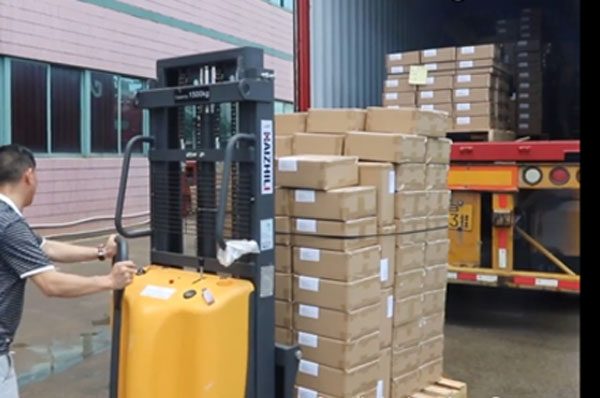
Performance fabric selection on wholesale activewear programmes: nylon/spandex, recycled polyester and blends
The fabric decision is a set of trade-offs rather than a single answer. Nylon with spandex gives strength, stretch and recovery in a light fabric, which suits fitted garments. Polyester blends offer durability, colour retention and moisture movement for looser training wear. Recycled polyester and recycled nylon occupy the same performance envelope, with the difference being documentation rather than behaviour.
Two properties decide the returns profile. Recovery, which is whether the garment returns to its original dimension after being stretched, and opacity under tension, because a fabric can be opaque flat and become translucent when stretched over a body. Both should be tested on the finished garment in the intended fit. Where a recycled claim is made, the documentation framework is covered by Textile Exchange, and harmful-substance testing references include OEKO-TEX Standard 100.
Flatlock versus overlock seams on wholesale activewear programmes: what holds under repeated stretch
Seam choice is often inherited from a previous style rather than decided, and on a wholesale performance range that is a costly habit. An overlock seam is efficient and suits looser garments and non-contact areas. A flatlock seam lies flat against the skin and stretches with the fabric, which is why it is standard where the garment is worn tight. Bonding removes the seam in some applications at the cost of a process that is frequently subcontracted.
| Seam type | Where it fits | What to verify |
|---|---|---|
| Overlock | Looser garments and non-contact areas | Stitch density and whether it rubs in wear |
| Flatlock | Fitted and high-stretch garments | Stretches with the fabric without puckering |
| Bonded | Smooth, seam-free panels | Process location and durability under extension |
| Cover stitch | Hems and elastic attachment | Recovery at the hem after repeated stretching |
The seam should be chosen with the fabric and the fit rather than after them. Where a specialised process is used, its setup and minimum belong in the quotation, because discovering them during production moves the schedule rather than the price alone.
MOQ structure for wholesale activewear: how minimums work per style, colour and size
Minimums are shaped by the fabric. Performance knits with a spandex content are stocked in fewer weights and colours than basic jersey, so a colour outside the available range may require a produced lot with its own minimum. Size spread adds a second effect, and on a fitted garment the grade matters more because the garment is worn under tension.
Buyers should ask the minimum per colour, the minimum per size, and whether the fabric is stocked or produced against the order. Where a specialised seam process is used, its minimum should be asked at the same time, since it can become the binding threshold. The garment-side mechanics are explained in this guide to clothing factory MOQ for wholesale buyers.
How the minimum changes when a new colour or fabric enters a wholesale activewear programme
A new colour is a dye lot with its own minimum and lead time, and performance fabrics are less widely stocked than basic knits, so the threshold is often higher than a distributor expects. The lab dip should be assessed on the actual fabric, because colour reads differently on a smooth performance knit than on a matte casual one.
A new fabric changes the fit, the seams and the ratio. A heavier or less elastic knit alters how the garment behaves at the armhole and the waistband, the seam type may need to change with it, and a change in recovery changes how the size ratio should be weighted because the garment sits differently. That makes a fabric change a commercial decision as well as a technical one.
Sampling sequence for wholesale activewear: what the fit sample and the PP sample each lock
The fit sample locks the block and the tension: measurements at the base size and the extremes, armhole and waistband behaviour, and how the garment sits in motion. The pre-production sample locks the fabric, the seams, the trims, the decoration, the labels and, in a wholesale programme, the packed unit.
Both approvals should be documented against references and retained, with the fabric recorded by composition and weight and the seam type recorded at each join. Where the programme carries a recycled or preferred fibre claim, the supporting documentation should be requested at this stage. The documentation practice is described in this sample approval protocol for wholesale orders.
Decoration and branding on wholesale activewear: print, embroidery, labels, hangtags and packaging
Decoration has to survive being stretched, so the method should be tested on the production fabric under extension rather than approved from a flat sample. Placement should be measured with the garment relaxed, because a position specified under tension sits differently in wear and changes across the size range.
Wholesale branding is dominated by components: the neck label, the care label, the hangtag and the packaging, each with its own minimum and lead time. The care text depends on the knit being locked, and the packaging print depends on the pack specification, so both should follow the fabric and pack decisions rather than precede them. Physical test references include the ASTM standards programme for textiles, and where a facility audit is required, amfori administers the BSCI framework.
QC checkpoints that decide whether a wholesale activewear bulk order ships clean
Inspection covers the garment, the decoration and the pack. On the garment: recovery after repeated stretching, opacity under tension, seam integrity under load, measurements at the base size and the extremes, and colour consistency. On the pack: piece counts, size composition against the ratio, fold standard and carton count against the plan.
The seam and recovery checks carry the most risk, because both are functional properties that fail in use rather than in the warehouse. Both should be applied to the seam and fabric actually used, at the point in production where correction is still possible. Testing houses publish the scope they apply, as Intertek’s textiles and apparel testing range illustrates.
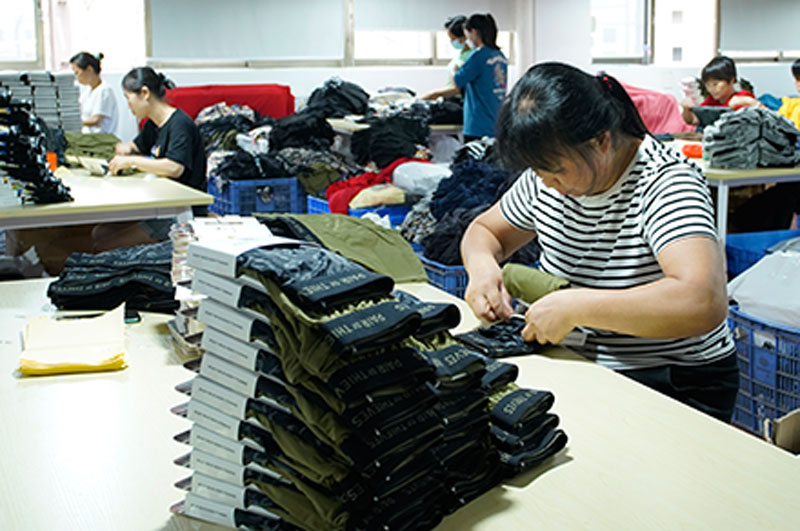
Where can I bulk buy gym clothing?
From a manufacturer, once the specification is fixed.
Marketplaces and wholesalers suit an immediate need from existing stock, while a manufacturer suits a programme where the fabric, fit and ratio must repeat between orders.
The distinction matters more in this category than in casualwear because performance garments are specified by properties that are not visible. A garment bought from stock may be described as stretchy without stating its recovery, and recovery is what decides whether the range still sells in month six. A manufacturer can commit to a specification and test against it.
Buyers should ask three things: what is held as finished stock, how the fabric properties are verified, and whether the pack specification can be changed without a new component minimum. Knitwear Base’s sportswear programme covers the category alongside its compression and activewear ranges, and the recycled fabric route is covered in this piece on eco activewear at wholesale scale.
Where can I buy bulk clothing to resell?
Where the ratio and the specification can be held.
Reselling depends on repeatability, so the supplier has to be able to hold one fabric, one fit and one pack across orders rather than offering whatever is in stock.
Resale economics depend on the ratio clearing and on the next order matching the last. A supplier that holds stock can fill an immediate gap but cannot guarantee that the next delivery matches in shade, weight or fit, which is what causes a reseller to discount the remainder of a run. A manufacturer can hold a specification across runs and provide the references that make the comparison possible.
The practical questions are the same as for any programme: what is held as stock, how shade and weight are controlled between lots, and whether the pack can be repeated without a new component order. Buyers who ask those three before the first order avoid the situation where the second delivery does not match the first and the range has to be discounted to clear.
Conclusion
Wholesale activewear is sold on fit and repeatability, and both are decided before the first order. The size ratio has to be weighted against the intended fit, the fabric has to recover rather than merely stretch, and the seams have to be chosen with the garment rather than inherited from a previous style. Because performance fabrics are stocked in fewer weights and colours, a colour addition moves the minimum more sharply here than in a casual programme. Buyers who fix the ratio against the fit, verify recovery and seam behaviour on the production fabric, and hold one specification across orders get a range that clears rather than one that ends in markdown.
FAQ
How should the size ratio differ from a casualwear line?
It should be weighted towards the middle sizes more heavily, because a fitted garment concentrates demand there. A ratio copied from a looser category over-supplies the extremes and leaves the core sizes short, which is where a range loses its full-price sell-through.
What should we ask a supplier to prove about a performance fabric?
Recovery after repeated stretching, rather than a single stretch figure. A fabric can extend well and still grow permanently, and it is recovery that decides whether the garment still fits after a season of washing.
Does the seam type affect the price?
It can. Flatlock takes longer than overlock, and bonding is a separate process that may be subcontracted and carry its own setup and minimum. The seam should therefore be chosen with the garment and priced explicitly rather than assumed.
How early should a performance reorder be placed?
Against the fabric lead time rather than against sell-through alone. Performance knits are stocked in fewer weights and colours, and a colour that was dyed to order cannot be replaced quickly enough to cover a selling period.
Next step. If you are planning a wholesale activewear range, send the channel, the intended fit and the pack you have in mind. The team can confirm what the ratio and carton plan would produce in freight terms, how the fabric properties would be verified, and where the minimums sit.
