
A low minimum on performance garments is harder to achieve than on basic ones, and the reason is the fabric. A casual T-shirt programme can draw on a wide range of stocked knits; a performance programme depends on a knit with a specific stretch and recovery, and those are stocked in fewer weights and colours. That single constraint shapes what a small order can contain, what it will cost, and which construction options are available at all.
Low MOQ Activewear Manufacturer: what to confirm before you send a tech pack
The brief still has to be complete, but its contents adapt to the volume. At a low minimum the fabric is usually chosen from what exists rather than specified from scratch, so the brief should state the performance envelope the brand can accept rather than the exact knit it would prefer. The construction can remain specific, because the pattern work is what the small order is paying for and it carries forward to every later order.
Two items deserve early attention. The colourways, because each colour on a performance fabric is a dye lot and the count multiplies the commitment. And the activity, because it determines the performance envelope and therefore how much latitude the fabric decision has. A programme that can accept a mid-weight four-way stretch will find more stocked options than one that requires a specific compression level.
What a genuinely low minimum costs on activewear: surcharges, stock-fabric limits and sampling
There are four ways a low minimum on performance wear is made economically possible, and each has a visible consequence in the quotation. The fabric may be restricted to stocked performance knits. A small-order element may be added to the unit price. The construction may be limited to seams that need no specialised setup. Or the sampling may be charged separately rather than credited against the order.
| Mechanism | What it looks like in practice | What the buyer gives up |
|---|---|---|
| Stock performance knit | Chosen from existing weights and colours | Exact colour matching and sometimes the optimal recovery |
| Small-order element | A separate line in the quotation | A proportion of the volume pricing |
| Seam constraint | Overlock rather than flatlock or bonding | Comfort on a fitted garment, or a seam-free finish |
| Separate sampling | Pattern and sample billed independently | The assumption that sampling is absorbed |
The seam constraint is the one specific to this category. Bonding carries tooling and a minimum of its own, and flatlock takes longer to run than overlock, so a low-volume programme often starts on an overlock construction and moves to a flatlock or bonded finish once the style has proved itself. That is a legitimate sequencing decision rather than a compromise, provided the brand knows it is making it.
Performance fabric selection on low moq activewear programmes: nylon/spandex, recycled polyester and blends
At a low volume the fabric decision is largely a question of what is available rather than what is optimal. Nylon with spandex gives strength, stretch and recovery in a light fabric and suits fitted garments; polyester blends offer durability and colour retention for looser training wear. The stocked range is usually wider in mid-weight four-way stretch than in high-compression constructions, which is why a small first order tends to start in the middle of the performance envelope.
Two properties should still be tested regardless of volume. Recovery, which is whether the fabric returns to its original dimension after stretching, and opacity under tension, because a fabric can be opaque flat and become translucent when stretched. Both should be confirmed on the production fabric, since a stocked knit that is available quickly is not useful if it fails either test.
Where a recycled or certified fibre is involved, the documentation route sits alongside those tests rather than replacing them. The framework most used for recycled and preferred fibres is administered by Textile Exchange, and material safety testing references include OEKO-TEX Standard 100. A claim of that kind also constrains the fabric choice further, because the certified option has to exist in the stocked range before it can be specified at low volume.
Flatlock versus overlock seams on low moq activewear programmes: what holds under repeated stretch
The seam choice interacts with volume more than any other specification in this category. An overlock seam joins and finishes in one operation, needs no specialised setup and suits a first small order. A flatlock seam lies flat against the skin and stretches with the fabric, which is what a fitted garment needs, but it takes longer to run. Bonding removes the seam entirely and carries tooling, which usually rules it out below a substantial quantity.
| Seam type | Availability at low volume | What it means for the garment |
|---|---|---|
| Overlock | Generally available; no specialised setup | Suits looser garments; can rub on a fitted one |
| Flatlock | Available; longer run time per garment | Comfortable on fitted garments; stretches with the fabric |
| Bonded | Tooling and minimum usually rule it out | Seam-free finish; best reserved for a later order |
| Cover stitch | Generally available | Used for hems and elastic attachment |
The practical sequence for a small first programme is to start on a seam that works with the fit and the fabric without tooling, validate the style, and move to a more specialised finish on the reorder. Where the fit is compressive from the outset, flatlock is usually the minimum acceptable choice even at low volume.
Two checks tell a buyer whether the seam specification is being met, and both are cheap to apply at any volume. The seam should stretch with the fabric without puckering, which is tested by extending the garment rather than inspecting it flat. And it should not rub at the points where the garment is worn tightest, which is a wear observation rather than a measurement. On a small order these two checks are the difference between validating a style and validating it twice.
MOQ structure for low moq activewear: how minimums work per style, colour and size
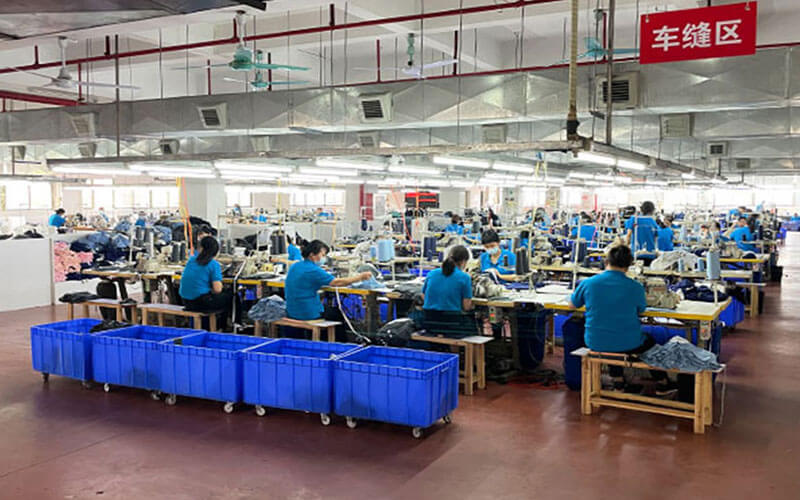
Even where a low minimum is available, it is expressed per style and per colour, and the size spread still matters. A small total quantity spread across a wide grade produces very small quantities per size, which is harder to validate on a fitted garment because the fit has to hold at the extremes. Narrowing the size range is often the cheapest way to make a small performance order viable.
Buyers should ask the minimum per colour, the minimum per size, and whether mixed sizes count towards a single threshold. Where the answer is that mixed sizes count together, a narrow first range in one colour is usually the most economical way to validate a style. The mechanics behind the thresholds are explained in this guide to clothing factory MOQ for wholesale buyers.
How the minimum changes when a new colour or fabric enters a low moq activewear programme
A new colour is the point at which a low minimum usually stops being low, because performance fabrics are less widely stocked and a colour outside the range requires a produced lot. On a fitted garment the minimum can be higher still, because very small quantities per size make the fit harder to validate across the range.
A new fabric is a heavier change than in most categories. Recovery depends on the knit, so a substitution after the fit approval is a new fit evaluation rather than a variation, and the seam type may need to change with it. Where the recycled content or the blend changes, the care instruction and any claim wording change as well, so composition should be locked before the component orders.
Sampling sequence for low moq activewear: what the fit sample and the PP sample each lock
The fit sample matters more on a small programme rather than less, because the pattern, the grade and the fabric reference are the assets that carry forward to the reorder. It locks the measurements at the base size and the extremes, the armhole and waistband behaviour, and how the garment sits in motion. The pre-production sample then locks the fabric, the seams, the decoration and the labels that bulk will use.
Both approvals should be documented against references and retained, with the fabric recorded by composition and weight so the recovery behaviour can be reproduced on the next order. Where the sample cost is billed separately, it is worth establishing in writing what the brand receives for it. The documentation practice is described in this sample approval protocol for wholesale orders.
Decoration and branding on low moq activewear: print, embroidery, labels, hangtags and packaging
Decoration is where a low minimum most often meets a wall, because each position and colour carries a fixed setup that a small run spreads across very few units. The choices that reduce the burden without reducing quality are a single-position mark, a garment colour that does not require an underbase, and a method with low setup such as direct-to-garment or heat transfer where the design allows it.
All decoration on a performance garment should be tested on the production fabric under extension, because a print that cannot stretch with the knit will crack. Where embroidery is used, the digitised file should belong to the brand, since it is the one decoration asset that carries forward to every later order. Material references worth naming include OEKO-TEX Standard 100 for harmful-substance testing and the ASTM standards programme for textiles for the physical tests.
QC checkpoints that decide whether a low moq activewear bulk order ships clean
The checks do not change with volume, but their cost per unit does. The ones worth insisting on regardless of quantity are the ones that predict returns: recovery after repeated stretching, opacity under tension, seam integrity under load, and measurements at the base size and the extremes. Each should carry a tolerance so the check is a comparison rather than an opinion.
Two additions are worth their cost even on a small run: a first-off check before the run continues, because a pattern or seam error repeats on every piece, and a wash and extension test on the pre-production sample, because both failure modes appear after the garment has been worn. Testing houses publish the scope they apply, as Intertek’s textiles and apparel testing range illustrates, and the ICC Incoterms rules settle where cost and risk transfer on delivery.
Where can I wholesale unbranded gym clothing?
Where a stocked knit and a repeatable specification meet.
Unbranded gym clothing suits a programme that can work from stocked performance knits, and it is cheapest when the specification is fixed so the same garment can be reordered identically.
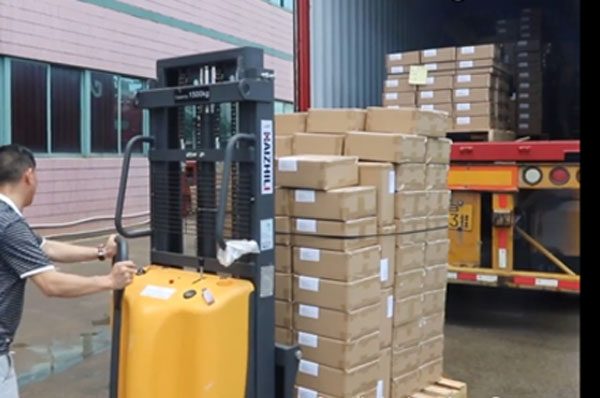
Buying unbranded is a way to test a fit and a fabric without committing to a full development cycle, but it only works when the supplier can hold the specification. A garment bought from stock is convenient once; a reseller or a brand that reorders needs the same weight, recovery and measurements next time, which is a manufacturing commitment rather than a stock purchase.
The practical questions are the same as for any small programme: what is held as finished stock, whether the performance properties are verified, and whether the specification can be repeated without a new component minimum. Knitwear Base’s sportswear programme covers the category alongside its compression and yoga ranges, and buyers should apply the same questions to any supplier being compared.
Conclusion
A low minimum on activewear is a cost structure that adapts to volume, and the fabric is what it adapts around. Performance knits are stocked in fewer weights and colours, so a small first order tends to sit in the middle of the performance envelope and in a narrow palette, and specialised seam processes such as bonding usually wait for a later order. The pattern, the grade and the fabric reference are what make the reorder cheaper than the first run, so they are the assets worth protecting. Buyers who understand which constraint is being applied get a small order that behaves predictably rather than one that looks cheaper and delivers less.
FAQ
Why is a low minimum harder on activewear than on casualwear?
Because a performance programme depends on a knit with a specific stretch and recovery, and those are stocked in fewer weights and colours than basic jersey. The available range sets what a small order can contain, whereas a casual programme can draw on a much wider stock range.
Can bonding be used on a small first order?
Usually not, because it carries tooling and a minimum of its own. The practical sequence is to start on a seam that needs no specialised setup, validate the style, and move to a bonded or flatlock finish on the reorder once the quantity justifies it.
What should not be reduced on a small order?
The specification work. The pattern, the grade and the fabric reference are what every later order depends on, and they are the reason a reorder is cheaper per unit than the first run. Reducing the sample rounds rather than the specification is the safer economy.
How can we test a performance style with the smallest commitment?
Use a stocked performance knit in one colour, a narrow size range, and a single-position decoration with low setup. That avoids the three costs that scale badly at low volume while still producing a pattern and specification you can reuse.
Next step. If you are planning a small first activewear order, send the performance level you need and the decoration you want. The team can confirm which knits are available at that quantity, which seam construction suits the garment, and what a second colour would change.
