
A private label launch is usually described as a sourcing problem, and it is more accurately an asset problem. Before a factory can quote, the brand needs a specification, a size chart, a label set and a target price. Those four assets are what the first order pays for, and they are what make the second order cheaper. Brands that approach the launch as a purchase rather than as the creation of assets usually pay for the same decisions twice.
How to Start a Private Label Clothing Brand: what a buyer has to settle first
Four decisions come before any supplier conversation. The category and the target price, because together they determine what materials and constructions are feasible. The size range, because it determines the pattern work and the ratio. The branding assets, including the label and packaging that carry the identity. And the channel, because a marketplace listing, a wholesale account and a direct-to-consumer store each require different packaging, barcodes and pack formats.
Two of those are the ones brands skip. The target price has to be settled before the specification, because a specification written without a price constraint usually has to be rewritten at the sample stage. And the channel determines the compliance text and the packaging, so deciding it late means reprinting components that were made to order.
It is also worth naming the destination market at this stage. Fibre naming, care text and origin marking are market-specific, and the obligation sits with the seller of the finished goods rather than with the factory. The European Commission’s textiles and clothing framework sets out the EU position on fibre names and labelling, and the US Federal Trade Commission’s business guidance covers the United States. Deciding that before the label artwork is approved is cheaper than correcting it afterwards.
The sourcing sequence for a private label launch: brief, shortlist, sample, approve, bulk, ship
The sequence exists because each stage produces the input the next one needs. The brief produces something a factory can quote against. The shortlist produces two or three candidates worth sampling with. The sample produces a physical standard, and the approval converts that sample into a written specification. Bulk then runs against the specification rather than an interpretation, and shipment follows the delivery term that was named at quotation.
The stages buyers most often compress are sampling and approval, and both compressions are expensive. Running one sample round and treating it as both a construction check and a fit approval means a later change invalidates an earlier decision. Approving a sample without recording the measurements means the standard exists only as a garment, and a garment cannot be compared with a reorder.
A second point about the sequence is that the material decision sits inside it rather than beside it. Fabric booking is the longest external dependency in most programmes, and it can start once the specification is fixed rather than after the pre-production sample is approved. Programmes that treat the fabric as a later decision put their longest lead time onto the critical path and then compress the stages that should not be compressed.
How to shortlist candidates when you are sourcing a private label launch
For a first launch, the useful filter is not size but relevance. A factory that runs the category routinely will have the machinery, the material relationships and the finishing routines already in place, and it will have a size chart for a comparable garment. That last point matters more than it appears: a supplier with an existing comparable specification can show the brand what a working size chart looks like.
Three questions do most of the filtering, and all three are free to ask. Which category does the factory run routinely? Which processes are on site? And what is the minimum per colour? A supplier that cannot answer the first two clearly is not a candidate for a sample order, and one whose minimum is incompatible with the planned launch quantity is a conversation for a second phase rather than for the first.
Questions to ask before you share designs or tech packs for a start private label brand
Sharing a design transfers information, and the questions worth asking first are about how it will be handled. Who inside the factory will see it? Is it stored with the brand name attached? What happens to the pattern and the artwork files at the end of the relationship? Those questions are easier to ask before the files are sent than after.
Three practical arrangements reduce the risk. Send a specification rather than a finished garment where possible, because a specification describes what is needed while a garment reveals the whole design. Ask for the pattern and artwork ownership position in writing before the first sample. And keep a record of what was sent and when, since a later dispute about originality is settled by evidence rather than recollection.
What a small first order for a start private label brand really costs, and how to plan it
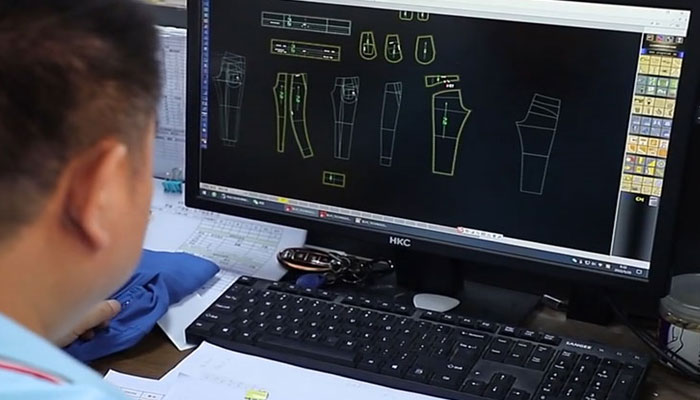
The cost has four elements, and they behave differently. Development covers the pattern, the grade and the sample rounds, and it is incurred once. The fabric scales with the weight and the fibre, and it may carry a dye lot minimum. The make scales with quantity and complexity. And the components — labels, hangtags and packaging — are made to order in minimum quantities that can exceed the garment minimum.
The planning consequence is that the first order is usually more expensive per unit than the second, and not because the factory is overcharging. The fixed elements are spread across fewer units. That makes two structural choices worth considering: launching on a stocked fabric in a narrow palette, which avoids a dye lot minimum, and using one label specification across the range so a single component order covers several styles.
Normalising quotations so two suppliers for start private label brand can be compared fairly
Two quotations for the same garment differ for a small number of reasons, and almost none of them is labour rate. The differences cluster around what is included: whether pattern and grading are part of the price, whether the fabric minimum is carried by the buyer, whether decoration setup is charged once or per run, and whether packing follows a standard or a specification.
The comparison should therefore be made on two documents rather than one. Freeze the specification, including the fabric weight and composition and the construction details, and freeze the delivery term, because the ICC Incoterms rules define where cost and risk transfer and a price without a term cannot be compared. Then mark every scope item as included, excluded or separately priced. What remains after those two steps is the genuine price difference.
QC and inspection arrangements for a first start private label brand order
A first order should carry three checks rather than one. An approved pre-production sample retained by both parties, which is the standard the delivered goods are measured against. A first-off check before the run continues, because a pattern or placement error repeats across the order. And a final inspection against the specification, with the measurements and the tolerances recorded rather than judged.
Two references make the checks enforceable. The measurement specification should state a tolerance for each critical dimension, so inspection is a comparison rather than an opinion. And where material testing or an audit record is required, the standard should be named; testing houses publish the scope they apply to garments, as Intertek’s textiles and apparel testing range illustrates, and the ASTM standards programme for textiles provides the vocabulary for the physical checks. Where a social audit applies, amfori administers the BSCI framework many European buyers reference.
A third arrangement is worth writing into the order: who acts when a check fails. A first-off error should have an owner and a remedy before the run continues, and a final inspection finding should have a stated consequence rather than being resolved commercially at the point where the buyer has the least leverage. Writing that into the purchase order is what turns the checks into controls.
How much does it cost to start a clothing label?
Development, first order, and the components between them.
A label launch costs the development work, a first production run and the component minimums, and the fixed elements are what make the first run more expensive per unit than later ones.
The development element covers the pattern, the grade and the sample rounds. The production element covers fabric, make and decoration, and it scales with quantity. The component element covers labels, hangtags and packaging, which are made to order and can carry minimums larger than the garment order. The fourth element is the cost that buyers forget: the inventory itself, since a launch that sells slowly ties up cash that a smaller first order would have preserved.
Two levers reduce the entry cost without reducing quality. Launching on a stocked fabric in a narrow palette avoids a dye lot minimum, and using one label and packaging specification across the range lets a single component order cover several styles. What should not be reduced is the specification work, because the pattern, the grade and the material reference are the assets that make the second order cheaper. Development scope across those stages is described in this overview of apparel design and development.
Conclusion
Starting a private label brand is the process of creating four assets: a specification, a size chart, a label set and a target price. The sourcing sequence produces them in order, and the first order pays for them, which is why a launch that treats the first order as a purchase rather than as development tends to repeat the same work. Buyers who settle the target price and the channel first, freeze the specification and the delivery term before comparing quotations, and plan the first order around the fixed costs get a launch that funds its own second season.
FAQ
How much inventory should a first private label order include?
Enough to test the fit and the market, not enough to tie up cash for a season. A narrow launch on a stocked fabric in one or two colourways is usually the most informative, and the reorder is where the volume economics arrive.
Do we need our own pattern to start a private label brand?
Not necessarily. A stock or lightly modified body with your own labels, packaging and decoration is a legitimate first range, and it avoids the pattern cost and the extra sample rounds a new fit requires. The development can follow once the style has proved itself.
When should the target price be decided?
Before the specification, because a specification written without a price constraint usually has to be rewritten once the quote arrives. The channel and the price point together determine which fabric weight and construction are feasible.
What should we ask for before paying a deposit?
An itemised quotation against a frozen specification, a named delivery term, a production timeline with the approval dates the brand owes, and the terms covering pattern ownership, sample-fee credit and component minimums.
Next step. If you are preparing a first private label order, send the category, the target price and the channel you are selling into. The team can confirm which materials and constructions fit that price point, what the component minimums are, and how the first order would be structured.
