
Sampling is described as a way to check the garment, and it is more accurately a way to fix decisions. Each round resolves one question, and collapsing two rounds into one means a later change invalidates an earlier approval. The cost of a sample round is small compared with the cost of discovering, during production, that the fabric was never approved or that the measurements were never confirmed.
Apparel Sampling Process Explained: what each round is for
A development programme usually runs through three rounds and each answers a different question. The proto asks whether the construction works. The fit sample asks whether the measurements and the block match the intended body and market. The pre-production sample asks whether the materials, trims and finish that bulk will use are the ones that were approved. A programme that treats one round as covering all three will discover the gaps in production.
The rounds are cumulative rather than independent: a change at one stage invalidates the work of the previous one. A construction change after the fit approval means the measurements were taken on a garment that will not be produced. A fabric substitution after the pre-production approval means the material going into bulk has never been presented for approval in that combination.
Two further items belong before the first round. The destination market, because fibre naming and care text are set by where the garment is sold and the label should not have to be reprinted; the European Commission’s textiles and clothing framework and the US Federal Trade Commission’s business guidance cover the two largest positions. And the intended quantity with its colour count, because a colour that requires a dye lot changes the material booking and therefore the sampling sequence.
The proto: proving the construction works
The proto is a construction test, not a fit approval, and treating it as both is the most common way programmes lose a round. Its purpose is to establish that the garment can be assembled as drawn: that the seams hold the intended shape, that the components sit where the drawing places them, and that the proportions read as intended on a body rather than on a table.
It is also the cheapest round at which to discover that the specification is internally inconsistent, because nothing has been ordered in bulk and the pattern is still open. A proto that arrives with a construction that had to be changed in the making is a useful result rather than a failure, provided the change is recorded and carried into the specification.
Three points belong on the review sheet. Whether the construction can actually be executed at the specified weight, because a method that works in a light knit may distort a heavy one. Whether the component placement matches the drawing, measured rather than judged. And whether the proto reveals anything the specification left open, which is the most valuable output of the round because it converts an assumption into a decision.
The fit sample: settling measurements and the block
The fit sample establishes the measurement set and the block, and it is the round in which comments produce the most value. Comments work when they are specific and referenced: this measurement at this size should move by this amount, judged on this body. Comments that describe a preference without a measurement are interpreted, and the interpretation may not match the intention.
Two practices make the round productive. Measure the base size and the extremes rather than only the centre, because a grade that works at the middle often fails at the ends. And issue the comments as a single consolidated set rather than in a stream, because a supplier that receives three messages over four days may act on the first and the last and miss the middle. The round closes when the corrections are recorded and the revised measurement specification is issued, which is the document the bulk will be checked against.
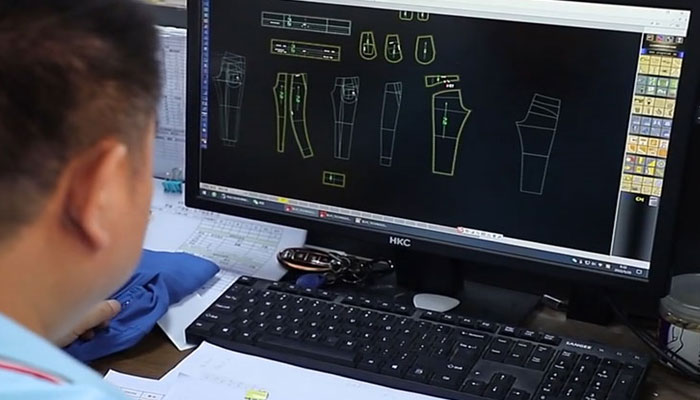
The pre-production sample: confirming what bulk will use
The pre-production sample is the most consequential approval in the sequence, because it is the last point at which the programme can change direction cheaply. It confirms the materials that will actually be used, the colour against the approved standard, the trims and labels, the decoration placement, and the finish. Where the fit sample settled measurements, this round settles everything else.
It should be produced in the production fabric and carry the real decoration rather than a stand-in, because a print or embroidery changes how the fabric behaves at the placement point. Two conditions should be true before bulk starts: the sample should be approved in writing against a reference, and a copy should be retained by both parties as the standard the delivered goods are compared with. An approval without a retained sample cannot be enforced.
What each approval should lock, and what it should not
| Round | What it locks | What it should not lock |
|---|---|---|
| Proto | Construction method and component placement | Measurements or material choices |
| Fit sample | Measurements, block and grade direction | Materials, colour or decoration |
| Pre-production | Materials, colour, trims, labels, finish and packing | Fit, unless a change has been agreed and re-approved |
The value of the table is that it defines what a later change invalidates. A measurement change after the pre-production approval is not a small adjustment; it reopens the fit round. A material change after the same approval reopens the material decision and, if the composition changes, the label text as well. Knowing which round a change reopens is what allows the buyer to judge whether it is worth making.
Writing comments so the next round lands closer
A comment should state the observation, the measurement implication and the intended direction. “Chest is tight” is an observation without a decision. “Chest at size M should increase by this amount, and the grade should carry half of that increase to size L” is a decision the pattern room can execute. The difference between the two is the difference between one round and two.
Two supporting practices reduce the ambiguity further. Reference each comment to a photograph with the measurement marked on it, because a shared visual removes disagreement about which dimension is meant. And record the agreed change in the measurement specification rather than only in the comment thread, so the specification the factory works from is the current one rather than the original.
Recording a sample for approval when you cannot attend
Remote approval is normal, and it depends on the sample being recorded rather than merely photographed. The useful record includes a flat photograph with a scale, a photograph on a body or form, the measured values against the specification at the base size and the extremes, and a note of the materials and trims used. Without the measurements, the photographs show what the garment looks like rather than whether it matches the brief.
The record should be versioned, because a programme can generate several sample rounds and the approval applies to one of them. Naming the round, dating it and attaching the measurements turns a set of images into an approval. The practice behind that is described in this sample approval protocol for wholesale orders.
One further reference is worth agreeing before the sample ships, and it is the one that decides who pays for what: the delivery term. The ICC Incoterms rules define where cost and risk transfer between seller and buyer, and they apply to sample shipments as well as to bulk, which matters when a sample has to arrive inside a fixed window.
Wash and wear testing before the bulk release
Wash and wear testing answers questions that a measurement check cannot, and it produces useful evidence only if it is structured. The garment should be worn and washed at the intended conditions for a defined number of cycles, and the observations recorded against a short list: dimensional change, colour retention, surface change such as pilling, seam behaviour under stretch, and the performance of elastic-bearing components.
Two rules keep the test informative. Record the wash conditions rather than describing them as normal, because care behaviour depends on temperature and cycle. And note how the finished garment compares with the specification after washing, since a garment that measures correctly and grows in the first wash is a returns risk rather than a tolerance question. The physical test vocabulary is provided by the ASTM standards programme for textiles, and material safety references include OEKO-TEX Standard 100 where testing is required.
A third rule concerns who does the wearing. Where the range covers a wide size span, the sample should be worn by somebody inside the intended size rather than by whoever is available, because a fit observation from outside the range is information about the range rather than about the garment. Where a decoration is applied, the test should also confirm that the print or embroidery survives the same care cycle.
Common causes of a repeated sample round
Repeated rounds are usually caused by an input rather than by the sample itself. The five that account for most of them are an incomplete brief, so the sample answers a question that was never asked; a measurement set without tolerances, so the fit is debated rather than checked; a material substitution, which changes how the garment behaves; comments issued in a stream rather than as one set; and a change of decision between rounds, which restarts a stage that had already closed.
The pattern is consistent enough to be planned for, because every one of those causes is a decision that could have been scheduled earlier. A programme that fixes the measurement table, approves the material before the fit round and issues comments as a single set typically runs fewer rounds than one that treats sampling as an iterative conversation. Development scope and the design decisions that precede sampling are described in this overview of apparel design and development.
Conclusion
Sampling is a sequence of decisions rather than a sequence of garments, and each round exists to close one of them. The proto proves the construction, the fit round settles the measurements, and the pre-production round confirms what bulk will use. The approvals matter because they define what a later change would reopen, and the record matters because a garment alone cannot be compared with a reorder. Buyers who fix the measurement table, approve the material before the fit round and issue comments as a single referenced set run fewer rounds and reach bulk with a specification rather than a set of samples.
FAQ
How many sample rounds should a programme expect?
Three stages are typical: a proto for construction, a fit sample for measurements, and a pre-production sample for materials and finish. Further rounds are reasonable when a recorded comment drives them; rounds that repeat because the brief was incomplete add cost without adding certainty.
Can the proto and the fit sample be combined?
It can be attempted, but the two questions then become entangled: a construction change after approval leaves the measurements in doubt, and a fit change leaves the construction unverified. Keeping them separate costs one round and removes the ambiguity.
What should be recorded for a remote approval?
A flat photograph with a scale, a photograph on a body or form, the measured values against the specification at the base size and the extremes, and a note of the materials and trims used — all attached to a named and dated round.
Why does a sample round get repeated?
Usually because of an input: an incomplete brief, a measurement set without tolerances, a material substitution, comments issued in a stream rather than as one set, or a decision changed between rounds. Each of those is a decision that could have been scheduled earlier.
Next step. If you are about to commission a sample, send the pack you have, even if it is incomplete. The team can confirm which elements are already defined, what has to be decided before the sample is cut, and what will be issued with each round.
