
Most buyers treat MOQ as a number a supplier chooses. It is usually a consequence: of the smallest dye lot the mill will run, of the smallest lay that can be cut economically, or of the smallest quantity in which a label or a box can be produced. Understanding which constraint is binding on your order is what makes the minimum negotiable rather than arbitrary, and it is what tells you which decision to change if the number does not fit.
Clothing Manufacturing MOQ Explained: what actually sets the minimum
A minimum is set by whichever step in the chain cannot be run economically below a threshold. Fabric dyeing has a minimum batch. Cutting has a minimum lay. Printing has a setup that only makes sense above a certain quantity. Labels, hangtags and boxes are made to order in minimum runs. The programme minimum is the largest of those thresholds, not the garment quantity.
That is why the same style quoted by two suppliers can carry very different minimums without either being unreasonable. One may be constrained by a fabric it does not stock, the other by a component it buys in. The useful question is therefore not what the minimum is but what it is set by, because the answer identifies the one decision that would move it.
Per style, per colour or per size: how a factory expresses a minimum
| Basis | What it means | What it drives |
|---|---|---|
| Per style | The garment quantity for one design | Pattern work and cutting efficiency |
| Per colour | The quantity for one colourway within a style | Dye lot minimum, the most common binding constraint |
| Per size | The quantity of each individual size | Cutting lay efficiency and packing |
| Per component | The run length for a label, tag or box | Printing or tooling minimums |
The distinction matters because the four bases multiply. A style offered in three colours across six sizes in a modest total quantity produces very small quantities per colour and per size, which is why buyers routinely find that the minimum they were quoted was per colour rather than for the order. Establishing the basis before discussing quantity prevents a long negotiation about the wrong number.
Why a new colour raises the minimum more than a new size does
A new size changes the cutting lay; a new colour changes the material booking. Adding a size to an existing colour spreads the same fabric across one more size, which affects efficiency but not the dye lot. Adding a colour outside the stocked range creates a separate dye lot with its own minimum, its own lead time and its own lab dip approval.
That is why colour decisions sit so early in a programme and why narrow launch palettes are so common in categories where the fabric is produced to order. A brand that expects to launch in five colourways is describing five material commitments rather than one, and the arithmetic should be done before the palette is confirmed rather than after the quotation arrives.
Two external references help when the material is the constraint. Textile Exchange covers chain of custody for recycled and preferred fibres, which affects which material options are available at a given minimum, and OEKO-TEX Standard 100 covers harmful-substance testing on the material where a buyer needs that confirmed.
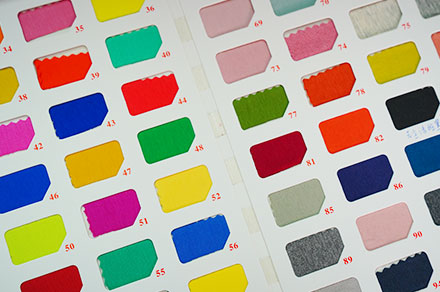
Fabric minimums, cutting minimums and component minimums
The three constraints behave differently and are worth separating in any conversation about quantity. The fabric minimum is a material commitment: it is set by what the mill or dyehouse will run, and it is the constraint most often outside the factory’s control. The cutting minimum is an efficiency threshold: below a certain quantity the lay cannot be cut economically, and it is the constraint that responds most directly to the size ratio. The component minimum is a tooling or print run: it applies to labels, hangtags, polybags and boxes, each of which is made to order.
The practical implication is that reducing the garment quantity does not reduce the component minimum, and reducing the colour count does not reduce the cutting minimum. Each constraint responds to a different decision, so a buyer trying to lower the entry quantity should first establish which one is binding and then change that decision rather than all of them.
What a low minimum costs you: surcharges, stock limits and sampling
A low minimum is a cost structure rather than a discount, and the cost appears in one of four places. The fabric may be restricted to stocked weights and colours. A small-order element may be added to the unit price. The construction may be limited to processes that need no specialised setup. Or the sampling may be charged separately rather than credited against the order.
| Mechanism | What it looks like | What the buyer gives up |
|---|---|---|
| Stock fabric restriction | Colour chosen from an existing range | Exact colour matching to a brand reference |
| Small-order element | A separate line in the quotation | A proportion of the volume pricing |
| Process constraint | Construction that needs no specialised setup | A technique, a finish or a component option |
| Separate sampling | Pattern and sample billed independently | The assumption that sampling is absorbed |
None of these is unreasonable; each reflects a real cost that a large order spreads and a small one cannot. The mistake is to accept a low minimum while specifying as though the order were large, because the result is a quotation that rises after sampling or a fabric that quietly changes.
A fifth mechanism appears on orders that carry a claim or a compliance requirement. Where a material has to be certified, or a component has to carry prescribed text, the documentation step can add its own minimum because the paperwork is issued against specific quantities. The frameworks behind those claims are administered by bodies such as GOTS for organic content and the amfori BSCI framework for social audit, and each is documented separately from the garment order.
How to plan a first order around the minimums you have
Planning starts from the binding constraint rather than from the target quantity. Ask which of the three — fabric, cutting or component — sets the number, then design the order around it. If the fabric is binding, the palette is the variable. If cutting is binding, the size ratio is. If a component is binding, the number of styles sharing one label specification is.
Two structural moves reduce the entry cost without reducing quality. Launching on a stocked fabric in a narrow palette avoids the dye lot minimum. And using one label and packaging specification across several styles lets a single component order cover the range, which lowers the effective minimum per style. Both preserve the development work, which is the part that carries forward to the reorder.
A third move is worth considering where the quantity is genuinely small: reduce the number of fabric qualities in the range rather than the number of styles. Styles on one knit combine towards a single material commitment, while styles spread across three knits each carry their own. That keeps the range broad for the customer while keeping the material bookings few for the factory.
Combining styles and colours to reach a threshold
Where a minimum applies per colour rather than per style, styles on the same fabric in the same colour can often be combined towards one threshold. That single question changes the arithmetic more than any negotiation, because it converts several small orders into one material commitment. It is worth asking explicitly, because the answer is not uniform across suppliers.
Where the minimum applies per size, the equivalent move is to concentrate the launch on the sizes the channel actually sells and add the extremes on the reorder. A narrow size range raises the quantity per size, improves the cutting efficiency and produces a faster read on demand, which is usually more valuable on a first order than the wider coverage.
Where the minimum applies per component, the move is to standardise the component. One label specification used across several styles, one carton size and one polybag format let a single component order cover the range. That is often the cheapest structural change available, because it reduces the entry cost without touching the fabric or the design.
MOQ and EOQ: two different questions
MOQ is what you can order; EOQ is what you should.
A minimum order quantity is the smallest quantity a supplier will produce, while an economic order quantity is the size that minimises your own total cost of ordering and holding stock.
The two come from different sides of the transaction. MOQ is set by the supplier’s production and material constraints, and it is a floor. EOQ is a buying calculation that balances order frequency against inventory holding cost, and it is driven by the buyer’s own demand and cash position. A buyer can be at the minimum and still be ordering far too little or far too much.
The practical relationship is that the minimum gives the feasible range and the buyer’s own economics decide where inside it to sit. On a first order the constraint is usually the minimum rather than the volume calculation, because demand is not yet known; on a reorder, when the selling rate is visible, the ordering quantity becomes a genuine calculation. Reconciling the two is where the minimum stops being an obstacle and becomes a parameter.
There is also a practical difference in how the two are evidenced. A minimum is stated in a quotation and can be verified by asking which constraint produced it. An economic order quantity is calculated from the buyer’s own data — the selling rate, the cost of holding stock and the cost of placing an order — and it changes as those inputs change. Treating the second as a supplier term is a common source of confusion.
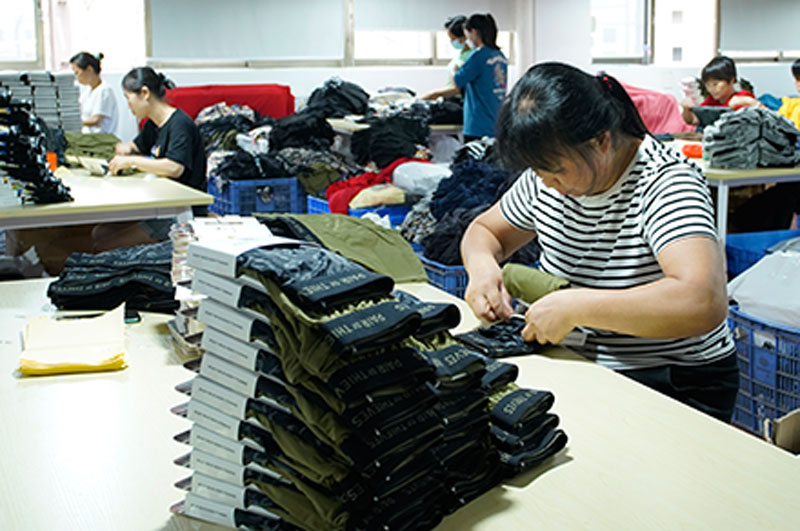
Where the minimum appears in a quotation, and how to compare it
A quotation that states a single minimum conceals which constraint produced it. The useful version states the minimum per style, per colour and per component, and whether styles on the same fabric can be combined. With those figures, two quotations can be compared on the basis that matters: whether the planned quantity is feasible at all, and what would have to change if it is not.
Delivery terms belong alongside, because a price quoted at a minimum quantity without a named term cannot be compared with another. The ICC Incoterms rules define where cost and risk transfer, and a minimum is only meaningful in the context of what is included at that quantity. The specification that the minimum applies to should also be frozen, since a minimum quoted against a lighter fabric or a simpler construction is not the same offer. Development scope, which is what carries forward beyond the first order, is described in this overview of apparel design and development.
Conclusion
A minimum order quantity is a consequence of whichever production step cannot run economically below a threshold, and identifying that step is what makes the number negotiable. Fabric, cutting and component minimums respond to different decisions, which is why colour reductions and quantity reductions have such different effects. Buyers who ask what the minimum is per style, per colour and per component, who find out whether styles can be combined, and who recognise the difference between a supplier’s floor and their own ordering calculation can plan a first order that fits rather than one that is negotiated downwards until it fails.
FAQ
What is MOQ in clothing manufacturing?
It is the smallest quantity a supplier will produce for a given style or colour, and it is set by whichever step cannot run economically below a threshold: a dye lot, a cutting lay, a print setup or a component run. The programme minimum is the largest of those.
Is the minimum usually per style or per colour?
Both exist, and sometimes both apply. It is worth asking explicitly, because a minimum quoted per colour is a much larger commitment than one quoted for the order, and the two are easy to confuse in a short conversation.
Can two styles share one minimum?
Often yes, provided they use the same fabric and the same colour, because the constraint is the material booking rather than the style. That question changes the arithmetic more than any negotiation, and the answer is not uniform across suppliers.
Why does adding a colour cost more than adding a size?
Because a colour outside the stocked range creates a separate dye lot with its own minimum, lead time and lab dip approval, while a size changes only the cutting lay. The material commitment rises with the colour, not with the size.
Next step. If the minimum is the constraint on your order, send the styles, the colourways and the planned quantity. The team can confirm what the minimum is per style, per colour and per component, whether styles can be combined, and what would change if the palette were narrower.
