
Sample rounds are where a programme spends its cheapest days and its most expensive mistakes. A fit comment approved without a reference measurement, a pre-production sample approved by email, or a sample that never becomes the standard for bulk — each of these costs nothing at the time and a season later. Sample development is not a creative stage that happens before production; it is the evidence trail production will be judged against.
Clothing Sample Development Services: what to confirm before you send a tech pack
A sample development service is only as useful as the brief it receives, so the first useful conversation is about what is not yet decided. Before a sample is commissioned, four things should be settled in writing: the construction and its component order, the fabric and trim references with their weights and compositions, the measurement set with tolerances, and the branding that the sample is expected to carry. Where any of these is open, the sample will resolve it by assumption rather than by decision.
The output that matters is not the garment but the documentation that accompanies it. A sample delivered with a measurement chart, a construction note and a fabric reference can be compared with the next round; a sample delivered alone can only be judged by eye. Buyers commissioning development should ask what will be issued with each round, because that determines whether the next round is an iteration or a repeat.
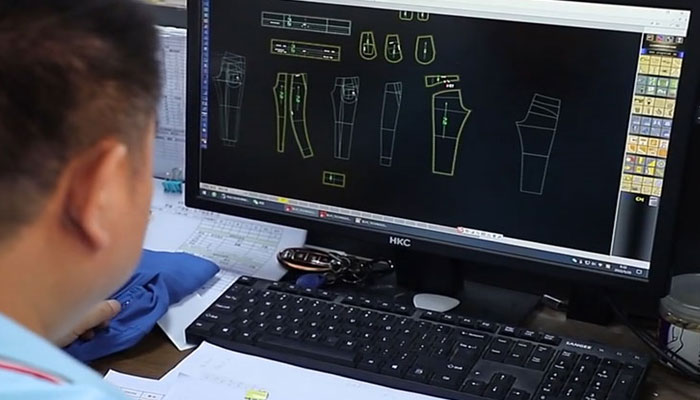
MOQ structure for knit apparel: how minimums work per style, colour and size
Sample development and minimum order quantity are more closely connected than they first appear, because the minimums determine how many samples are worth making. A minimum that applies per colour means a sample in a second colour has a cost consequence beyond the sample itself; a minimum that applies per size means the size set chosen for the sample previews the size set that must eventually be ordered.
Buyers should establish three things before sampling: whether the minimum applies per style, per colour or per fabric; whether mixed sizes count towards a single minimum or are treated separately; and whether a sample order counts towards the bulk minimum or sits outside it. Those three answers decide whether a sample programme is a low-cost experiment or the first instalment of a committed order. The mechanics of how factories set these thresholds are set out in this explanation of clothing factory MOQ for wholesale buyers.
How the minimum changes when a new colour or fabric enters a knit apparel programme
Adding a colour to a sample is not the same as adding a colour to an order. In sampling, a new colour is a lab dip and a small cut of material; in production, the same colour is a dye lot with its own minimum, and the fabric has to be booked before the cutting date. A programme that samples three colours and orders one has discovered the range cheaply; a programme that orders three colours in sample quantities has discovered the minimum only after committing.
Fabric changes behave similarly. Substituting a weight or a blend keeps the pattern but changes consumption, and consumption changes cost per unit and sometimes the grading. The practical discipline is to sample the fabric that will actually be used, and to treat any substitution after the fit approval as a new evaluation rather than a variation.
Sampling sequence for knit apparel: what the fit sample and the PP sample each lock
The sequence exists because each stage answers a different question, and collapsing the stages moves discovery into production. The proto establishes whether the construction works. The fit sample establishes whether the measurements and the block match the intended body and market. The pre-production sample establishes whether the materials, trims and finish that bulk will use are the ones that were approved.
The order matters because a change at one stage invalidates the work of the previous one. A construction change after the fit approval means the measurements were taken on a garment that will not be produced. A fabric substitution after the pre-production approval means the material that bulk uses has never been presented for approval at all. Buyers who keep the stages separate spend one extra round and remove both risks, because each approval is only meaningful if the thing it describes is still going to be made.
| Stage | Question | Approval that follows |
|---|---|---|
| Proto / first sample | Does the construction function and read as intended? | Construction comments, component placement |
| Fit sample | Do measurements and the block fit the target market? | Measurement specification, grading direction |
| Pre-production sample | Will bulk match what was approved? | Sealed standard covering materials, trims, finish, packing |
Each approval should be recorded against a reference and retained. The record, not the sample, is what survives a change of personnel; the protocol is described in this sample approval protocol for wholesale orders.
Two further details decide whether the rounds move quickly. Comments should be issued as a single consolidated set rather than in a stream, because a supplier that receives three messages over four days will often act on the first and the last and miss the middle. And each comment should say what should change and by how much, which turns a preference into an instruction the pattern room can execute.
Decoration and branding on knit apparel: print, embroidery, labels, hangtags and packaging
Branding is the part of sampling that most often arrives late, and late branding is the reason a pre-production sample does not look like the final product. Print and embroidery need placement references and, for embroidery, a digitised file; labels, hangtags and packaging need artwork that has been through compliance review. Where any of these is missing at the pre-production stage, the sample is approved with a stand-in and the real decoration is seen for the first time on bulk.
The fix is sequencing rather than effort. Approve composition and care text first, then brand label artwork, then hangtag and packaging artwork, and approve print or embroidery placement alongside the pre-production sample so the sample carries the real decoration. Where a brand needs an external reference for testing, the commonly cited apparel baseline is OEKO-TEX Standard 100, and third-party laboratories publish the test scope they apply to textiles.
Where decoration is tested as part of approval, the test should be named. The ASTM standards programme for textiles provides the neutral vocabulary for describing which property is being measured, and testing houses such as Intertek’s textiles and apparel service publish the scope they apply. Naming the standard turns a general requirement for durable decoration into something both parties can check.
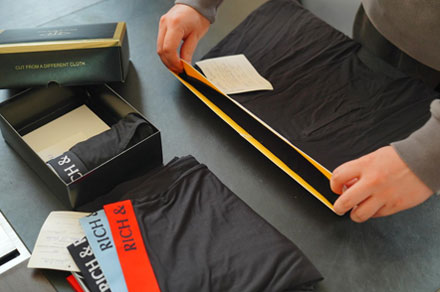
QC checkpoints that decide whether a knit apparel bulk order ships clean
Sampling decides what bulk will be checked against, so the QC checkpoints should be chosen while the sample is still open. The measurements that matter most are the ones a customer will notice, and those should be marked as critical on the specification rather than left to an inspector’s judgement. Seam integrity, stitch density where stretch is involved, and colour consistency against the approved standard belong in the same list.
Two practical arrangements make the checkpoints usable. The specification states a tolerance for each critical measurement, so inspection is a comparison rather than an opinion. And the approved pre-production sample is retained by both parties, so a disagreement about the delivered goods can be resolved against a physical standard instead of a memory.
Where a programme also carries workplace or social requirements, the checkpoints extend from the garment to the site. Better Work, run by the International Labour Organization and the International Finance Corporation, and the ILO’s textiles sector programme describe the assessment frameworks buyers commonly reference alongside their own quality checks.
Where can I get clothing samples made?
From the manufacturer you intend to produce with.
Sampling with the intended production partner confirms that their pattern, their materials and their construction match your specification; sampling elsewhere proves only that the design can be made.
A separate sample house can be useful for early concept work, but it does not de-risk production. The pattern that a sample house builds is not the pattern the factory will use, the fabric may come from a different mill, and the construction may be executed with different machinery. The result is a sample that has to be re-made before bulk, which doubles the cost of the stage it was meant to simplify.
Sampling with the production partner also produces the asset the brand actually needs: a measured specification and a pattern that the factory already understands. Knitwear Base develops and samples in-house across its knit categories, which is what allows the same block to run from a first sample through to bulk without re-cutting the pattern. Buyers comparing options should ask whether the sampling team and the production team are the same people, because handoffs inside a supplier produce the same problems as handoffs between suppliers.
How much do clothing samples cost?
A sample fee, plus the cost of being wrong.
Sample fees usually reflect materials, pattern work and labour for one unit, and the more consequential cost is the round that has to be repeated because the brief was incomplete.
Sample pricing is normally structured as a development or pattern fee plus a materials and labour charge, and many factories credit part of it against a subsequent bulk order. The variation between quotations is less about labour rates than about scope: whether pattern and grading are included, whether the fabric has to be bought in a minimum quantity for the sample alone, and whether decoration setup is charged for a single unit.
The cost that does not appear on a sample invoice is the repeated round. A sample programme that runs three rounds because the brief was unclear, the measurement set was undefined and the branding arrived late has spent more than a programme that ran two rounds against a complete pack. Buyers should treat the specification work as the cost-reduction measure it is, and ask what the factory needs in order to make the first sample representative. Scope and sampling are described together in this overview of apparel design and development.
Delivery terms belong in the same conversation, because a sample shipment and a bulk shipment move under different terms. The ICC Incoterms rules define where cost and risk transfer, and buyers comparing offers should confirm which term applies to samples and which to the order that follows.
Conclusion
Sample development is a documentation exercise that produces garments, not a garment exercise that produces documents. The stages exist so that construction, fit and materials are decided separately, and each one is only resolved if the approval that follows it is written down and retained. Minimums enter the picture early, because a minimum per colour or per fabric decides whether sampling a range is a cheap experiment or a committed order. Brands that fix the specification, sequence the branding approvals and keep the approved standard get to bulk with a production file rather than a collection of samples.
FAQ
How many sample rounds should a knit programme expect?
Three stages are typical: a proto for construction, a fit sample for measurements, and a pre-production sample for materials and finish. Further rounds are reasonable when a recorded comment drives them; rounds that repeat because the brief was incomplete add cost without adding certainty.
Do sample charges count towards the bulk order?
Practice varies. Some suppliers credit part or all of the pattern and sample fee against a first bulk order, others price sampling separately. Ask before the sample is commissioned, and establish whether the credit applies to the first order only or to any subsequent order.
Can a sample approve fit and materials at the same time?
It can be attempted, but the two questions then become entangled: a fit change after approval leaves the material approval in doubt, and a material substitution leaves the fit measurement set unverified. Keeping the approvals separate costs one extra round and removes most of that ambiguity.
What should be issued with each sample?
A measurement record against the specification, a note of the materials and trims used, and the changes made since the previous round. Without those, the next round cannot be compared with the last, and the approved standard for bulk is defined only by the physical sample.
Next step. If you are about to commission a sample, send the pack you have — even if it is incomplete. The team can confirm which elements are already defined, which need deciding before the sample is cut, and what will be issued with each round.
