
Fitness apparel is bought as a range rather than as a garment. A brand sells a legging, a short, a top and a bra that have to look like one collection and share one colour palette, and that multiplication is what makes the minimum order quantity in this category feel larger than the product suggests. Planning a custom fitness range is therefore an exercise in combining styles and colourways so a small order reaches the thresholds that matter.
Custom Fitness Apparel Manufacturer: what to confirm before you send a tech pack
The brief should state the range rather than the garment. That means listing the styles, naming the colour palette, stating the size range for each style and confirming which pieces share fabric and which do not. It should then fix the construction: the fabric and recovery expectation, the seam type at each join, the elastic-bearing components and the fit intention for each piece.
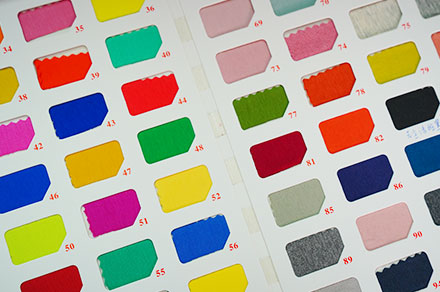
Two items deserve early attention in a range programme. The shared fabric, because styles built on one knit can be combined towards a single fabric minimum, while styles spread across several knits each carry their own. And the colour reference, because a palette applied across a range has to read consistently across every piece, and a set where two pieces differ slightly in shade reads as a defect. The fabric choices for this balance are compared in this guide to fabrics chosen for sweat, stretch and recovery.
It is also worth stating the selling channel, because it decides how the range is assembled. A direct-to-consumer brand can launch a small collection and let the pieces sell individually; a wholesale or team programme needs a size curve and a pack structure for each style. Those two routes lead to different ratios, different packaging and different reorder patterns for what looks like the same collection.
MOQ structure for knit fitness apparel: how minimums work per style, colour and size
Minimums in a range programme are the largest of several thresholds: the fabric minimum per colour, the style minimum per piece, the size spread within each style, and the minimum for each made-to-order component. Because a style that shares a knit with another can be combined towards one fabric commitment, the range structure directly affects how small the first order can be.
Buyers should ask the minimum per colour, the minimum per style, and whether styles on the same fabric can be combined to reach the fabric threshold. That last answer changes the order arithmetic more than any negotiation. The garment-side mechanics are explained in this guide to clothing factory MOQ for wholesale buyers.
A useful way to think about the arithmetic is in two dimensions. The fabric and palette decisions set how many dye lots the range needs, and the style and size decisions set how the quantity is divided within each. A range of four styles in one colour on one knit is one material commitment; the same four styles in two colours on two knits is four. Narrowing either dimension reduces the entry cost without reducing the number of styles sold.
How the minimum changes when a new colour or fabric enters a knit fitness apparel programme
A new colour is a dye lot with its own minimum and lead time, and in a range it applies to every style carrying it. That multiplication is why fitness ranges launch with a narrow palette and add colourways later, and why the palette decision belongs before sampling rather than after the fit has been approved.
A new fabric is heavier still, because it splits the range. Styles on the new knit can no longer be combined with styles on the old one towards a single fabric threshold, so a fabric addition can raise the effective minimum for the whole range. Where the range runs several fabrics for good reasons, the palette should stay narrow to compensate.
There is also a labelling consequence that is easy to miss. A range built on two knits carries two composition texts, so the care label specification splits even though the brand and the packaging stay the same. That is a component decision rather than a garment one, and it should be settled before the label order rather than after the fabric is confirmed.
Sampling sequence for knit fitness apparel: what the fit sample and the PP sample each lock
The fit sample locks the block and the tension for each style: measurements at the base size and the extremes, waistband and armhole behaviour, and how each piece behaves in the intended activity. In a range programme the samples should also be assessed together, because the pieces have to read as one collection in proportion as well as colour. The pre-production sample then locks the fabric, the seams, the trims, the decoration and the labels for each style.
Both approvals should be documented against references and retained, with the fabric recorded by composition and weight for each style and the colour reference recorded once for the range. The documentation practice is described in this sample approval protocol for wholesale orders.
Decoration and branding on knit fitness apparel: print, embroidery, labels, hangtags and packaging
Decoration in a range programme has to work across pieces of different weights and shapes. A print that reads correctly on a legging may sit differently on a loose top, and placement references differ between styles, so each placement should be specified from a named reference on its own pattern rather than applied as a fixed measurement across the range.
Where the range carries a co-ordinated look, the decoration is usually applied to one piece rather than all of them, because repeating a mark across a full collection reads as a uniform rather than a collection. The pieces that do not carry the mark contribute through the fabric, the fit and the packaging, which is what makes a range read as one product line without turning every garment into a billboard.
Two specifications apply across all of it. The decoration has to survive stretching and washing, so the method should be tested on each production fabric under extension rather than approved from a flat sample. And the care and composition label has to match the fabric of the garment it is attached to, which means a range built on two knits carries two label specifications. Material references worth naming include OEKO-TEX Standard 100 for harmful-substance testing, the ASTM standards programme for textiles for the physical tests and Textile Exchange for recycled content claims.
QC checkpoints that decide whether a knit fitness apparel bulk order ships clean
Inspection covers each style and the range together. On each garment: recovery after repeated stretching, seam integrity under load, elastic-bearing components, measurements at the base size and the extremes, and colour consistency. Across the range: that the pieces read consistently in shade and proportion, which cannot be judged on any single garment.
The range-level colour check is the one most often missed, and it is the one that generates returns, because a collection where two pieces differ slightly in shade looks wrong even when each is within tolerance. Where the order is packed as a set or as a story, that check belongs in-line rather than at final inspection. Testing houses publish the scope they apply, as Intertek’s textiles and apparel testing range illustrates, and the ICC Incoterms rules settle where cost and risk transfer on delivery.
The first-off check should be run per style rather than once for the range, because each style has its own pattern and its own seam and elastic specification. A common failure is to verify the legging carefully and treat the top as a simpler garment, when in fact the top carries the same requirements at the armhole and the neckline.
Where can I find custom fitness apparel?
Where the range can be built on one fabric.
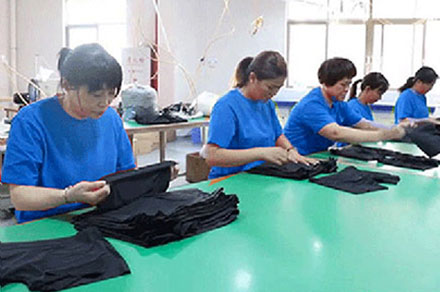
Look for a manufacturer that runs performance knits routinely and can combine styles on the same fabric towards a single minimum, rather than quoting each style as a separate order.
The category test is specific: a factory that produces performance knitwear will have the machinery, the tension settings and the seam types the range needs, and it will be able to say which styles can share a knit. A general apparel supplier may be able to sew the garments without being able to hold the recovery behaviour that performance wear depends on.
The second question is about range structure, because that determines the entry cost. A supplier that can combine several styles on one fabric, one palette and one label specification makes a small first range viable; one that treats every style as a separate minimum does not. Knitwear Base’s sportswear programme runs alongside its compression and yoga ranges, and the same two questions should be applied to any supplier being compared.
Conclusion
A custom fitness range is a planning exercise before it is a manufacturing one. The styles that share a knit can be combined towards a single fabric minimum, the palette applies to every piece at once, and the colour reference has to read consistently across the collection rather than on one garment. Decoration has to survive stretching on every fabric in the range, and each garment needs a label matching its own composition. Buyers who structure the range around one or two knits, fix the palette before sampling and check the collection as a whole get a first order that is both affordable and coherent.
FAQ
Can several styles be combined to reach one fabric minimum?
Often yes, provided they use the same knit and the same colour. That is the single most useful question for a small range, because styles that share a fabric and a palette combine towards one dye lot while styles on different fabrics each carry their own minimum.
Why does a range feel more expensive than a single style?
Because the pattern work, the sample rounds and the fabric commitment multiply across the styles, and because a palette applied to several pieces commits every colour to every style. Narrowing the palette and the fabric count is the usual way to reduce that.
How should decoration placement be handled across a range?
Specify it from a named reference on each pattern rather than applying one fixed measurement across the collection, because the styles differ in weight and shape and the same absolute position reads differently on each.
What is the most commonly missed check on a range order?
The collection-level colour check. Each garment can be within its own tolerance while the collection looks inconsistent, and that inconsistency is visible to a customer in a way that a single garment is not. It should be checked across the pieces rather than one at a time.
Next step. If you are planning a fitness range, send the styles, the palette and the fabric you have in mind. The team can confirm which styles can be combined towards a single minimum, how the fit and seams would be specified, and where the thresholds sit.
