
A tank top has no sleeves to hide behind. The strap width, the armhole shape and the binding decide whether the garment reads as athletic or shapeless, and they also decide whether it stays in place through movement. Because the garment is cut close at the upper body, a small change in the armhole or the binding tension shows immediately, which makes the specification more sensitive than the style’s simplicity suggests.
Custom Tank Top Manufacturer: what to confirm before you send a tech pack
The brief should fix four construction elements before anything decorative: the strap width and shape, the armhole and neckline geometry, the binding method and its tension, and the fabric weight and recovery. Two of these are specific to the category. The binding determines whether the neckline and armholes stay flat after washing, and the fabric recovery determines whether the garment keeps its shape at the strap.
It should also state the intended use, because performance and fashion tanks are specified differently. A performance tank is built for movement, moisture management and stretch recovery, with strap and armhole geometry set to avoid friction. A fashion tank is built for drape and appearance, where fabric weight and hand-feel matter more than recovery. A factory given neither specification will default to whichever it produces routinely.
Two further items shorten the sampling round. The first is the size range the strap and armhole have to serve, because the upper-body geometry behaves differently at the extremes from the base size. The second is the care regime the garment must survive, since binding tension and armhole shape are judged after washing rather than on the finished garment. Both are cheap to state and expensive to discover once the pattern has been cut.
| Strap and edge option | Support and coverage | Where it works |
|---|---|---|
| Narrow strap with bound armhole | Minimal support with a clean line | Fashion and layering programmes |
| Wide strap with bound armhole | More coverage without a shelf construction | Everyday knit basics |
| Racerback | Movement range with a stable shoulder | Sport and gym programmes |
| Folded or taped edge | A flat finish with no visible binding | Programmes where the edge sits against skin |
The edge treatment is the specification that decides how the armhole behaves after washing, because a bound edge and a folded edge recover differently. Naming both the strap width and the armhole finish, rather than only the strap, is what stops the factory from choosing an edge that is cheaper to sew and less stable in wear.
MOQ structure for knit tank tops: how minimums work per style, colour and size
Minimums for tanks follow the structure of any knit style: per style, per colour, with an effect from size spread. Where the strap and armhole are cut differently between sizes rather than graded proportionally, the pattern work increases and that can affect the development charge, because the grader is managing a shape that changes rather than one that scales.
Buyers should ask the minimum per colour, the minimum per size within a colour, and whether mixed sizes count towards a single threshold. Where the tank uses a performance fabric with elastane, the fabric minimum may be the binding constraint, because those fabrics are stocked in fewer weights and colours than basic jersey. The mechanics are explained in this guide to clothing factory MOQ for wholesale buyers.
How the minimum changes when a new colour or fabric enters a knit tank tops programme
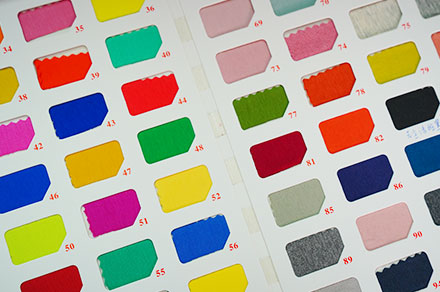
A new colour introduces a dye lot with its own minimum and lead time, and the lab dip approval sits before bulk dyeing. On a garment that consumes little fabric, that minimum can represent a disproportionate share of the material cost, so a two-colour launch is usually cheaper to test than a three-colour one.
A new fabric changes the upper-body fit more than it changes the body. Fabric recovery determines whether the binding holds its tension and whether the armhole keeps its shape, so moving from a cotton jersey to a stretch blend changes how the garment behaves at the neckline and armhole rather than only how it feels. A weight or blend change after the fit approval should be treated as a new fit evaluation, and where the fibre composition changes, the care label text changes with it.
Where the tank is part of a co-ordinated range, the colour decision carries an extra constraint. A tank and a matching short or legging have to read as one garment, which means the shade standard has to be shared across the components rather than agreed per style. A slight shade difference between two pieces sold as a set is more visible than the same difference on two separate products, so the colour reference should be recorded once and applied across the range.
Sampling sequence for knit tank tops: what the fit sample and the PP sample each lock
The fit sample locks the strap width and position, the armhole geometry, the neckline shape and the binding tension. Because these are the elements that decide how the garment sits, the fit approval should be based on wear rather than on a flat measurement, and the observations should be recorded against named construction points: whether the binding lies flat after washing, whether the strap stays in position, whether the armhole gapes or binds.
The pre-production sample then locks the fabric, colour, binding, decoration and finish that bulk will use. Both approvals should be documented against references and retained, with a measurement record stating the base size and the tolerance for each critical dimension. The documentation practice is described in this sample approval protocol for wholesale orders.
Decoration and branding on knit tank tops: print, embroidery, labels, hangtags and packaging
Decoration on a tank is constrained by the garment’s shape. The printable area is narrower than on a T-shirt, the placement reference moves because there is no shoulder seam to measure from, and a print that runs close to the armhole or the strap edge will distort when the binding is attached. Placement should be specified from a named reference — the centre front, the armhole edge or the neckline — with a tolerance, and the print dimensions should be stated rather than left to the printer.
Where embroidery is used, the backing has to suit the fabric weight, because a light knit with a dense mark will pucker at the placement point. Material references are worth naming at the same stage: OEKO-TEX Standard 100 is the common apparel baseline for harmful-substance testing, and testing houses such as Intertek publish the scope they apply to garments. Where a facility or social audit is required, amfori administers the BSCI framework many European buyers reference.
QC checkpoints that decide whether a knit tank tops bulk order ships clean
Inspection should concentrate on the upper body and the binding. Strap width and attachment point, armhole geometry, neckline shape, binding flatness after washing, measurements at the base size and the extremes, and colour consistency. Each check should carry a tolerance, and the binding checks should be done after the intended care regime rather than on the freshly finished garment, because that is when a tension problem becomes visible.
The checks belong where correction is still possible, which for binding means at the machine rather than at final inspection. Where material verification is needed, the ASTM standards programme for textiles provides neutral vocabulary for the property under test. Delivery terms belong in the same agreement, since a quotation without a named term cannot be compared with another; the ICC Incoterms rules define where cost and risk transfer. Labelling text follows the destination market, with the European Commission’s textiles and clothing framework covering the EU position.
Where can I get a custom tank top printed?
From the manufacturer that makes the garment.
Printing the tank at the point of manufacture keeps the placement, the binding tension and the decoration in one specification, which is hard to recover if the two are separated.
A separate printer can add decoration to a finished garment, and for small additions that is often practical. The difficulty appears at the edges: the armhole and neckline binding has already been attached, so a print that needs to run close to those edges cannot be placed as intended, and the print may sit on fabric that has already been stretched by the binding. Combining the two stages lets the decoration be planned against the pattern rather than against the finished garment.
The second consideration is who carries the risk. When printing is separate, a placement or durability problem can be attributed to either party, and resolving it costs time that the order may not have. Keeping the garment and the decoration together removes that ambiguity. Knitwear Base’s knit T-shirt and tank programme runs garment and decoration through one specification, and buyers comparing suppliers should ask where the decoration stage actually happens, and whether it is in-house or subcontracted. Development scope is described in this overview of apparel design and development.
A third consideration is the order in which the two stages run. Where the decoration is applied before the binding is attached, the printable area is larger and the placement can extend closer to the edges; where it is applied afterwards, the binding limits both. That difference is worth knowing before the artwork is finalised, because a design that requires a full-width placement may not be achievable on a finished garment.
Conclusion
A tank top is decided by the strap, the armhole and the binding, because there is nothing else to absorb a mistake. The fabric weight and recovery decide whether those elements hold their shape, which is why a blend change after the fit approval costs a sample round rather than a change order. Decoration is constrained by the garment’s geometry and by the fact that the edges are bound before printing, so placement has to be specified against the pattern rather than against the finished garment. Buyers who fix the construction, check the binding after washing rather than before, and keep garment and decoration in one specification get a range that repeats cleanly.
FAQ
What causes a tank top binding to go wavy?
Usually a mismatch between the binding tension and the fabric’s recovery, or a binding specified for a different fabric weight. It appears after washing rather than on the finished garment, so the check should follow the intended care regime rather than a visual inspection at the end of the line.
Should the armhole be graded differently from the chest?
Often it needs its own treatment, because an armhole that scales proportionally can gape or bind at the extremes. Check the armhole at the smallest and largest sizes as well as the base size, and state whether the geometry is graded or fixed.
Can a tank be printed after the binding is attached?
It can, but the printable area shrinks and a print running close to a bound edge may distort. Planning the decoration against the pattern rather than the finished garment allows placements that are not otherwise achievable at the armhole and neckline.
How do we choose between a performance tank and a fashion tank?
Start from the end use. A performance tank is specified around recovery, moisture management and armhole geometry; a fashion tank around drape and hand-feel. The two lead to different fabrics and different binding specifications, so the choice should be made before sampling.
Next step. If you are developing a tank range, send the strap and armhole you are aiming for and the fabric weight you have in mind. The team can confirm how the binding would be specified, how the decoration placement would be set against the pattern, and where the minimums sit.
