
Most ODM conversations start with a catalogue and end in an argument about ownership. A brand picks a style from a factory’s range, the first order ships, and only later does anyone ask who holds the pattern, whether the style is exclusive, and what happens when a second buyer orders the same block. By then the leverage is gone. ODM is a legitimate and fast route to market, but it transfers fewer rights than most buyers assume, and the parts it does not transfer are the parts that decide whether the style stays yours.
For brands selling into Europe, those decisions sit inside a wider compliance picture that the European Commission’s textiles and clothing framework sets out, covering fibre naming and labelling obligations that apply whoever designed the garment.
What an ODM program includes that an OEM program does not
ODM and OEM are not two prices for the same service; they are two different starting points for the design. In an OEM program the brand supplies the design and the factory executes it. In an ODM program the factory supplies the design from its own development pipeline, and the brand selects, adjusts and brands it. That single difference cascades into who produces the pattern, who pays for development, how fast the first order can move, and what the brand can claim as its own.
An ODM program normally bundles a design range, an existing fit block, sampling from that block, and a route to bulk without a development fee. An OEM program assumes the brand already has pattern and specification files, and quotes the work of executing them. In practice, factories that run both operate them on separate calendars, because ODM work reuses tooling that already exists while OEM work has to build it.
| Element | ODM program | OEM program |
|---|---|---|
| Design source | Factory catalogue or range, selected and adjusted by the brand | Brand’s own design and specification |
| Pattern and fit block | Reused from the factory’s existing block | Built or adapted for the brand |
| Development cost | Usually absorbed into the unit price or a small sample charge | Charged as pattern, grading and sample work |
| Time to first bulk order | Shorter, because tooling exists | Longer, because tooling must be created |
| Uniqueness | Depends entirely on the exclusivity clause | Higher by default |
Knitwear Base runs both routes across its knit categories, which is why the two are worth separating before a brief is written: the same factory can look fast on an ODM enquiry and slow on an OEM enquiry without anything being wrong.
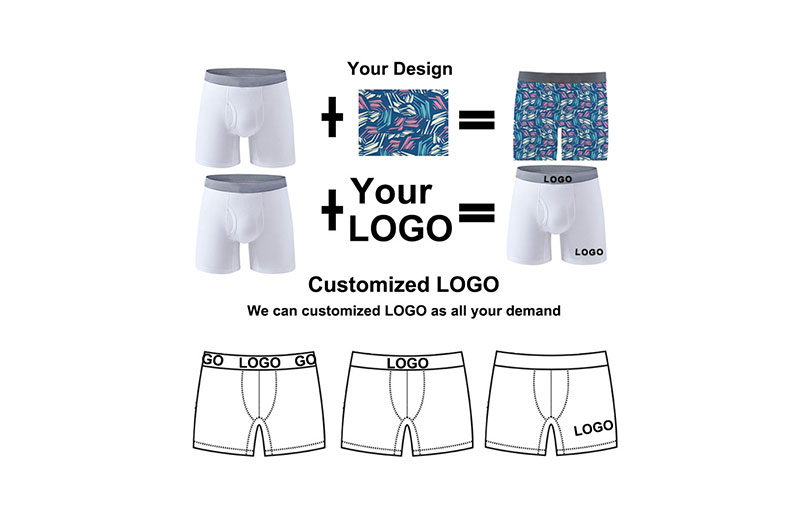
Reading an ODM design catalogue: what is genuinely available versus what is a mock-up
A catalogue is a sales document, and catalogues mix produced styles with concept renders. The distinction matters because a produced style has a live pattern, a tested fit and a known fabric consumption, while a render has none of those. A buyer who treats a render as available can lose a month discovering that the block has to be built from scratch, which turns an ODM order into an OEM order at OEM cost.
Three questions separate the two reliably. Ask for the style’s production history: has this exact style shipped, in what fabric, and in what size range? Ask to see the actual production sample rather than the studio image. And ask whether the size set is already graded, because grading is the hidden cost in most catalogue orders.
- Produced style: existing pattern, tested fit, known consumption, graded size set, and a colour or fabric history to compare against.
- Adapted style: existing block with deliberate changes — different fabric, trim, print or length — which keeps most of the tooling but needs a new sample round.
- Concept render: an illustration without a pattern, which will be treated as new development.
Design ownership, exclusivity and IP terms in ODM agreements
ODM agreements rarely transfer the design. What they transfer is a licence to buy and brand the style, often limited by territory, channel, quantity or time. Exclusivity is a commercial term rather than a default, and it is usually priced: a factory that gives one buyer exclusivity on a best-selling block gives up the sales it would have made to everyone else, so exclusivity normally attaches to a committed volume, a longer term or a higher unit price.
Two clauses do most of the work. The first defines the licensed design precisely, so a later dispute can be settled by comparing the buyer’s garment against a named style reference rather than against a general claim of originality. The second states whether the factory may sell the same style to other buyers, in which markets, and after what date. Without both, a brand can spend a season building demand for a style that a competitor orders next quarter.
Terminology is also worth pinning down. Industrial property rules such as the World Trade Organization’s TRIPS framework set baseline protection for designs and trademarks, but they do not create a private exclusivity right between a buyer and a factory; that comes from the contract. Where a brand wants protection in its own name, the registration route runs through registries such as WIPO’s industrial design system and its trademark system, not through the supply agreement. Buyers who want a defensible position should treat the agreement, not the catalogue, as the source of their rights.
Pattern and block ownership: who holds the files after the order
Pattern files are the most practical asset in the relationship and the least discussed. Whoever holds the pattern decides how quickly the style can be reordered, how easily it can be moved, and whether a competitor can buy the same fit. In ODM work the pattern almost always stays with the factory, because the factory built it and the brand never paid for it.
Buyers who need portability should negotiate file ownership before the first bulk order, not after. A workable structure is to agree that the brand acquires the digital pattern and graded files on payment of a stated development fee, with the factory retaining the right to use the underlying block for other designs. That separates the reusable block from the specific pattern, which is usually the compromise both sides can accept.
Where file transfer is agreed, specify the format and the deliverable set: the digital pattern, the graded set, the marker or consumption record, and the measurement specification. A pattern without its grading is only half an asset, and a measurement chart without the pattern cannot be reproduced elsewhere. It is also worth deciding in advance who pays for a physical pattern to be re-digitised if the brand later moves.
The cost of using a factory design versus commissioning an original
An ODM style is cheaper up front and more expensive in optionality. The up-front saving is real: the factory has already paid for pattern work, sample rounds and fit testing, and those costs are spread across its catalogue rather than charged to one brand. The cost appears later, when the brand wants exclusivity, a different fit block, or the freedom to move production.
Commissioning an original reverses the profile. The brand pays for development, pattern and grading, and in return holds an asset that can be produced by more than one supplier. For a brand that expects to run a style for several seasons, the development cost is normally the cheaper route; for a brand testing a category, an ODM style gets the product to market without that commitment.
The decision is therefore about expected volume and expected life, not about the first invoice. A style that will run once is usually cheaper as ODM. A style that will anchor a range for years is usually cheaper as an original, because the second and third seasons carry no development cost and the brand retains the tooling.
Customising an ODM style: fabric, trim and colour changes that are actually permitted
ODM ranges are built around standard fabrication, and every deviation from that standard reduces the advantage of choosing ODM. Buyers should establish which changes the factory treats as routine and which turn the order into development, because that boundary determines both cost and calendar.
| Change | Effect on the programme |
|---|---|
| Print, placement or embroidery on an existing fabric | Normally routine; needs artwork approval and a placement sample |
| Trim, label, hangtag and packaging | Routine; driven by the brand’s own assets and lead times |
| Colour within a stocked fabric | Depends on whether the colour is in the fabric range or requires a dye lot |
| Substituting fabric or weight | Treated as adaptation: new consumption, new sample, sometimes a new pattern |
| Changing the fit block or measurements | New development, and usually a shift to OEM terms |
The pattern in the table is consistent across factories: the closer a change sits to the garment’s printed surface, the cheaper it is, and the closer it sits to the pattern or the fabric, the more it costs. Buyers should write the permitted change list into the brief so the quotation is comparable with other offers.
Two external references are worth carrying into that conversation. If a fabric substitution is proposed, ask which test standard the substitute has been assessed against; OEKO-TEX Standard 100 is the common baseline for harmful-substance testing on apparel textiles. If the substitute is a certified organic or preferred fibre, the claim has to travel with a verified chain of custody rather than a sales statement, which is what programmes such as GOTS exist to document.
Minimums and lead times specific to ODM styles
ODM minimums behave differently from OEM minimums because they attach to different constraints. An OEM minimum is usually set by the smallest economically viable dye lot, print run or cutting lay. An ODM minimum is often set by the factory’s existing fabric commitment: if the fabric is already in the range, the entry quantity can be lower, and if the buyer wants a new colour, the order inherits the fabric minimum.
Lead times follow the same logic. The variable part of an ODM order is not the sewing, which is well understood, but the approval chain — artwork, placement, trim and label sign-off, and any fabric booking when the colour is not stocked. Buyers who want the shortest possible route keep the fabric, the fit and the construction unchanged, and spend their decision time on branding instead.
How minimums are set in practice, per style, colour and size, is worth understanding before an ODM brief is written; this explanation of clothing factory MOQ for wholesale buyers covers the mechanics that decide whether a small first order is viable.
Because delivery terms and production time are separate variables, agree them separately. The Incoterms rules published by the International Chamber of Commerce define where risk and cost transfer between seller and buyer; a quoted production window says nothing about who pays the freight or when the buyer takes ownership of the goods.
Sampling an ODM style: what a fit sample proves and what it does not
An ODM sample is a confirmation exercise, not a development exercise. It confirms that the block fits the intended market, that the chosen fabric behaves in the required weight, and that the branding sits where the buyer expects. It does not confirm that the style is exclusive, that the pattern will transfer, or that the fabric will be available next season.
Two approvals matter most. The fit sample fixes the measurements and the block. The pre-production sample fixes the materials, colour and construction against the bulk that will follow. Buyers who skip the second approval, on the assumption that an ODM style is already proven, are the ones who discover a trim substitution or a colour shift in the delivered goods, when the options are limited to accepting, reworking or rejecting.
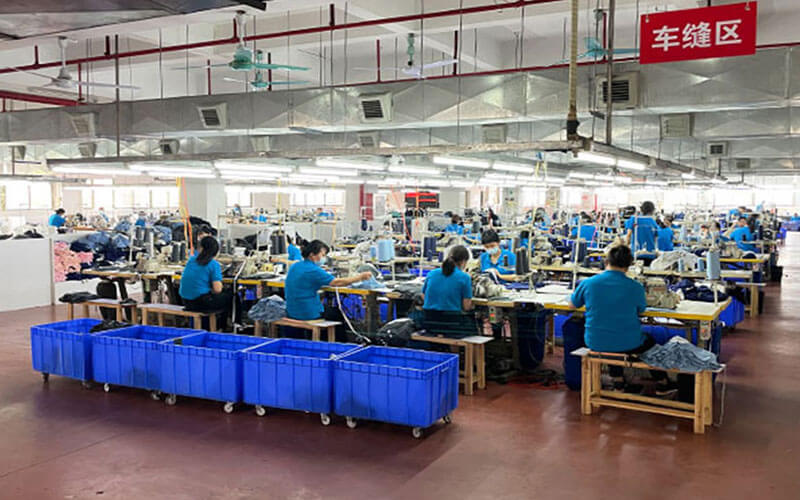
Where ODM breaks down: exclusivity conflicts and competing buyers
ODM programmes fail commercially more often than they fail technically. The common failure is a style that succeeds for two buyers at once, because the factory sold the same block to both and neither negotiated exclusivity. The second failure is a brand that builds its identity on a catalogue style and then finds the factory promoting it to other buyers on its own website.
The practical safeguard is to treat the ODM style as a commercial position to be defended in the contract: name the style reference, define the territory and channel, state the term, and record what happens if the factory wants to release it more widely. Factories accept these terms when they are attached to volume, and they accept them far less readily once the style is already selling.
Does an ODM style stay exclusive to your brand?
Only if exclusivity is written into the contract.
Exclusivity is a negotiated commercial term, not a default of ODM. It usually attaches to a committed volume, a defined territory or channel, and a stated term.
A factory’s catalogue exists to be sold, so the baseline position is that any style in it can be offered to other buyers. Exclusivity changes that baseline and has a price, because the factory is giving up alternative sales of a proven block. Buyers who need it should expect to commit volume, to accept a defined market rather than worldwide rights, and to accept a term that both sides can review. Buyers who do not need exclusivity should instead make sure their branding, packaging and fit adjustments are distinctive enough that a shared block does not read as a shared product.
What should a buyer ask before signing an ODM agreement?
Ask who owns the pattern, the block and the artwork.
The four questions that matter are design ownership, exclusivity scope, pattern file transfer on payment, and what happens to the tooling if the relationship ends.
Start with the design reference: which exact style is being licensed, and against what sample will the delivered goods be compared? Then the exclusivity scope: which markets, which channels, for how long, and against what volume commitment. Then the files: does the brand receive the pattern and graded set, in what format, on what payment trigger? Finally the exit: if the brand leaves, what can it take with it, and what can the factory continue to sell? Answers to those four determine whether an ODM order is a fast route to a first collection or a short lease on someone else’s product.
Can you move an ODM style to another factory later?
Only if the pattern and grading transfer with it.
Moving a style without the pattern files means re-developing the fit and re-approving samples, which usually costs more than the original ODM saving.
Portability depends almost entirely on the file position agreed at the start. If the brand holds the digital pattern, the graded set and the measurement specification, a second factory can reproduce the style and the transition is a sampling exercise. If the factory holds them, the brand is asking a new supplier to reverse-engineer a fit from a physical sample, which rarely reproduces the original exactly and always consumes time. The commercial point to settle early is therefore not whether the brand plans to move, but whether it can.
Conclusion
ODM is a fast, low-commitment route to a first collection, and its value depends on terms rather than on the range itself. The design in an ODM order normally stays with the factory unless exclusivity is negotiated and paid for; the pattern files stay with the factory unless transfer is agreed before the first bulk order; and the fabric and fit are the two variables that decide whether an order behaves like a proven style or like new development. Buyers who fix those three points in writing get the speed of ODM without discovering later that they have built a season on a product they do not control.
Next step. If you are evaluating an ODM route, send the styles you are considering and the markets you sell into. The team can confirm which elements are available from an existing range, which need adaptation, and what the pattern and exclusivity position would be before you commit to a first order.
FAQ
Does an ODM order mean the factory owns the design permanently?
In most ODM arrangements the factory retains the design and grants the brand a licence to buy and brand it. The licence can be limited by territory, channel, quantity or term. If the brand needs to hold the design itself, that has to be negotiated as an assignment or a development fee rather than assumed from the order.
Can we get the pattern files so another factory could produce the style?
Often yes, as a paid transfer agreed before bulk production. Ask for the digital pattern, the graded set, the marker or consumption record and the measurement specification. Agree the format and the payment trigger in writing, because a pattern without its grading cannot be reproduced reliably elsewhere.
How much customisation is possible before an ODM style becomes OEM?
Print, placement, trim, labels and packaging are normally routine. Colour changes depend on whether the fabric is stocked. Changing the fabric weight, the measurements or the fit block reduces the benefit of the existing tooling and is usually re-quoted as development work.
What should be agreed before the first bulk order?
The style reference, the exclusivity scope, the pattern file position, the approved sample that governs the bulk, the change list that is permitted without re-quotation, and the process for handling a colour or trim substitution. Fixing these five points early avoids most disputes that arise later.
