
A private label hoodie programme is where branding and construction overlap most awkwardly. The hood carries a label, the chest carries a print or an embroidered mark, the zipper pull may carry a brand mark, and the packaging carries the retail identity. Each element is made to order, and each has its own minimum and lead time. A programme can be sewn well and still be late because a component was ordered before the fibre was locked.
Private Label Hoodie Manufacturer: what to confirm before you send a tech pack
Send the garment specification and the branding specification as two documents. The garment document covers fabric weight and surface, hood and pocket construction, rib specification, closure details and the graded measurement set. The branding document covers the neck label, the care and composition label, the hangtag, the zipper pull if branded, the inner packaging and the carton mark.
Separating them matters because they run on different clocks. The garment can be planned from the fabric and the construction, while the branding depends on artwork approvals that may involve a compliance review. Merging them into one brief gives the branding approvals the garment’s deadline, which is how a programme ends up reopening packed cartons to add a hangtag.
Private-label components for hoodies: woven labels, care labels, hangtags and packaging
| Component | Production route | What delays it |
|---|---|---|
| Neck label | Woven or printed, sewn into the back neck | Artwork finalisation and the label minimum |
| Care and composition label | Printed, sewn into a side seam | Fibre and care text not yet confirmed |
| Hangtag | Printed card, often with variable data | Barcode or price format supplied late |
| Branded zipper pull | Made to order where the style has a zip | Tooling and its own minimum |
| Inner packaging and carton mark | Printed film or labelled carton | Piece count and shipping marks not fixed |
The component with the longest lead is usually the one that has to be tooled: a branded zipper pull or a made-to-order woven label. Because a hoodie is bulky, the packing components also carry more freight weight, so a change to the carton plan has a larger cost consequence here than on a lighter garment. Buyers should establish which components the supplier sources and which the brand supplies, then place the component orders against the production calendar rather than against the shipping date.
MOQ structure for private label hoodies: how minimums work per style, colour and size
Private label hoodie minimums are the largest of several thresholds: the garment minimum per style, the minimum per colour where the fleece has to be dyed, the effect of size spread, and the minimum for each made-to-order component. Because a hoodie consumes more fabric than a light garment, the dye lot minimum represents a larger material commitment, which is why a produced colour raises the entry quantity more visibly in this category than in others.
Buyers should ask the minimum per colour, the minimum per size, and the minimum for each component including any branded trim. Where the brand uses one label specification across several styles, a single component order can cover the range, which lowers the effective minimum per style. The garment-side thresholds are explained in this guide to clothing factory MOQ for wholesale buyers.
How the minimum changes when a new colour or fabric enters a private label hoodies programme
A new colour is a dye lot with its own minimum and lead time, with the lab dip approval before bulk dyeing. On a heavy garment the cost of that minimum is proportionally larger, and because the garment is often the top layer of a range, the colour decision tends to be more considered and therefore later. That combination is what pushes a hoodie programme behind schedule.
A new fabric weight or surface treatment changes the construction fit and the decoration behaviour. Brushed and unbrushed fleece, and the difference between fleece and French terry, alter the hand-feel, the print surface and the shrinkage behaviour. Where the fibre composition changes, the care label text changes with it, so the composition should be locked ahead of the component orders rather than alongside them. The fabric and weight decisions behind this are covered in this comparison of fleece and French terry.
Sampling sequence for private label hoodies: what the fit sample and the PP sample each lock
The fit sample locks the body, the hood shape, the pocket position and the rib specification. The pre-production sample locks the fabric, surface, trims, decoration, labels and packaging that bulk will use. Under private label the second approval carries extra weight, because it is the only point at which the branding and the garment are seen together before bulk.
Both approvals should be recorded against a version reference, so a later dispute is settled by comparison rather than memory, and the approved pre-production sample should be retained by both parties as the standard for the delivered goods. Where the garment is packed as a set or in retail packaging, the pack should be approved at the same stage. The documentation practice is described in this sample approval protocol for wholesale orders.
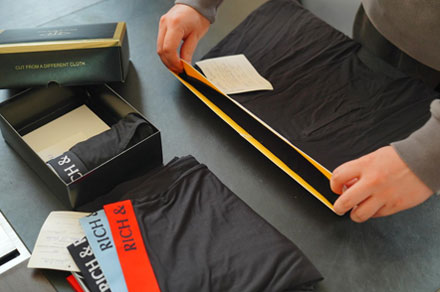
Decoration and branding on private label hoodies: print, embroidery, labels, hangtags and packaging
Decoration on a private label hoodie usually combines a printed or embroidered brand mark with the label set. Placement should be specified from a named reference with a tolerance, and the print dimensions stated rather than left to the printer. Where embroidery is used, the digitised file should belong to the brand, because a brand that does not hold it cannot move the order without re-digitising the mark.
The label set carries both the brand and the compliance text. Fibre naming and care conventions differ by market, and the obligation sits with the seller of the finished goods: the US Federal Trade Commission’s business guidance and the European Commission’s textiles and clothing framework set out the two largest positions, and for imports into the United States the country of origin marking requirements are published in Customs and Border Protection’s informed compliance publications. Where a fibre claim is certified, GOTS documents organic content, and where material testing is required, OEKO-TEX Standard 100 is the common apparel baseline.
QC checkpoints that decide whether a private label hoodies bulk order ships clean
Inspection combines garment, decoration and branding checks. On the garment: measurements at the base size and the extremes, hood and pocket attachment, rib recovery at cuff and hem, seam integrity in a heavy fabric, and zip function where fitted. On the decoration: placement, dimensions, colour accuracy and durability. On the branding: label position and orientation, care text accuracy against the specified composition, and packaging correctness including the carton mark.
The branding checks are too often deferred to final inspection, which is a mistake because a label sewn in the wrong position cannot be corrected without reopening the garment. Applying the check in-line, at the point of attachment, catches a systematic error before it repeats across the run. Testing references worth naming include Intertek’s textiles and apparel testing range, and this guide to labels, duties and documentation for wholesale imports covers the paperwork side.
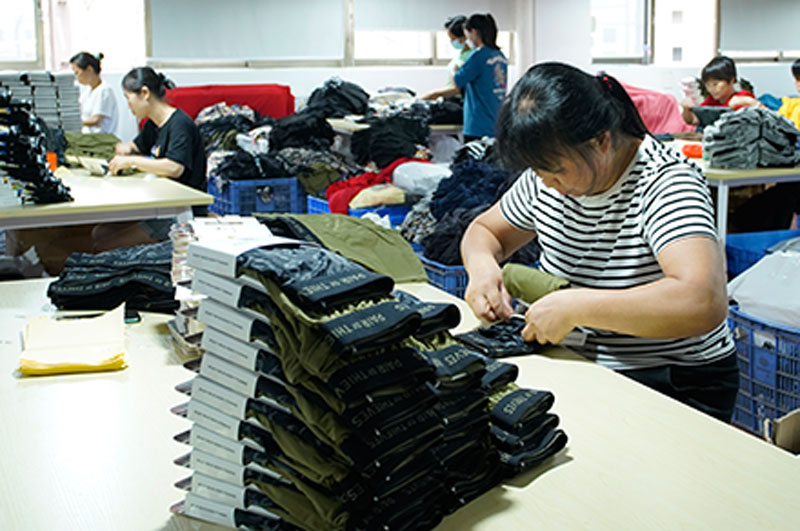
Where can I find a custom hoodie manufacturer?
Where the category and the components already exist.
Look for a manufacturer that runs fleece and terry routinely and can source the branded components, rather than one that has to buy in the parts of the order it does not normally produce.
Category capability is the first filter. A factory that produces fleece and terry garments routinely has the machinery, the fabric relationships and the finishing routines a hoodie needs, and it will already have standard rib, pocket and hood constructions a private label programme can be built on. A general apparel supplier may subcontract the parts it does not run, which adds calendars the buyer cannot see.
The second filter is the component question: which labels, hangtags, zipper pulls and packaging the manufacturer can source as part of the order and which the brand must deliver. That answer determines the entry quantity, because component minimums frequently exceed the garment minimum. Knitwear Base’s hoodie programme covers the category end to end, and buyers should apply the same component question to any supplier they compare.
How much does it cost to get a hoodie manufacturer?
The cost is in the elements, not the supplier.
There is no headline price for a manufacturing relationship; the cost is development, fabric, make, trims and decoration, each responding to a different decision.
Development is a fixed cost tied to whether the body is custom or stock. Fabric is the largest variable and scales with weight, surface and whether the colour is stocked or produced. Make reflects the number of operations, which on a hoodie is higher than on a light garment because of the hood, pocket and rib attachments. Trims cover rib, drawcord, zipper and labels, each potentially with its own minimum. Decoration carries a setup and a running element.
Buyers comparing offers should therefore compare element by element against one specification and one delivery term, rather than comparing totals. A quotation that appears lower may simply exclude development or carry a lighter fabric; a quotation that appears higher may include components the other has left to the buyer. Writing the comparison as a table of elements rather than a single number is what makes the difference visible.
Conclusion
A private label hoodie programme is decided by two documents and a component order. The garment specification fixes the construction and the fabric; the branding specification fixes what the customer reads and touches; and the component minimums fix how small a first order can be. Because the care label depends on the fibre and the packing depends on the retail route, the composition decision has to be taken before the component orders rather than alongside them. Buyers who separate the two documents, sequence the artwork approvals and keep one controlled version of each asset run to the production calendar rather than to the artwork calendar.
FAQ
Which component usually sets a private label hoodie minimum?
Either the dye lot, because a hoodie consumes more fabric than a light garment, or a tooled component such as a branded zipper pull or a made-to-order woven label. Ask for each minimum separately rather than assuming the garment quantity governs.
Does private label give exclusivity on the hoodie style?
No. Private label governs how the product is branded and sold, not who may make or sell the style. Exclusivity is a separate commercial term, usually tied to volume or term, and it has to be recorded in the supply agreement.
When should the care label text be finalised?
After the fibre and surface treatment are locked and before the label order is placed. A composition change after printing produces a label that describes a garment the factory is not making, and the reprint carries its own minimum and lead time.
Does the pack format affect freight on a hoodie order?
More than on most garments, because hoodies are bulky. The fold, the bag and the pieces per carton determine the carton count, and the carton count determines the freight volume, so the packing specification should be fixed before production rather than at shipment.
Next step. If you are building a private label hoodie programme, send the components you plan to use and the markets you sell into. The team can confirm which components are sourced with the order, where the minimums sit, and what the approval order should be.
