
Private label loungewear multiplies the component problem, because a set has two garments and sometimes two fabrics. Each piece needs its own care and composition label, the packaging has to present the pair as one product, and both the garment and the branding have separate approval calendars. It is the category where a component ordered too early is most likely to become waste, because a change to either fabric invalidates part of the label set.
Private Label Loungewear Manufacturer: what to confirm before you send a tech pack
Send two documents and make one of them set-aware. The garment document covers the fabrics, the construction of both pieces and the graded size runs. The branding document covers every element that carries the brand: the neck label, the care and composition label for each piece, the hangtag, the inner packaging and the carton mark.
The set-awareness matters because a loungewear set built from two fabrics needs two label specifications rather than one, each matching the garment it is attached to. Where the two fabrics share a composition the labels can be common; where they differ, a single label is a compliance problem. Establishing that at the brief stage prevents a component order that has to be split after artwork approval.
It also helps to name the retail channel in the same brief. A set sold through a marketplace warehouse needs a scannable identifier and a defined unit specification; a set sold through a gift channel needs a presentation that survives handling. The channel determines the packaging decisions, and those decisions carry tooling and minimums, so leaving the channel open until after the garment is approved usually means reordering components.
Private-label components for loungewear: woven labels, care labels, hangtags and packaging
| Component | Production route | What delays it |
|---|---|---|
| Neck label | Woven or printed, sewn into the top | Artwork finalisation and the label minimum |
| Care and composition label | Printed, one per garment | Fibre and care text not confirmed for each fabric |
| Hangtag | Printed card, often with variable data | Barcode or price format supplied late |
| Inner packaging | Printed film, box or sleeve | Presentation format and set size not fixed |
| Carton and carton mark | Printed or labelled | Set count and shipping marks not fixed |
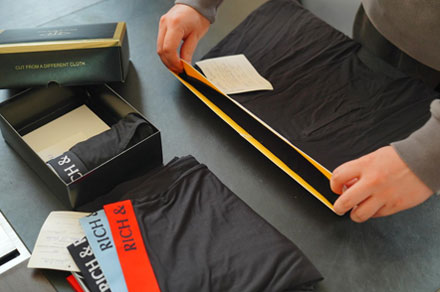
The packaging element carries more weight in this category than in most, because loungewear is frequently bought as a gift, and a gift presentation often means a boxed or sleeved set rather than a folded garment in a bag. Boxes are made to order with their own tooling and minimum, which is why the presentation format should be decided before the order size rather than after the garment is approved.
Two of the five components deserve earlier attention than the rest. The care and composition label depends on the fibre being locked for each garment, so it should not be ordered until both fabrics are confirmed. The inner packaging depends on the folded dimensions of the set, which are only known once the grade is fixed. Both are inexpensive to prepare and expensive to reprint, and both sit behind decisions that are usually taken later than they should be.
Fabric selection by season on private label loungewear programmes: cotton, modal, bamboo and brushed fleece
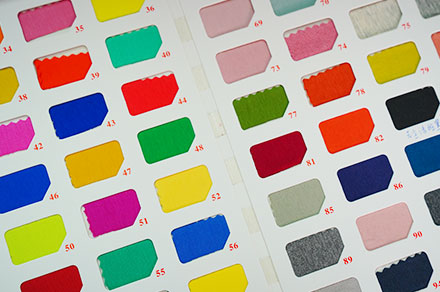
The fabric decision sets the season and the label set at the same time. Cotton jersey and interlock suit warm weather, modal and micro-modal sit in the mid-season premium bracket, bamboo viscose suits warm climates and softness-led ranges, and brushed fleece carries the cold-weather and gifting end. Each family has its own shrinkage behaviour, its own minimum and its own fibre description for the care label.
Two consequences follow for a private label set. Where the range runs more than one fabric across the season, the brand is managing several label specifications rather than one. And the fibre naming conventions differ by market, so the label text should be confirmed against the destination before the artwork is approved. The European Commission’s textiles and clothing framework and the US Federal Trade Commission’s business guidance set out the two largest positions, and the fabric options themselves are compared in this guide to pajama fabrics for wholesale programmes.
Fit blocks and size grading for loungewear sets on private label loungewear programmes: how the set grades across sizes
Grading a private label set means keeping two garments related while fitting them to two different parts of the body. The top and bottom are usually sold in one size, so the bottom should correspond to the top size across the whole range rather than only at the base. Where the set contains a boxed or sleeved presentation, the folded dimensions of both pieces also have to be fixed, because they determine whether the set fits the packaging.
The practical control is to state the correspondence and the folded dimensions in the same specification. A set that grades correctly but folds to a size the box was not designed for produces a packaging problem at the last stage, which is the most expensive place to solve it. Buyers should ask to see both measurements and the packed unit before the pre-production approval.
MOQ structure for private label loungewear: how minimums work per style, colour and size
Private label minimums in this category are the largest of several thresholds: the fabric minimum per colour, the set minimum per style, the effect of two garments being cut in matching quantities, and the minimum for each made-to-order component, including any box or sleeve. Because a set consumes fabric twice over, a new colour raises the material commitment more sharply here than in a single-piece programme.
Buyers should ask the minimum per colour expressed in sets, the minimum per size, and the minimum for each component including the presentation packaging. Where the brand uses one label specification across several set styles, a single component order can cover the range, which lowers the effective minimum per style. The mechanics behind the garment thresholds are explained in this guide to clothing factory MOQ for wholesale buyers.
How the minimum changes when a new colour or fabric enters a private label loungewear programme
A new colour is a dye lot with its own minimum and lead time, and in a set it applies to both garments, which doubles the material commitment relative to a single-piece style. The lab dip should be assessed on both fabrics, because a colour can read slightly differently on a jersey and on a brushed fleece, and a set where the two pieces differ in shade reads as a defect.
A new fabric changes the label set as well as the garment. The fibre description changes, the shrinkage behaviour changes so the grade has to be re-confirmed, and if the two pieces of the set then have different compositions, the label specification has to be split. Composition should therefore be locked before the component orders rather than alongside them.
Sampling sequence for private label loungewear: what the fit sample and the PP sample each lock
The fit sample locks both garments and their relationship: the top measurements, the bottom measurements and the correspondence between them across the grade. The pre-production sample locks the fabrics, colours, trims, labels and packaging that bulk will use, and it should be assessed as a packed set rather than as two loose garments.
Both approvals should be recorded against a version reference, and the approved set retained by both parties as the standard for the delivered goods. The documentation practice is described in this sample approval protocol for wholesale orders. Where a component is made to order, its artwork version should be recorded alongside the sample so a later dispute can be settled by comparison.
Decoration and branding on private label loungewear: print, embroidery, labels, hangtags and packaging
Decoration in this category is usually restrained, with one mark on the top rather than a matching mark on both pieces, because repetition across a set reads as a uniform. Placement should be specified from a named reference with a tolerance, and any print or embroidery tested on the production fabric, since a jersey and a brushed fleece take the same decoration differently.
The label set carries the compliance text for both garments. Each care and composition label has to match the fabric of the garment it is attached to, and the positions should be specified rather than left to the operator. For imports into the United States, country of origin marking requirements are published in Customs and Border Protection’s informed compliance publications. Material references worth naming include OEKO-TEX Standard 100 for harmful-substance testing.
QC checkpoints that decide whether a private label loungewear bulk order ships clean
Inspection covers both garments, their pairing and the packaging. On the garments: measurements at the base size and the extremes, neckline and waistband recovery, and hem finishes. On the pairing: that both pieces correspond in size and read consistently in colour. On the branding: label position and accuracy for each garment, and the packed set against the agreed presentation.
Two checks are specific to this category. The pairing check cannot be made on either garment alone, and the packed-set check is what confirms the packaging decision, since a set that fits individually may not fold into the intended box. Both belong where correction is still possible rather than at final inspection. Testing references worth naming include Intertek’s textiles and apparel testing range, and this guide to labels, duties and documentation for wholesale imports covers the paperwork side.
Conclusion
Private label loungewear is a set programme with a component programme attached. Two garments mean two label specifications when the fabrics differ, the packaging often needs tooling because the set is presented as a gift, and the grade has to keep the two pieces related across the whole size range. Because a colour change applies to both garments at once, the material commitment moves faster in this category than in a single-piece programme, and because the composition affects the label text, it has to be locked before the components are ordered. Buyers who plan the set, the labels and the packaging as one specification get a programme that runs to its calendar.
FAQ
Does each garment in a private label set need its own care label?
Where the two pieces share a composition, one specification can cover both. Where they differ, each garment needs a label matching its own fabric, because the composition printed on the label has to describe the garment it is attached to.
Which component usually sets the minimum on a loungewear set?
Either the fabric, because a set consumes it twice over and a new colour carries its own dye lot minimum, or the presentation packaging if a boxed or sleeved set is specified, because boxes are made to order with their own tooling and minimum.
Should both pieces carry the brand mark?
Usually not. A mark on both pieces can read as a uniform rather than a set, so most programmes place one mark on the top and carry the branding on the label and the packaging instead.
When should the packaging format be decided?
Before the order size, because a boxed or sleeved set carries tooling and a minimum that may exceed the garment quantity, and because the folded dimensions of both pieces have to suit the packaging the brand has chosen.
Next step. If you are building a private label loungewear set, send the pieces, the fabrics and the presentation you have in mind. The team can confirm how the label set would be structured, where the component minimums sit, and what the approval order should be.
