
Sleepwear is the category where private label carries the most regulatory weight, because some consumer groups are covered by stricter requirements than clothing in general. That makes the label set and the packaging compliance documents rather than branding niceties, and it means the composition of the range — adult or children’s, knit or woven — has to be decided before the artwork rather than after it.
Private Label Sleepwear Manufacturer: what to confirm before you send a tech pack
Send two documents and make one of them market-specific. The garment document covers the construction route for each piece, the fabrics, the graded size runs and the trims. The branding document covers the neck label, the care and composition label for each garment, the hangtag, the inner packaging and the carton mark — and where the range includes children’s sleepwear, the additional text and testing that the destination market requires.
Two decisions should therefore be taken at the brief stage rather than later. Whether the range is adult, children’s or mixed, because the compliance regime differs. And which market each style is sold into, because labelling language, fibre naming and origin marking differ between destinations. Both answers shape the component order, and both are awkward to change once labels are printed.
Private-label components for sleepwear: woven labels, care labels, hangtags and packaging
| Component | Production route | What delays it |
|---|---|---|
| Neck label | Woven or printed, sewn into the top | Artwork finalisation and the label minimum |
| Care and composition label | Printed, one per garment | Fibre and care text not confirmed for each fabric |
| Hangtag | Printed card, often with variable data | Barcode, price format or safety text supplied late |
| Inner packaging | Printed film, box or sleeve | Presentation format and set size not fixed |
| Carton and carton mark | Printed or labelled | Set count and shipping marks not fixed |
Each of these is made to order in a minimum quantity, and the largest minimum sets the entry quantity for the programme. Because a sleepwear set contains two garments, the label count also doubles in practical terms, and where the two pieces use different fabrics the label specifications differ rather than being shared.
Kids’ sleepwear labelling and safety requirements by market for private label sleepwear
Children’s sleepwear is treated more strictly than general apparel in several major markets, with requirements that can cover the material’s behaviour as well as the information printed on the label. The practical consequence for a manufacturer is that a children’s programme may require testing that an adult programme does not, and that the label text is prescribed rather than chosen by the brand.
Three consequences follow for the programme. Testing has to be arranged at the material stage rather than at the end, because a failed result after production leaves no room to change the fabric. The label and packaging text should be confirmed with the destination market’s requirements before artwork approval rather than afterwards. And the obligation sits with the seller of the finished goods, so the brand carries it even when the factory supplies the material. For the United States, the Federal Trade Commission’s business guidance covers labelling and marketing obligations and the country of origin requirements are published in Customs and Border Protection’s informed compliance publications; for the EU, the European Commission’s textiles and clothing framework sets out the labelling position. Buyers should confirm the specific requirements for their destination with a compliance adviser rather than relying on a summary.
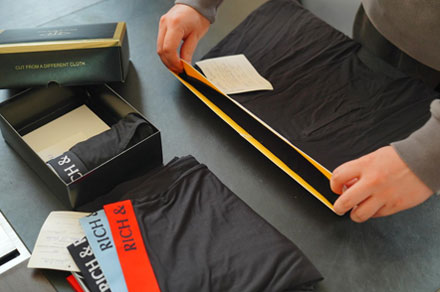
Set assembly, sizing and seasonal range planning for sleepwear for private label sleepwear
A sleepwear set is assembled rather than merely packed. The pieces have to be graded so they correspond in size, the folded dimensions have to suit the presentation, and where the range is seasonal, the same construction has to work across several fabric families. Each of those is a planning decision that arrives before production rather than during it.
Seasonal planning adds a second layer in this category, because sleepwear sells strongly into gifting periods and the fabric changes with the season. A range that runs a light cotton set for warm weather and a brushed interlock set for winter is running two material bookings with two lead times on different dates. Buyers should build the season into the order calendar rather than treating the fabrics as interchangeable. The material options are compared in this guide to pajama fabrics for wholesale programmes, and the sustainability angle is covered in this piece on sustainable sleepwear at wholesale scale.
MOQ structure for private label sleepwear: how minimums work per style, colour and size
Minimums are the largest of several thresholds: the fabric minimum per colour, the set minimum per style, the effects of cutting two garments in matching quantities, and the minimum for each made-to-order component including boxed presentation. Where the range is for children, additional testing may also carry its own cost structure, which is worth establishing alongside the garment minimum rather than afterwards.
Buyers should ask the minimum per colour expressed in sets, the minimum per size, and the minimum for each component. Where the brand reuses one label specification across several set styles, a single component order can cover the range and lower the effective minimum per style. The mechanics behind the garment thresholds are explained in this guide to clothing factory MOQ for wholesale buyers.
How the minimum changes when a new colour or fabric enters a private label sleepwear programme
A new colour is a dye lot with its own minimum and lead time, and in a set it applies to both garments. The lab dip should be assessed on the fabrics actually used, because a colour can read differently between a jersey and a brushed interlock, and a set where the two pieces differ in shade reads as a defect.
A new fabric changes the label set as well as the garment. The fibre description changes, the shrinkage behaviour changes so the grade has to be re-confirmed, and if the two pieces then have different compositions the label specification has to be split. On a children’s range a fabric change may also require new testing, so it should be treated as a new compliance event rather than as a variation of the existing style.
Sampling sequence for private label sleepwear: what the fit sample and the PP sample each lock
The fit sample locks both garments and their relationship: the measurements of each piece and the correspondence between them across the grade. The pre-production sample locks the fabrics, colours, trims, labels, packaging and any safety text that bulk will use, and it should be assessed as a packed set rather than as two loose garments.
Both approvals should be recorded against a version reference, and the approved set retained by both parties as the standard for the delivered goods. On a children’s programme the testing records should be requested at this stage rather than at shipment, because a material problem discovered after production cannot be corrected economically. The documentation practice is described in this sample approval protocol for wholesale orders.
Decoration and branding on private label sleepwear: print, embroidery, labels, hangtags and packaging
Decoration in this category is usually restrained and concentrated on the top. Where a print is used it is often an all-over seasonal design, which requires a repeat that works across the body panels and sleeves without obvious joins, and the repeat should be tested on the production fabric rather than approved from a flat file.
The label set carries both the brand and the compliance text. Each care and composition label has to match the fabric of the garment it is attached to, and on a children’s programme the prescribed wording and any required testing statement have to be included rather than adapted. Material references worth naming include OEKO-TEX Standard 100 for harmful-substance testing on the substrate, and GOTS where a certified organic fibre claim is made.
QC checkpoints that decide whether a private label sleepwear bulk order ships clean
Inspection covers both garments, their pairing, the branding and the pack. On the garments: measurements at the base size and the extremes, waistband and neckline recovery, and hem finishes. On the pairing: that the two pieces correspond in size and read consistently in colour. On the branding: label position and accuracy for each garment, including any prescribed text. On the pack: set counts and presentation against the approved packed sample.
Two checks are specific to this category. The pairing check cannot be made on either garment alone, and on a children’s programme the label and packaging text should be verified against the approved version rather than by eye. Testing houses publish the scope they apply, as Intertek’s textiles and apparel testing range illustrates, and delivery terms belong in the same agreement because the ICC Incoterms rules define where cost and risk transfer.
How to start a sleepwear brand?
Decide the consumer group and the season first.
The consumer group determines the compliance regime and the season determines the fabric family, so both decisions shape the range before any styling does.
Starting from the garment design reverses the dependencies. Sleepwear for adults and for children sit under different labelling and testing regimes, which changes the cost, the calendar and sometimes the material. The season then determines which fabric families are viable and how many material bookings the range needs. Both are decisions that must be made before the label artwork, because the text depends on them.
Once those are fixed, the brand needs a set specification with both fabrics named, a graded size range with the correspondence between the pieces stated, the branding and packaging assets, and a reorder plan built around the gifting periods rather than a flat selling curve. Those assets are what every subsequent order depends on, so they are worth building properly on the first run rather than reconstructing on the second.
Conclusion
Private label sleepwear is a component programme with a compliance dimension. Two garments mean two label specifications where the fabrics differ, the presentation often carries tooling, and the consumer group determines which labelling and testing regime applies. Because a colour or fabric change affects both garments and can require new testing, the composition has to be locked before the component orders rather than alongside them. Buyers who separate the garment and branding documents, confirm the destination requirements early and approve the packed set get a programme that runs to its calendar and supports the text it prints.
FAQ
Is children’s sleepwear regulated differently from adult sleepwear?
In several major markets it is treated more strictly, with requirements that can cover the material as well as the label text. That means testing may need to be arranged at the material stage, and the wording is prescribed rather than chosen by the brand.
Who carries the obligation for the label text?
The seller of the finished goods, which is normally the brand, even where the factory supplies the material and the components. The destination market’s requirements should be confirmed with a compliance adviser before the label artwork is approved.
Where should testing be arranged in the programme?
At the material stage, before production. A failed result discovered after the goods are made leaves no room to change the fabric, which is why the testing record should be requested at or before the pre-production approval rather than at shipment.
Does a gift presentation affect the minimum order?
It can. A box or sleeve is made to order and carries its own tooling and minimum, which may exceed the garment quantity. The presentation format should therefore be decided before the order size rather than after the garments are approved.
Next step. If you are developing a private label sleepwear range, send the pieces, the consumer group and the destination markets. The team can confirm how the label set would be structured for those markets, where the component minimums sit, and what the approval order should be.
