
Freight is quoted per shipment and paid per kilogram and cubic metre, which is why the packaging decision taken weeks earlier shows up on the invoice. The number that matters is not the freight rate but the landed cost, and a landed cost that stops at the port is not a landed cost at all — it is the first instalment of one.
Shipping Clothes From China: what a landed cost has to include
A landed cost is the total of everything required to place one sellable unit in a warehouse, and it has nine lines. The factory price per unit. Packaging beyond the standard. Inland transport from the factory to the port or airport. Export clearance and any export-side charges. International freight. Insurance, if it is taken. Import duty and any additional measures applied at entry. Destination port charges, including terminal handling and any demurrage. And the inland leg from the port to the warehouse.
Two of those lines are invisible in most quotations and cause most of the surprises. Destination charges accumulate per container and per day, and a consignment that sits because a document is wrong can generate demurrage that exceeds the freight. And the duty line depends on the classification of the product and the origin, which is a customs question rather than a supplier question.
The practical rule is to build the landed cost once, in a spreadsheet with a line per charge and the party responsible against each. Once the structure exists, a change in freight rate or duty can be modelled rather than argued about, and the comparison between two suppliers becomes a comparison of landed figures rather than of factory prices.
Freight modes compared: sea, air, rail and express
| Mode | Best suited to | What it costs you |
|---|---|---|
| Sea freight | Volume orders where the delivery window is months away | Planning time, and a minimum that makes small shipments uneconomic |
| Air freight | Urgent replenishment or high value per kilogram | Cost per kilogram, which for apparel is high relative to the goods |
| Rail | Land routes where sea is too slow and air too expensive | A less predictable transit time than either |
| Express courier | Samples, small top-ups and urgent single cartons | Cost at volume, and weight and size limits per shipment |
Apparel is a low-density cargo, so it is usually charged on volume rather than weight, and it is the carton dimensions that set the charge. That makes the packaging specification a freight decision: reducing the cubic volume of a carton by a modest amount across a full container moves the cost per unit more than a small change in the freight rate.
Two modes are often combined. A first delivery by air to meet a launch date while the balance travels by sea is a normal pattern, and it is worth planning as one shipment with two legs rather than as two unrelated orders, because the carton marks and the packing list have to reconcile.
Incoterms: who arranges what, and where risk transfers
A delivery term assigns tasks, costs and risk between the seller and the buyer, and it is the only way to compare two prices. The ICC Incoterms rules define the standard terms, and the practical distinction for apparel buyers is where the seller’s responsibility ends.
At the factory end of the range, the buyer arranges everything after the goods are made available at the premises, which gives maximum control of the freight booking and maximum exposure to the export formalities. At the delivered end, the seller arranges carriage, import clearance and delivery, which simplifies the buyer’s work and usually carries the highest unit price. In between sit the terms that end at the port of shipment or at the port of destination, with the risk point and the cost point sometimes transferring at different places.
Two habits prevent most disputes. Name the term explicitly with its version, because the same three letters have changed meaning between editions. And name the named place in full, since a term that ends at a port of destination is not a term that ends at a warehouse.
Cartons and cubic volume: the packaging decisions that set the freight
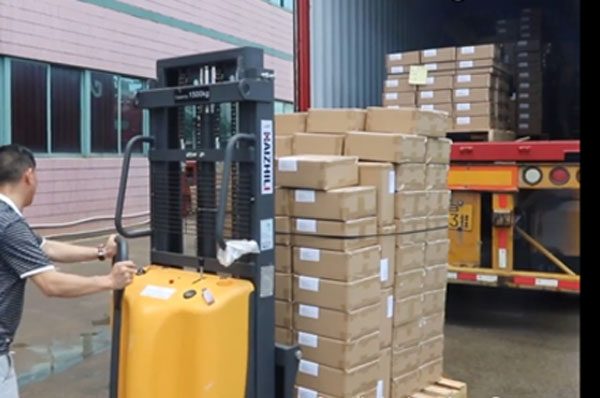
Three packaging decisions change the freight materially. The carton dimensions, which set the cubic volume. The units per carton, which set the number of cartons for a given order. And the carton weight, which has to stay within handling limits that vary by mode and by country.
The trade-off is between carton count and sturdiness. Fewer, larger cartons reduce handling but increase the risk of crushing; more, smaller cartons reduce crush damage and increase the number of movements. For a knitted product where the garment is soft and the carton can be compressed, the balance usually favours a carton that fills the container footprint cleanly, since wasted space is paid for at the same rate as goods.
Two measurements belong in the specification as a result: carton dimensions and carton gross weight, both stated as a maximum rather than a target. Where the goods move by air, the dimensions also have to suit the unit-load and handling requirements of the carriers, which the IATA cargo programme sets out.
Customs, duty and the documents that travel with a consignment
Duty is assessed on the classification of the product and its origin, and both are declared by the importer of record rather than by the factory. The classification comes from the customs tariff of the importing country, and getting it wrong produces a demand for the difference plus, in some cases, penalties.
The documents that travel with an apparel consignment are short and exact: the commercial invoice, the packing list, the transport document, the certificate of origin where a preferential rate is claimed, and any test or compliance certificate that the market requires. Where a certificate of origin supports a preferential duty rate, the origin has to be substantiated rather than asserted, which is where the fibre and supply-chain records described in this guide to labels, duties and documentation for wholesale clothing imports become a customs file rather than a compliance file.
Where documentation is queried, the procedures customs authorities are expected to maintain are framed by the WTO Trade Facilitation Agreement, and the specific publications that set out US entry and origin requirements are issued by US Customs and Border Protection. For goods entering the European Union, the product-level requirements that sit alongside the customs formalities are described within the European Commission’s textiles and clothing framework.
Are there still tariffs on clothing from China?
Yes, in many markets, but the rate depends on the specific case.
Most countries apply duty to imported apparel, and additional measures may also apply to goods originating in China. The rate depends on the product classification, the origin and the measures in force on the date of entry.
Three variables determine what is actually payable. The tariff classification of the garment, which distinguishes between products that look similar on a rail. The country of origin, which for apparel usually follows where the garment was substantially assembled and is a question of rules rather than of labels. And any additional measures in force at the time of import, which change by market and by date and cannot be assumed from a previous shipment.
The practical consequence is that a tariff figure quoted by a supplier is an estimate until it is checked. The rate for a specific product in a specific market is a customs question, answered from the importing country’s tariff schedule and the rulings that interpret it, and it should be re-checked for each season rather than carried forward. Building the duty line into a landed cost as a variable, rather than as a fixed percentage agreed once, is the way to avoid discovering a change after the goods have shipped.
Is China still shipping goods to the US?
Yes — the trade relationship continues; the terms of it change.
Apparel continues to move from China to the United States and other markets in volume. What changes over time is the duty treatment, the documentation expected and the compliance requirements attached to the goods.
Trade between the two markets is a normal commercial flow rather than a privilege that is granted or withdrawn, and apparel is one of the largest categories within it. What varies is the cost of entry and the evidence required at entry, both of which are set by policy rather than by the factory, and both of which are matters of public record rather than of supplier assurance.
For a buyer, the practical implication is a planning one. Where the duty position is uncertain, the decision that carries the most leverage is the delivery term, because it determines who bears the cost if the position changes before the goods clear. The second is the documentation, because a consignment that is held for a query is paying for time. The structural questions that determine what a supplier can commit to, including who carries which obligation, are set out in this explanation of factory minimum order quantity.

Managing the transit window into a retail calendar
Transit time is the least controllable part of the calendar, which is why it should be the most heavily padded. A sea transit quoted at a fixed number of days is a midpoint rather than a promise, and the variability comes from port congestion, schedule omissions and the sailing frequency of the specific service rather than from the distance.
Three practices reduce the exposure. Book against the production date with a buffer rather than against the sailing date, because a missed sailing costs a week rather than a day. Keep the documentation complete before the vessel departs, since most port charges are generated by queries rather than by volume. And plan the last mile separately, because goods at a terminal are not goods in a warehouse, and a retail date is met by the warehouse.
The test to apply to a shipping plan is whether it names the party responsible for each stage and the date on which each stage is expected to complete. A plan that names only the freight forwarder has one owner for a sequence of events, which is the structure in which a small delay becomes an unmanaged one.
Conclusion
Shipping from China is a landed-cost exercise with a calendar attached. Build the nine lines of the landed cost once, choose the mode against the delivery window rather than against the rate, name the delivery term and its version so that two quotations are comparable, and treat carton dimensions as a freight decision. Duty and entry requirements are customs questions that change by market and by season, which is why they belong in the model as variables and on the calendar as dates rather than as assumptions carried forward from the last order.
FAQ
What should a landed cost include?
The factory price, packaging beyond standard, inland transport, export clearance, international freight, insurance where taken, import duty and any additional measures, destination port charges, and the inland leg to the warehouse. Destination charges and duty are the two lines most often omitted.
Which freight mode should apparel use?
Sea for volume orders with a delivery window months away, air for urgent replenishment or high value per kilogram, rail where land routes suit, and express for samples and small top-ups. Apparel is usually charged on volume, so carton dimensions matter as much as weight.
How do I compare two quotations from different suppliers?
Only by converting both to the same delivery term. A price quoted at the factory gate and a price quoted delivered are not comparable, and the term and its version have to be named explicitly because the same three letters have changed meaning between editions.
How can I check the duty that applies to my product?
From the importing country’s customs tariff, using the classification of the garment and its country of origin, and then checking whether any additional measures are in force on the date of entry. Re-check each season rather than carrying a figure forward.
Next step. If you are planning a shipment, send the carton dimensions, the destination and the delivery window. The team can confirm how the freight mode fits the calendar, which delivery term would suit the programme, and what the documentation has to show.
