
Wholesale underwear is a pack product. A distributor does not buy a garment, it buys a carton containing a defined assortment that has to sell through in a defined channel, and the assortment is what makes or loses the margin. The specifications that decide success are therefore not only the waistband and the fabric but the size ratio, the fold, the carton count and the reorder trigger. Those are set before the first order and rarely revisited, which is why they deserve the same attention as the garment.
Wholesale Underwear Supplier: what to confirm before you send a tech pack
A wholesale brief has two halves, and most buyers write only the first. The garment half covers waistband and leg finish, seam types, fabric family and the graded size set. The commercial half covers the pack: how many pieces per pack, what the size ratio is, how the pieces are folded and bagged, how many packs go into a carton, and what the carton mark has to show.
The commercial half is what the distributor actually resells, so it should be written with the channel in mind. A pack designed for a supermarket shelf and a pack designed for a marketplace warehouse differ in fold, bag, barcode and carton count, and a supplier given only the garment specification will default to its own standard pack. Buyers should send both halves together, because the pack decisions change the cutting plan and therefore the price.
Wholesale pack-out for underwear: size ratios, carton plans and reorder triggers
Pack-out is a chain of decisions that ends in a carton count. The size ratio determines how many of each size go into a pack; the pack count per carton determines how many cartons an order produces; and the carton plan determines the freight volume. A ratio that does not match the grade leaves the extremes unsold; a carton plan that is not fixed produces a freight estimate rather than a quote.
| Pack-out decision | What it drives | What to fix before ordering |
|---|---|---|
| Pieces per pack | Retail price point and handling cost | Pack quantity and the assortment inside it |
| Size ratio | Marker, consumption and sell-through | Ratio per pack and the sizes it covers |
| Fold and bag | Presentation and packing labour | Fold standard and bag specification |
| Packs per carton | Freight volume and carton strength | Piece or weight limit per carton |
| Carton mark | Warehouse handling and receipt | Mark content, barcode and label position |
| Reorder trigger | The next order date | Sell-through level that triggers a repeat |
The reorder trigger is the decision most often left out. A distributor that reorders on instinct buys late; one that reorders at a defined sell-through level buys while the material and capacity are still available. Agreeing the trigger with the supplier is what makes a repeat order predictable rather than reactive.
Freight planning follows the same logic, because the carton plan converts directly into volume. The ICC Incoterms rules define where cost and risk transfer between seller and buyer, which determines who is calculating that freight in the first place, and air cargo guidance from bodies such as the International Air Transport Association is the reference for how air consignments are documented and consolidated.
Waistband, pouch and leg-opening construction on wholesale underwear programmes: where comfort complaints start
In a wholesale programme the construction decisions are also inventory decisions. A waistband type that is stocked can be reordered quickly; one that is made to order carries a minimum and a lead time that will delay the repeat. The leg opening behaves the same way, because it depends on an elastic that may be specific to the programme. Pouch construction is the least visible variable to a buyer and the most likely to generate returns, because it determines how the garment behaves in movement rather than how it looks folded.
Buyers planning to reorder should therefore prefer construction elements that exist in the supplier’s standard range, unless the brand needs the difference badly enough to accept the lead time. A distinctive waistband that cannot be reordered quickly converts a fast-moving pack into a slow one.
Fabric composition options on wholesale underwear programmes: modal, bamboo viscose, combed cotton and performance blends
The fibre choice in a wholesale pack is a channel decision as much as a comfort one. Modal and micro-modal sell on hand-feel and hold colour well, which suits repeat purchase. Bamboo viscose sells on softness and warmth, and suits markets where moisture management is part of the message. Combed cotton remains the volume baseline. Cotton-blend cellulosics and blends with elastane cover the middle of the range and the fitted end respectively.
Two operational points matter more in wholesale than in direct-to-consumer programmes. The blend has to be reproducible across reorders, because a pack that changes hand-feel between production runs loses its repeat customers. And the care label has to match the delivered fabric, since the labelling obligations sit with the seller of the finished goods; the European Commission’s textiles and clothing framework and the US Federal Trade Commission’s business guidance set out the positions for those two markets.
MOQ structure for wholesale underwear: how minimums work per style, colour and size
Wholesale minimums are usually expressed per style and per colour, with a further constraint per size. That last constraint is the one that catches distributors, because a wide size range in a modest total quantity produces very small quantities per size, which affects the cutting lay and therefore the cost. A ratio that concentrates on the middle sizes is cheaper to produce than an even spread across eight sizes.
Buyers should ask three questions: the minimum per colour, the minimum per size within a colour, and whether mixed sizes count towards one threshold. The answers decide whether the first order can be a single assortment or has to be split across two placements. The underlying mechanics are explained in this guide to clothing factory MOQ for wholesale buyers.
How the minimum changes when a new colour or fabric enters a wholesale underwear programme
A colour addition in a wholesale programme is a dye lot plus a pack decision. The dye lot brings its own minimum and lead time, and the pack decision may require new packaging print if the pack is colour-coded. Neither is unreasonable, but both change the entry quantity and the calendar, and a distributor planning a seasonal refresh should decide the palette early enough that the lab dip approval does not sit on the critical path.
Fabric additions are heavier, because a new blend affects comfort and can affect fit at the waistband and leg opening. A wholesale programme that reorders on a trigger depends on consistency, so a fabric substitution between runs is a product change rather than a production adjustment. Where a substitution is unavoidable, it should be treated as a new fit and approval cycle rather than a like-for-like swap.
Sampling sequence for wholesale underwear: what the fit sample and the PP sample each lock
The fit sample settles the measurements, the block and the ratio’s behaviour across sizes. The pre-production sample settles the fabric, elastic, colour, labelling and pack-out that bulk will use. In a wholesale programme the second approval should include the folded pack rather than the flat garment, because the fold standard and the bag specification are part of what the distributor buys.
Both approvals should be documented against references, and the approved pack retained as the standard. The documentation practice that supports that is described in this sample approval protocol for wholesale orders.
Decoration and branding on wholesale underwear: print, embroidery, labels, hangtags and packaging
Wholesale branding is dominated by components rather than graphics: the waistband element, the sewn brand label, the care and composition label, and the packaging. In a pack product the packaging carries more weight than usual, because the pack face is the shelf presence and the carton mark is the warehouse instruction.
Each component has its own minimum and lead time, and the pack print is the one that most often surprises buyers, because film and carton printing are made to order. Buyers should confirm the component lead times at the same time as the garment lead time, and place the component orders against the production calendar rather than against the shipping date.
Where the buyer also has to report a test result or a facility claim, the reference should be named in the same conversation. OEKO-TEX Standard 100 is the common apparel baseline for harmful-substance testing, and WRAP certifies facility compliance against a published standard.
QC checkpoints that decide whether a wholesale underwear bulk order ships clean
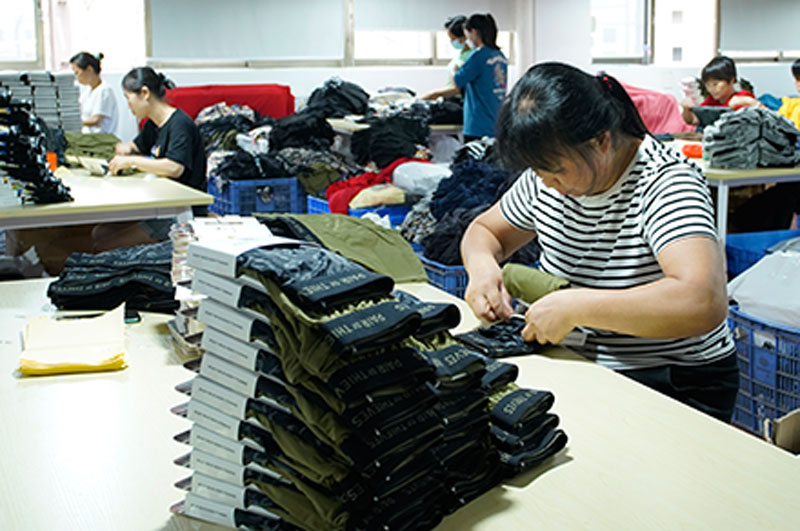
A wholesale inspection covers the garment and the pack, and the pack checks are where most programmes lose time. On the garment: measurements at the waistband and leg opening, elastic recovery, seam integrity and colour consistency. On the pack: piece count per pack, correct size mix against the ratio, fold standard, bag integrity, and carton count against the plan.
Correcting a pack error after the cartons are closed is expensive, because the goods have to be reopened and reassorted. The check therefore belongs in-line, at the point where the pack is assembled, not at final inspection. Where a third party is involved, the same sequence applies; the practices behind a working inspection process are described in this guide to factory QC for wholesale apparel orders.
Testing laboratories publish the scope they apply to garments and their packaging, as Intertek’s textiles and apparel testing range illustrates, and naming the test on the specification removes the ambiguity about what a passed inspection actually covers.
Where can I buy underwear in bulk?
From the manufacturer that will produce your pack.
Buying bulk underwear means buying a pack specification, so the supplier has to be able to control the size ratio, the fold and the carton plan, not just the garment.
Marketplaces can supply bulk garments quickly, but they rarely allow the pack specification to be changed, which limits a distributor to whatever assortment the seller already holds. A manufacturer produces to the ratio and pack the channel needs, and it can hold those specifications across reorders, which is what makes sell-through predictable.
The practical test is whether the supplier can quote the pack as well as the garment. A quotation that prices the garment and leaves the packing standard open cannot be compared with one that specifies piece count, ratio, fold and carton plan, because the two are not offering the same product. Knitwear Base’s underwear programme covers garment and pack together, which is what a wholesale buyer should require before placing a first assortment.
How do I start my own underwear business?
Decide the pack before the brand identity.
Start from the channel and the price point, derive the pack and the ratio from those, and only then specify the construction and the branding that fit inside them.
This reverses the instinct to design the product first. A pack product has to sell at a price the channel accepts, which fixes a cost per piece, which in turn fixes what kind of fabric and waistband are feasible. Brands that design the garment first often find that the construction they want does not fit the price point their channel needs, and the correction happens at the sampling stage where it is most awkward.
Once the pack and ratio are set, the programme needs a garment specification, the branding components, and a reorder plan with a defined trigger. This guide to underwear size assortment for wholesale packs covers the ratio decisions that sit at the centre of it.
Conclusion
Wholesale underwear succeeds or fails on the pack. The size ratio determines the marker and the sell-through, the fold and carton plan determine the freight, and the reorder trigger determines whether the second order arrives while the first is still selling. Around those sit the garment decisions — waistband, leg finish, fabric family — which matter most where they affect reorder speed. Buyers who specify the commercial half of the brief alongside the garment half get a supplier relationship that can repeat predictably. Buyers who specify only the garment get a supplier’s default pack and no control over the cost of the next order.
FAQ
What size ratio should a first wholesale pack use?
Derive it from the channel and the grade rather than copying another brand. A ratio concentrated on the middle sizes is cheaper to produce and usually sells through better in a general retail channel, while a wider spread suits a range that has to serve the extremes of the size curve.
How many pieces should go into a carton?
That is a freight and handling decision. A heavier carton reduces handling cost per piece and may attract weight limits; a lighter carton is easier for a warehouse to handle and produces more cartons for the same volume. Fix a piece or weight limit and keep it consistent across orders.
When should we place a reorder?
At a defined sell-through level agreed in advance, not when stock looks low. The trigger should allow for the material and production lead time of the construction you chose; a distinctive waistband that is made to order needs an earlier trigger than a stock one.
Can the pack specification change between orders?
It can, but each change usually carries a component minimum and a lead time, and for printed packaging it may require new artwork approval. Reorders run most predictably when the pack stays identical and only the quantity changes.
Next step. If you are planning a wholesale underwear order, send the channel, the price point and the pack you have in mind. The team can confirm what the ratio and carton plan would produce in freight terms, where the component minimums sit, and what the reorder timeline looks like.
