
Hoodies are the bulkiest garment in most knit ranges, so the pack-out decisions that are minor elsewhere become the difference between a profitable order and an expensive one. The fold, the pieces per carton and the size ratio determine how many cartons leave the factory, and that number determines the freight. A pack plan chosen late, or copied from a lighter category, will quietly cost more than the price difference being negotiated.
Wholesale Hoodies Supplier: what to confirm before you send a tech pack
A wholesale hoodie brief has two halves. The garment half covers fabric weight and surface, hood and pocket construction, rib specification, closure details and the graded size set. The commercial half covers the pack: pieces per pack, the size ratio inside it, the fold standard, the bag, the pieces per carton and the carton mark.
The commercial half deserves early attention because hoodie freight is volume-driven. A fold that adds a few centimetres changes the stack height, which changes the carton count and therefore the container utilisation. Buyers should write the packing specification as precisely as the garment specification, and should ask the supplier to confirm the carton dimensions that the chosen fold produces rather than accepting a standard pack.
Wholesale pack-out for hoodies: size ratios, carton plans and reorder triggers
Pack-out runs as a chain. The size ratio determines what goes into a pack; the pack count determines the cartons; the carton plan determines the volume; the volume determines the freight. Because each step feeds the next, a change to the ratio late in the process moves the freight estimate rather than only the assortment.
| Decision | What it drives | What to fix early |
|---|---|---|
| Pieces per pack | Retail price point and handling | Pack quantity and the assortment inside it |
| Size ratio | Marker, consumption and sell-through | Ratio per pack and the sizes it covers |
| Fold standard | Stack height and carton dimensions | The fold and the resulting carton size |
| Pieces per carton | Freight volume and carton strength | Piece or weight limit, confirmed in writing |
| Carton mark | Warehouse handling and receipt | Mark content, barcode and label position |
| Reorder trigger | When the next order is placed | Sell-through level that triggers a repeat |
The reorder trigger matters more in this category than in light ones, because a hoodie reorder depends on fleece availability. Where the colour is stocked the replacement is quick; where it was dyed to order, the lead time is long enough that a late trigger costs a season. Delivery terms should be named explicitly, since the ICC Incoterms rules define where cost and risk transfer and the freight calculation depends on which term applies.
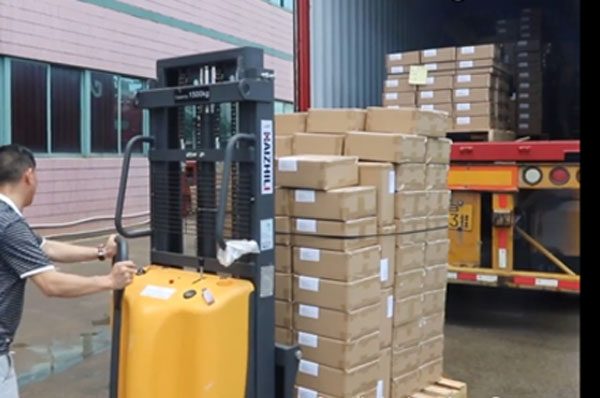
MOQ structure for wholesale hoodies: how minimums work per style, colour and size
Hoodie minimums are shaped by the fabric. A hoodie consumes more fleece than a light garment, so the dye lot minimum represents a larger material commitment and a produced colour raises the entry quantity more visibly than it would on a T-shirt. Size spread adds a second effect, because a wide range in a modest order produces small quantities at the extremes and reduces cutting efficiency.
Buyers should ask the minimum per colour, the minimum per size within a colour, and whether the fabric is stocked or produced against the order. Where a branded or tooled trim is used, its minimum should be asked at the same time, because a made-to-order component can exceed the garment minimum. The garment-side mechanics are explained in this guide to clothing factory MOQ for wholesale buyers.
How the minimum changes when a new colour or fabric enters a wholesale hoodies programme
A new colour is a dye lot with its own minimum and lead time, and the lab dip approval sits before bulk dyeing. On a heavy garment the minimum consumes more material, so the cost of testing a colour is higher and the decision to add one is more consequential than it is in a lighter category.
A new fabric weight or surface changes the structure and the decoration. Brushed and unbrushed fleece, and the difference between fleece and French terry, alter the hand-feel, the print surface and the shrinkage behaviour; a heavier fleece holds a boxy silhouette while a lighter one drapes. Where the weight changes, the rib specification should be reviewed as well, because a rib chosen for a lighter body can collapse under a heavier one. The fabric choices are compared in this comparison of fleece and French terry.
Sampling sequence for wholesale hoodies: what the fit sample and the PP sample each lock
The fit sample locks the body, hood, pocket and rib specification, and its measurements should be checked at the extremes as well as the base size. The pre-production sample locks the fabric, surface, trims, decoration and, in a wholesale programme, the folded pack. Approving the pack at the same stage as the garment prevents a change in fold from moving the carton count after the quotation has been agreed.
Both approvals should be documented against references and retained, with a measurement record stating the base size and the tolerance for each critical dimension. The documentation practice is described in this sample approval protocol for wholesale orders.
Decoration and branding on wholesale hoodies: print, embroidery, labels, hangtags and packaging
Wholesale branding is dominated by components rather than by graphics: the neck label, the care label, the hangtag and the packaging, with a print or embroidered mark where the buyer is decorating. Each component has its own minimum and lead time, and the packaging print is usually the one that surprises buyers because film and carton printing are made to order.
Decoration on a heavy brushed surface needs method-specific testing. A dense print must penetrate the fleece without permanently flattening it, and embroidery needs the right backing to avoid distortion at the mark. Both should be tested on the production fabric rather than on a swatch of a different weight. Material references worth naming include OEKO-TEX Standard 100 for harmful-substance testing and amfori, which administers the BSCI social audit framework many European buyers reference.
QC checkpoints that decide whether a wholesale hoodies bulk order ships clean
Inspection covers the garment, the decoration and the pack. On the garment: measurements at the base size and the extremes, hood and pocket attachment, rib recovery at cuff and hem, seam integrity in a heavy fabric, and closure function where fitted. On the pack: piece count, size composition against the ratio, fold standard, and carton count against the plan.
Correcting a pack error after the cartons are closed is expensive, because the goods have to be reopened and reassorted, so the pack check belongs in-line where units are assembled. Where the material or the transport mode requires specific documentation, both should be named at the same stage: testing houses publish the scope they apply to garments, as Intertek’s textiles and apparel testing range illustrates, and air consignments follow the handling standards published by the International Air Transport Association.
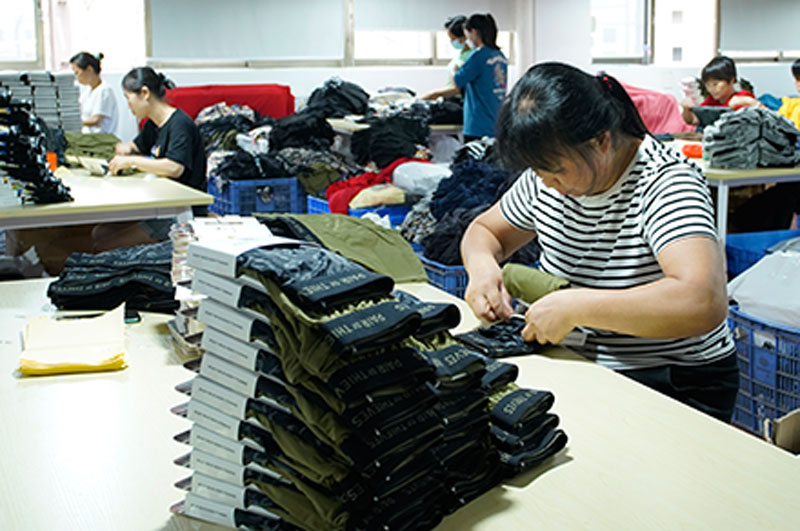
Where can I find a wholesaler for hoodies?
Where the fleece and the pack can both be controlled.
A wholesaler that holds stock in your weight and colour can top up quickly; a manufacturer can hold your specification across reorders, which is what makes the pack repeatable.
The distinction is about repeatability. A wholesaler is convenient for a mixed order drawn from existing stock, but the weight, colour and pack are whatever is available. A manufacturer can hold one specification across production runs, which is what a reorder needs, and it can also build the pack plan around the container configuration rather than accepting a default carton.
Buyers should ask three things of either: what is held as finished stock, how shade and weight are controlled between lots, and whether the pack specification can be changed without a new component minimum. Knitwear Base’s hoodie programme runs garment and pack through one specification, and the weight and construction references behind it are covered in this guide to hoodie weight and GSM.
Where can I bulk buy hoodies?
From a manufacturer once the specification is fixed.
Marketplaces and wholesalers suit immediate needs from existing stock; a manufacturer suits a programme where the weight, colour, measurements and pack must not change between orders.
Bulk buying through a reseller works when the requirement is immediate and the specification is flexible, because the buyer is choosing from what exists. It stops working when consistency matters, because a different lot means a different shade or weight, and the buyer’s own customers notice. A manufacturer is the route that can commit to one specification across orders.
The decisions that make a bulk programme repeatable are the fabric weight and the pack plan, and both should be recorded before the first order rather than reconstructed afterwards. Freight consolidation is the reward for a fixed pack plan, and the terms governing it belong in the quotation rather than in a later conversation, because the ICC Incoterms rules determine which party is calculating the freight in the first place.
Conclusion
Wholesale hoodies are a volume business before they are a garment business, because the fold and the carton plan determine the freight before any price is agreed. The garment decisions — weight, surface, hood, pocket and rib — set the structure, and the fabric minimum sets how small a first order can be. Buyers who write the packing specification as precisely as the garment specification, who ask whether the fleece is stocked or produced, and who set the reorder trigger against material lead time rather than instinct get a programme that repeats without renegotiating the pack. Where the material requires verification, the ASTM standards programme for textiles gives both parties neutral vocabulary for the property under test.
FAQ
Why does the fold standard matter so much on hoodies?
Because hoodies are bulky and freight is volume-driven. A fold that adds a few centimetres changes the stack height, which changes the carton count and the container utilisation. The fold should be specified with the carton dimensions confirmed in writing.
Should we buy hoodies from stock or produce to specification?
Stock suits an immediate requirement and a flexible specification. Production suits a programme where the weight, colour and measurements must not change between orders, because only a manufacturer can hold one specification across runs.
How early should a hoodie reorder be placed?
Against the material lead time, not against when the stock looks low. A stocked fleece reorders quickly; a colour that was dyed to order does not, and a late trigger costs a selling season rather than a few days.
Does the size ratio affect the price on a bulky garment?
It affects the cutting efficiency and therefore the cost per unit, and it also affects the carton count. A ratio weighted towards the middle sizes is cheaper to produce and usually sells through better in a general retail channel.
Next step. If you are planning a wholesale hoodie order, send the channel, the weight and the pack you have in mind. The team can confirm what the fold and carton plan would produce in freight terms, whether the colour is stocked or dyed to order, and how the reorder timeline would run.
