
A product development partner is usually chosen on sampling speed and judged later on ownership. The first sample arrives quickly, the second season is planned, and only then does anyone establish who holds the pattern, whether the graded set can be reproduced, and what the brand can take with it if the relationship changes. Product development creates the assets a brand will depend on for years, so the questions worth asking at the start are about files and rights, not about lead time.
Apparel Product Development Company: what to confirm before you send a tech pack
Development briefs fail in the same three places: the construction is described in words rather than in a drawing, the measurements are given as a single size rather than as a graded set, and the materials are named without a composition or a weight. Each omission is filled by the developer’s assumption, and assumptions made at the start are expensive to reverse once a pattern exists.
A development-ready pack therefore needs a technical drawing with construction notes, a measurement table that states at least the centre size with direction for the grade, fabric composition and weight with a tolerance, trim references, and a statement of what the finished garment is expected to do in wear. The last item is the one most often missing and the one that most changes the pattern, because a garment built for stretch recovery is cut differently from one built for drape.
Lead time, freight and Incoterms for knit apparel shipments from China
Development lead time and shipment lead time are separate clocks, and buyers who treat them as one underestimate both. Development runs until the pre-production sample is approved; production starts after that and depends on material booked in advance; shipment begins when the goods are packed. A programme that starts material booking only after the pre-production approval has inserted the longest external dependency into the middle of its calendar.
Delivery terms should be fixed at quotation rather than at shipment. The ICC Incoterms rules define where cost and risk transfer between buyer and seller, and a quotation that does not name a term cannot be compared with another quotation that does. Buyers should also confirm who prepares the shipping documents and who is responsible for clearance, because documentation problems surface at the port where there is no time to solve them.
Freight mode is a development decision as much as a logistics one. Air freight compresses the calendar and raises the landed cost, which changes the price at which a first collection can be tested; sea freight reduces the unit cost and requires the order to be placed earlier. Buyers should decide the mode before the development calendar is set, because the decision determines how many weeks of buffer the programme actually has.
Where the product is sold into a regulated market, the development stage is also where labelling and material obligations enter the calendar. The European Commission’s textiles and clothing framework sets out the EU position on fibre naming and product labelling, and it is cheaper to build those requirements into the specification than to retrofit them onto an approved sample.
Cost drivers when comparing two knit apparel quotations on one specification
Two quotations for the same garment differ for a small number of reasons, and almost none of them is labour rate. The differences cluster around what is included: whether pattern and grading are part of the price, whether the fabric minimum is carried by the buyer or absorbed, whether decoration setup is charged once or per run, and whether packing follows a standard or a specification. Comparing totals without normalising those four items produces a false gap.
Currency and payment structure produce a second, quieter difference. A quotation in one currency and a quotation in another cannot be compared without knowing who carries the exchange risk, and a deposit-heavy structure costs the buyer cash earlier than a structure weighted towards the balance. Neither is a defect, but both belong in the comparison rather than in the reconciliation after the order.
| Quote element | What to normalise before comparing |
|---|---|
| Development | Whether pattern, grading and sample rounds are included, and the fee for extra rounds |
| Material | Specified composition and weight, consumption basis, and who carries the fabric minimum |
| Decoration | Method, number of positions, and whether setup is per colour or per order |
| Packing and delivery | Packing standard, carton plan, and the named delivery term with place of delivery |
What to verify on an apparel factory before committing to a knit first order
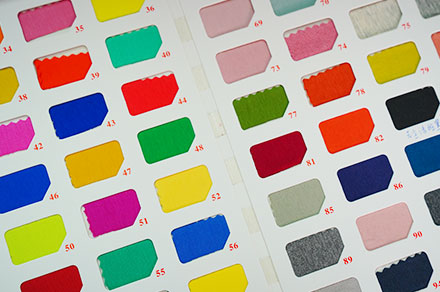
Verification should test the specific claim that matters to your category rather than the general size of the business. A factory that runs knit basics well may have no experience with the fabric you have specified, and a factory with impressive machinery may subcontract the finishing that determines how your garment presents in retail. The useful checks are category-specific: which machines are used for the construction you need, how the finishing and pressing are handled, and whether the sampling team is the same team that will run production.
Three documents shorten the exercise. A business licence establishes the legal entity you are contracting with. A specification and sample from a comparable programme shows what the factory has actually produced. And a written statement of which processes are in-house and which are subcontracted tells you where the handoffs will be. Buyers should ask for all three before the first order rather than after the first problem.
Where the category is regulated in the destination market, verification extends to materials and to the site. Testing frameworks such as OEKO-TEX Standard 100 cover harmful-substance testing on apparel textiles, and certification programmes such as GOTS document organic fibre claims through the supply chain. A factory that cannot say which standard applies to which material has not yet been asked the right question.
Technical references complete the picture. The ASTM standards programme for textiles gives both parties the same vocabulary for describing the property under test, which is what turns a general requirement for good quality into a specification an inspector can apply.
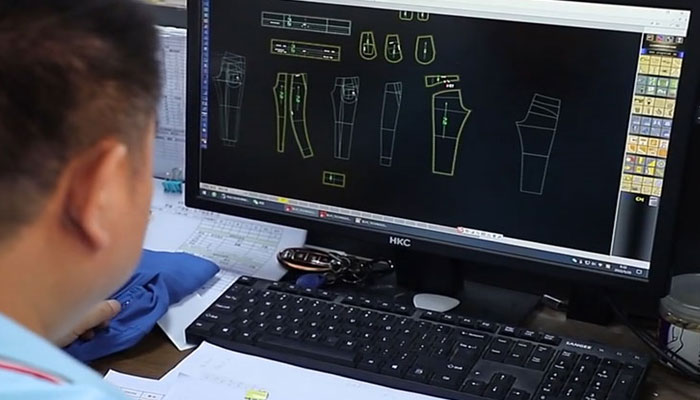
How size grading and size-ratio planning change a knit apparel order
Grading determines how a pattern behaves away from its centre size, and it interacts with the pattern in ways that are only visible when the extremes are measured. A measurement that reads correctly at the middle of the range can produce a garment that is too long at the top or too tight at the bottom, and correcting that after the sample stage means re-grading rather than adjusting a single measurement.
Size-ratio planning then decides how the graded set is bought. Retail partners usually work to a ratio, and a ratio that does not match the grade wastes either the extremes or the centre. Buyers should establish the ratio before the cutting plan is set, because the ratio drives the marker, the marker drives consumption, and consumption drives the cost per unit. A ratio chosen after the quotation is a cost change dressed as a merchandising decision.
What happens to the pattern and tooling if a knit apparel programme changes supplier
The answer depends entirely on what was agreed when the pattern was created, and it is the single most important commercial term in a development relationship. If the pattern stays with the developer, a new supplier has to reverse-engineer the fit from a physical sample, which rarely reproduces the original and always costs a sample round. If the brand holds the digital pattern and the graded set, the change is a sampling exercise rather than a development project.
A workable structure separates the reusable block from the specific pattern: the developer keeps the block it uses across its own work, and releases the specific pattern, the graded set and the measurement specification for the style the brand paid to develop. Buyers should name the file formats and the payment trigger in the agreement, and should treat file transfer as a deliverable of development rather than as a favour requested later.
The same logic applies to the measurement specification. A measurement chart without the tolerances it was built to cannot be reproduced, because two makers reading the same chart will apply different allowances. Buyers should ask for the tolerances as well as the measurements, and for the size the chart is anchored to, since a chart without its base size is only half a specification.
What does an apparel product developer do?
Turns a design into a producible, graded specification.
A product developer resolves construction, fit, materials and grading into files a factory can cut from, and manages the sample rounds until the specification is approved.
The work sits between design and production. A designer produces an intention; a developer produces the drawing, the measurement table, the material specification and the pattern that let a factory make it repeatedly to the same standard. That includes deciding how the garment is assembled, where the seams sit, how the components interact, and how the fit changes across the size range.
In practice a developer also manages the feedback loop. Comments from a fit session have to be converted into measurement or pattern changes, and those changes have to be recorded so the next sample reflects them. Where a brand runs development with a manufacturing partner, the useful question is whether the person doing this work will also be accountable for production, because a specification that is never tested on the line tends to contain assumptions the line cannot execute. Knitwear Base runs development and production under one roof across its knit categories, which keeps those two stages in the same conversation.
What is product development in apparel?
The stage that makes a design manufacturable.
Product development converts a concept into a technical pack, a pattern, a graded size set and an approved sample, and it ends when bulk can be produced without further interpretation.
The stage has a clear boundary. It begins when someone decides what the garment should be and ends when a factory can produce it repeatedly against a written standard. Everything in between — pattern work, grading, material selection, sample rounds, fit evaluation — exists to remove interpretation from the production process, because interpretation is what produces variation between one order and the next.
That boundary also defines what the brand should own at the end. A developed programme should leave the brand holding a technical pack, a measurement specification, a material specification and a record of the approvals that produced them. Whether the brand also holds the pattern is a commercial decision, but a brand that holds no documentation at all has bought a garment rather than developed a product. Development scope and technical documentation are described in this overview of apparel design and development.
Conclusion
Product development produces assets, and the commercial questions are about who holds them. The technical work — pattern, grading, construction and materials — is well understood by any competent partner; what varies is whether the brand ends the process with files it can use elsewhere, or with a relationship it cannot leave. Buyers who fix the documentation list, the file position and the delivery terms at the start get a developed product. Buyers who focus only on sampling speed get a garment that is difficult to reproduce.
FAQ
Does product development include design?
Usually not. Design decides what the garment should be; development decides how it is made repeatedly. Some suppliers offer both, and where they do, a buyer should ask which elements are original development and which are drawn from the supplier’s existing range of styles.
Who should hold the pattern at the end of development?
That is a commercial term rather than a technical one. The workable compromise is that the developer keeps the reusable block and releases the specific pattern, graded set and measurement specification for the style the brand paid to develop, usually on payment of a stated fee.
How long does apparel product development take?
Duration depends on how much has to be created. A style developed from an existing block with a known fabric may need one sample round; a new construction with a new material usually needs three. The variable that buyers control is the completeness of the brief, not the speed of the pattern room.
Should the developer also be the manufacturer?
It reduces risk when they are, because the specification is proven on the machinery that will run it. Where they are separate, the specification should be tested on the production line before bulk, and the handover should include the pattern, the grading and the measurement tolerances.
Next step. If you are briefing a development partner, send the concept and the documents you have. The team can tell you which parts of the specification are already defined, what will be created during development, and which files your brand would hold at the end.
