
The OEM-versus-ODM question is usually framed as a price comparison, and that framing hides the real variable. The model you choose decides how much of the garment you have to specify before anyone can quote it, and therefore how much of the risk you carry when the delivered goods are not what the market wanted. A brand that picks the cheaper model without noticing that it also picked a heavier specification burden tends to discover the mismatch during the first sample round, when the calendar is already committed.
What actually changes between OEM and ODM?
The design source changes; everything else follows.
In OEM the brand supplies the design and the factory executes it; in ODM the factory supplies the design and the brand selects and brands it, which shifts development cost and ownership.
The two models sit at opposite ends of one variable: who pays for and holds the development. An OEM order starts from the brand’s own pattern, specification and measurement set. An ODM order starts from a style the factory has already developed and can produce without new tooling. Everything that buyers experience as different — quotation speed, sample rounds, minimums, exclusivity and the amount of written detail required — is a consequence of that one structural difference rather than a separate negotiation.
This is also why the comparison is not a ranking. A factory that is strong at OEM may be slow and expensive on ODM, because its strength is in executing a specification precisely rather than in maintaining a commercial range. Buyers should choose the model that matches what they can specify, not the model that sounds more advanced.
What does an OEM order require from you that an ODM order does not?
A complete, measurable specification you can defend.
OEM requires pattern, grading, construction details, fabric and trim specifications and a measurement tolerance table; ODM reduces that to style selection, fit confirmation and branding decisions.
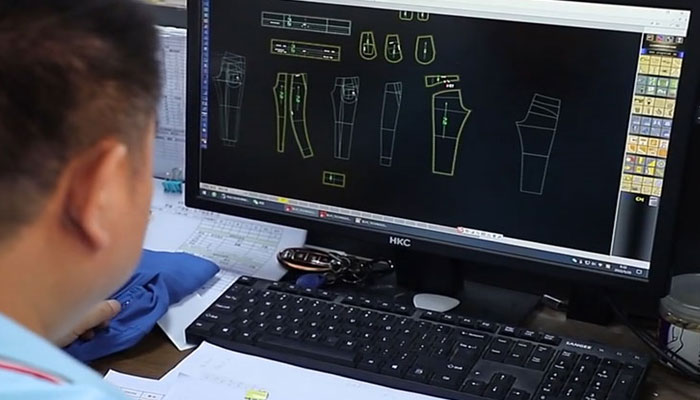
An OEM brief has to be specific enough that two factories could quote the same work and a third party could judge whether the delivered goods comply. That means a technical drawing with construction notes, a graded measurement specification with tolerances, fabric composition and weight, seam types, stitch densities where they matter, trim references, and packaging instructions. Where those are missing, the factory fills the gap with its own assumptions, and assumptions are what produce the disputes that later look like quality problems.
An ODM brief is shorter because the garment has already been defined. The brand selects a style, confirms fit on a sample, chooses from available fabrics where a colour change is needed, and supplies the branding assets. The risk does not disappear; it moves from the brand’s specification to the factory’s range management, which is why exclusivity and availability become the questions that matter instead.
How does the model change the tech pack you have to supply?
OEM needs the full pack; ODM needs a decision sheet.
An OEM tech pack must be self-sufficient for production, while an ODM instruction set only has to capture the deviations from the factory’s existing specification.
In practice the difference is between a document that creates the product and a document that modifies it. The OEM pack has to carry the pattern logic, the grading, the construction and the materials, because nothing exists until the brand has stated it. The ODM instruction set references an existing style and records the changes: which fabric if not the standard, which colour, which print or embroidery placement, which label and packaging, and which measurements if the fit is adjusted.
That has a practical consequence for how brands build their own files. A brand planning to move from ODM to OEM later should keep a running specification record from the first ODM order — measurements as approved, fabric consumed, trims used, construction observed. Those records become the basis of the OEM tech pack and remove most of the re-development cost at the point of transition. Knitwear Base’s apparel design service works from both types of file, which is why a buyer can start on one model and change later without starting again.
Where does design ownership sit in each model?
OEM keeps it with the brand; ODM usually does not.
In OEM the brand owns the design it supplied; in ODM the factory owns the range and licenses the style, so exclusivity has to be negotiated and is normally tied to volume.
The ownership question follows the payment question. If the brand paid for the pattern and the sample rounds, the design is the brand’s asset. If the factory absorbed that work into its catalogue, the design remains the factory’s commercial inventory, and what the brand receives is a right to buy and brand the style, bounded by whatever the agreement says about territory, channel and term.
Buyers who need a design to be theirs, in the sense of being unable to appear on a competitor’s range next season, are describing an OEM requirement or a negotiated ODM exclusivity term. Treating that as a design question understates it; it is a commercial term with a cost attached, and it is priced against the sales the factory gives up.
Which model fits which buyer stage?
Test with ODM, commit with OEM.
ODM suits first collections and category tests where speed matters more than uniqueness; OEM suits brands that know their fit, expect several seasons on a style and want the tooling in their own hands.
The choice tracks expected volume and expected life more closely than it tracks budget. A style that will run once, or a category the brand is testing, is usually cheaper and faster through ODM because the development work is already done. A style that will anchor a range for several seasons is usually cheaper through OEM once the second season arrives, because no further development cost is incurred and the tooling can be moved.
| Buyer situation | Model that usually fits | Why |
|---|---|---|
| First collection, limited capital, needs stock within a season | ODM | No development fee; sampling starts from an existing block |
| Category test where the brand is unsure of the fit | ODM | Low commitment; the range proves demand before tooling is built |
| Established fit, multi-season style | OEM | Development cost amortises across seasons; tooling stays portable |
| Distinctive construction or a proprietary pattern | OEM | Only the brand’s own specification can reproduce it |
| Brand that needs exclusivity in a specific market | Either, with a written exclusivity term | Exclusivity is contractual, not a property of the model |
How does the model change sampling and the approval steps?
ODM confirms; OEM proves.
An ODM sample confirms fit, fabric behaviour and branding placement, while an OEM sample has to prove the pattern, the grading and the construction against a specification that did not previously exist.
ODM sampling is a shorter loop because the block is already tested and the variables are limited to the brand’s chosen changes. The fit sample settles the measurement set; the pre-production sample settles fabric, colour, trims and branding; bulk follows. OEM sampling carries more weight because the sample is the first physical evidence that the specification works, so a fit comment that changes the block can ripple into the grade and the marker.
Whichever model applies, two approvals should never be collapsed. The fit approval fixes the measurements; the pre-production approval fixes what the bulk will be made from. The sample approval protocol used for wholesale orders sets out what each stage is meant to lock, and it applies equally to both models.
How does the model change minimums and colour flexibility?
OEM minimums follow fabric; ODM minimums follow stock.
An OEM order inherits the minimums of the fabric it specifies, while an ODM order that stays within the factory’s stocked range can start lower and gains more colour flexibility.
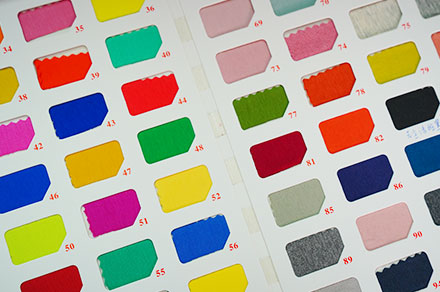
Minimums are set by whichever step in the chain cannot be run economically below a threshold: a dye lot, a print run, a cutting lay, or a fabric commitment. In OEM work the brand determines the fabric, so the brand determines the threshold. In ODM work the factory has already committed to certain fabrics and colours, and an order that stays inside that range avoids the threshold entirely — which is why colour flexibility in ODM is greatest for colours the factory already carries and weakest for new ones.
The practical rule for buyers is to test the colour decision before the style decision. If a launch palette is non-negotiable and outside the factory’s stocked range, the order will behave like OEM regardless of which model was named on the enquiry.
How do decoration and branding differ between the two models?
Branding is routine in both; placement control is not.
Print, embroidery, labels and packaging are available under both models, but an OEM pack can specify exact placement, stitch and colour standards while an ODM order usually works within the factory’s existing placement options.
Branding is the layer most brands control fully in either model, because the assets originate with the brand. The difference is precision. An OEM specification can dictate a stitch count, a placement tolerance and a thread colour reference, and the factory is obliged to deliver to those numbers. Under ODM the same decoration is normally applied to an agreed position on an existing style, with the tolerance set by the factory’s standard rather than by the brand’s drawing.
Labels and packaging sit outside that distinction: they are governed by the brand’s own artwork and the compliance rules of the destination market, not by the manufacturing model. The US Federal Trade Commission’s business guidance is a useful starting reference for how labelling obligations attach to apparel sold in that market, and the European Commission’s textiles and clothing framework covers the equivalent position for the EU market.
What does each model do to lead time and reorder behaviour?
ODM starts faster; OEM reorders cleaner.
ODM avoids the development window on the first order, while OEM avoids re-development on every subsequent order, so the advantage flips after the first or second season.
On a first order the ODM route removes pattern work, grading and the associated sample rounds from the critical path, and the remaining variable is the approval of the brand’s changes. On a reorder the position reverses: an OEM style reorders against a specification the brand owns, which makes a second supplier possible and makes the comparison of reorder quotations straightforward, while an ODM reorder depends on the factory’s continued willingness to supply the block.
Delivery terms should be agreed independently of the production window. The ICC Incoterms rules define when risk and cost pass between the parties, and buyers comparing an ODM and an OEM quotation should normalise those terms before comparing anything else.
Which model gives tighter control over compliance and labelling?
OEM, because the brand owns the specification.
OEM gives the brand a written specification to audit against, while ODM control depends on how completely the factory documents its own materials and processes.
Compliance control follows documentation. Where the brand holds the specification, it also holds the evidence trail: which fibre was specified, which test standard applied, which label text was approved. Where the factory owns the range, the brand is relying on the factory’s records, which may be complete but are not the brand’s to audit freely. In regulated markets this difference matters more than the unit price, because the obligation to substantiate a claim sits with the seller of the finished goods.
One test standard comes up in almost every buyer conversation about materials: OEKO-TEX Standard 100, which covers harmful-substance testing on apparel textiles and applies to the material rather than to the manufacturing model.
Two references are worth knowing whichever model applies. Textile Exchange’s standards programme sets out how preferred and recycled fibre claims are documented through the supply chain, and amfori administers the BSCI social audit framework that many European buyers ask suppliers to hold. Neither replaces the brand’s own record-keeping, but both define the vocabulary a buyer will be asked to work in.
How do you move from ODM to OEM as the brand scales?
Convert the approved sample into a specification.
Document the ODM style you already sell — measurements, fabric, trims, construction — and use that record as the OEM tech pack so the transition needs sampling rather than development.
The migration is a documentation exercise rather than a redesign. Take the approved production sample, record the measurements as delivered, identify the fabric and trim references, note the construction and seam types, and confirm the measurement tolerances the factory has been working to. That record is the draft tech pack. The brand then decides what to change deliberately, such as a fit adjustment or a fabric upgrade, and treats those as the only development items.
Two practical points make the transition cheaper. First, agree the pattern file position while the ODM relationship is healthy, because negotiating it during a move is harder than negotiating it during a first order. Second, expect one confirmation sample round even when nothing has changed, since the specification is new even if the garment is not. Brands that plan that round into the calendar treat the switch as a normal project step rather than a disruption.
Conclusion
The model decision is really a decision about how much of the garment the brand is willing to define. OEM asks for a specification complete enough to be executed and audited, and returns ownership of the pattern, the grading and the reorder position. ODM asks for selection and branding decisions, and returns speed on the first order at the cost of exclusivity, portability and control of the evidence trail. Neither is superior; the mismatch to avoid is choosing ODM while behaving as though the specification burden were OEM, or choosing OEM without the files an OEM order requires. Brands that document their approved samples from the first ODM order keep the option open to change models later without paying for the same development twice.
Next step. If you are deciding between the two models, send the styles or the draft specification you are working from. The team can tell you which parts of the garment are already defined and which ones you would still need to specify, before either route is quoted.
FAQ
Is OEM always more expensive than ODM?
Not on a multi-season style. OEM carries a development cost on the first order but no further development on reorders, and it keeps the tooling portable. ODM spreads the factory’s existing development cost across the unit price, which is cheaper for a single run and more expensive once a style is repeated.
Can we run both models with the same manufacturer?
Yes, and many brands do: ODM for category tests and OEM for the styles that prove themselves. The practical requirement is documentation, because a style that starts as ODM has to be converted into a specification before it can be reordered as OEM.
What has to be in an OEM tech pack?
A technical drawing with construction notes, a graded measurement specification with tolerances, fabric composition and weight, seam and stitch details where they affect performance, trim references, and packaging and labelling instructions. Anything omitted will be filled by the factory’s own assumption.
Does the model affect labelling and compliance obligations?
The obligations are the same because they attach to the seller of the finished goods. What changes is control: an OEM specification gives the brand a written standard to audit against, while an ODM style relies on the factory’s records for the materials and processes used.
