
An audit is not a certificate and it is not a visit. It is a structured comparison between what a factory says it does and what its records and floor show, and it only produces a decision if the findings are scored and carried forward. The most common failure is not a missed defect but an assessment that ends in a friendly summary with nothing agreed to change.
Clothing Manufacturer Audit Checklist: what an assessment has to cover
An assessment has to answer three questions separately: is this legally and commercially the entity you think you are contracting with, can it make the product to your specification, and does it meet the standards your market requires.
The three are often folded into one conversation, which is where the confusion starts. Company verification is a documentary question. Technical capability is an engineering question about equipment and process control. Compliance is a question about evidence, scope and currency, and it is answered by certificates and reports rather than by observation.
Keeping them separate matters because they fail differently. A factory can be technically excellent and non-compliant in one market, or fully certified and unable to hold a tolerance. An assessment that blends the three into a single impression will produce a decision that cannot be explained later, when a problem appears and the buyer needs to know which assumption was wrong.
Company and site verification: what the documents actually prove
Company documents prove identity and standing; they do not prove capability. The business licence establishes the legal name, the registration number and the registered scope of business, and the address on it is the address that should appear on the contract and the shipping documents.
Three checks are worth making. That the name on the quotation, the licence and the bank account match, because a mismatch is the classic structure for a payment that cannot be recovered. That the production site named in the contract is the site that will make the order, since a trading entity can hold the contract while the goods are made elsewhere. And that any certificate presented has been issued to the entity doing the work, not to an affiliate.
Where the audit is remote, documents can be checked but the site cannot. Photographs and a video walkthrough are useful, and they are not a substitute for a visit, so a remote assessment should be recorded as conditional rather than passed, with the site visit scheduled later. The contractual side of that structure belongs in the commercial section below.
Technical assessment: equipment, capacity and process control
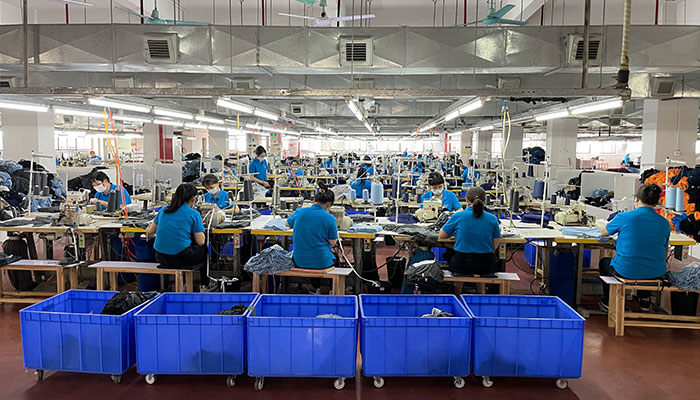
The technical section examines whether the floor can execute the specification, and it is answered by the machine list and the process flow rather than by the product catalogue. Walk the flow from fabric receiving to packing and note where a step leaves the factory, because a subcontracted step is a schedule the factory does not control.
Four items carry most of the weight. The machine types relevant to your construction, counted rather than described. The cutting method, since a straight knife, a band knife and a die press produce different consistency at the top and bottom of a spread. The in-line control points, because a factory that inspects only at the end is classifying defects rather than preventing them. And the maintenance record, which is the least glamorous and most predictive document on the floor.
Capacity belongs here rather than in the commercial conversation. Ask for the current order book and the number of lines, and establish where your order would sit, since capacity is a scheduling fact rather than a maximum. Development scope and the sequence that precedes production are described in this overview of apparel design and development.
Quality system assessment: inspection, records and traceability

A quality system is visible in records rather than in organisation charts. Ask to see a recent inspection report and check whether it identifies the lot, the quantity inspected, the defects by class and the accept or reject decision. A report that states only a result is not a control.
Traceability is the second check. Can the factory connect a finished carton back to the fabric roll and the cut lot, and how long does that take. Where a material claim is being made, traceability is what makes the claim verifiable rather than decorative, and it is the part of a quality system that buyers ask about last and need most.
The third check is the corrective action record. Ask for one closed finding and the evidence that the change held, because a factory that records problems but does not close them is running a diary rather than a system. The inspection structure that produces those records, including the acceptance standard, is set out in this guide to factory QC that protects the buyer.
Social compliance: scope, currency and corrective actions
Social compliance is assessed through a framework, and the framework name is the least informative part of the answer. What matters is who the certificate is issued to, which sites are in scope, when it was issued, when it expires, and which findings remain open.
Three questions cut through a certificate. Does the scope name the site that will make this order. Is the audit current, or does the date place it before the factory expanded or moved. And were there findings, with what corrective action plan and what evidence of closure. A certificate with an expired date is a historical record of a previous state, not a statement about the present.
The programmes that publish their scope and methodology make those questions answerable: amfori administers the BSCI framework, Sedex holds SMETA reports, WRAP certifies facilities, and Better Work assesses workplace conditions in specific programmes. Two further references are useful when a buyer is assembling a compliance file rather than checking a single certificate: the International Labour Organization’s textiles programme for the labour standards position, and Higg for facility-level measurement.
Commercial assessment: terms, ownership and contractual position
The commercial section establishes what is being agreed and who is bound by it. Confirm the contracting entity, the delivery term the price is quoted on, what falls outside the quoted price, the payment schedule and the instrument, and where ownership of patterns, tooling and artwork sits.
Two clauses deserve separate attention. The pattern and tooling position decides whether a buyer can move a style to another factory later, and it is far cheaper to settle before the first order than after. The inspection right decides whether the buyer can place an inspection at the factory before shipment and what happens if the goods fail.
A security assessment sits alongside the commercial one for buyers shipping into programmes that require it. The reference framework is administered by the US Customs and Border Protection’s compliance programme, which sets out the criteria a facility is measured against. Where a buyer is assessing a supplier for a first order rather than auditing an existing one, the commercial questions overlap with the recruitment process, and the questions that decide viability are set out in this explanation of factory minimum order quantity.
Planning and conducting the visit
A visit is planned against the checklist rather than the calendar. Send the scope in advance so the factory can assemble the records, because a finding produced by a missing document is a finding about preparation rather than about the system. Ask which of the buyer’s questions require the pattern room or the quality manager, and request that those people are available.
| Assessment | What it establishes | Evidence it rests on |
|---|---|---|
| Company and site | Legal identity, registered scope and the site that will produce | Business licence, contract, site address |
| Technical | Ability to execute the specification | Machine list, process flow, maintenance record |
| Quality system | Control between inspection points | Inspection reports, traceability, corrective actions |
| Social compliance | Standards position for the site in scope | Audit report, certificate holder, expiry, open findings |
| Commercial | Who is bound and on what terms | Contract, delivery term, payment schedule, IP clauses |
The visit itself should follow the production flow rather than a meeting room, and it should spend its time on the two areas where documents and reality diverge most often: the records room and the line. Interview the people who do the work rather than only the people who manage it, since the gap between a documented procedure and a practised one usually appears at the bench.
Scoring the findings and agreeing follow-up
Findings should be classified before they are discussed, because classification sets what happens next. A critical finding is one that stops the order or invalidates a claim. A major finding is one that will affect quality or timing unless it is corrected. A minor finding is an improvement rather than a condition. The classes matter because they decide which findings block a first order and which are simply recorded.
Each finding then needs an owner, a date and a piece of evidence that will show closure. A finding without those three is a note. Where the audit is a pre-qualification, the outcome is a decision about whether to proceed, proceed conditionally, or stop; a conditional pass should name the conditions and the date by which they must be satisfied.
Re-auditing: reviewing the record over time
An audit describes one day, and its value over time depends on the record it creates. Two files are worth keeping: the assessment with its findings and closures, and the schedule of expiry dates for every certificate and report the factory relies on. Expiry is a calendar fact, and a compliance position that lapses quietly is more dangerous than one that was never claimed, because the buyer has been relying on it.
The interval between audits should follow risk rather than a fixed cycle. A supplier with a stable record, closed findings and a current audit can be re-assessed less frequently, while a new supplier, a new site or a change of ownership justifies a fresh visit. Where a first order is being placed after a successful assessment, the next control point is the sample rather than another audit, and the approvals that make that sample enforceable are described in this sample approval protocol for wholesale orders.
Conclusion
An audit is a comparison, and its three parts answer three different questions: who you are contracting with, whether the floor can make the product, and whether the standards your market requires are met with current evidence. The technical and quality sections rest on records, the compliance section rests on scope and dates, and the commercial section rests on a contract. A checklist is only an audit once the findings are classified, owned and dated, and once somebody has agreed to check that they closed.
FAQ
What is the difference between an audit and a factory visit?
A visit is an impression; an audit is a structured comparison against a checklist, with findings that are classified and tracked to closure. A visit can inform a decision, but it leaves no record that can be re-read when a problem appears.
Do I need a social audit before placing a first order?
It depends on your market and your buyers. What matters is the scope and currency of whatever is presented: the certificate should name the site that will make your order, be current, and be accompanied by the corrective action status of any findings.
What should a technical assessment cover?
The machine types relevant to the construction, the cutting method, the in-line control points and the maintenance record, plus where the process flow leaves the site. Those four answer whether the factory can execute the specification rather than merely agree to it.
How often should a factory be re-audited?
Follow risk rather than a fixed cycle. A stable supplier with current audits and closed findings can be reviewed less often, while a new supplier, a new site or a change of ownership justifies a fresh assessment.
Next step. If you are assessing a manufacturer before a first order, send the categories and markets you are sourcing for. The team can confirm which parts of the checklist apply to your programme, what records to request, and how a site assessment would be arranged.
