
Private label is usually discussed as a branding exercise, and in production it behaves as a compliance one. The label, the care text, the origin mark and the packaging are the parts of the product that a market regulator inspects, and they are the parts that are decided last and printed first. A programme that treats them as stationery discovers the difference at the packing table.
Private label is a compliance exercise as much as a branding one
Private label means your name is on the product, and that makes you the party responsible for the information the product must carry. The requirements are set by the market of sale, so the market has to be known before the label is ordered.
Four obligations travel with putting your own brand on a garment. The fibre composition has to be stated accurately, using the terminology the market recognises. The care instructions have to be present and appropriate to the material. The country of origin has to be marked where the market requires it. And the packaging has to satisfy whatever information and material rules apply in the same market.
Each of those is a decision rather than a printing task, and each has a version count. Where a programme sells into two markets, the fibre terminology and the language of the care text can differ, which means two label versions and two print runs. Identifying the markets before the labels are ordered is therefore the single most useful sequencing decision in a private label programme.
Fibre composition labelling rules by market
Fibre labelling rules specify which fibre names may be used, how the composition is expressed and how tolerance is treated. In the European Union, textile fibre names and the labelling of composition are governed within the European Commission’s textiles and clothing framework. In the United States, fibre content, origin and care information are addressed through the Federal Trade Commission’s business guidance.
Three practical consequences follow. The fibre names have to be the recognised ones rather than marketing descriptions, so a fabric cannot be labelled with an invented name. The composition has to be accurate enough that the tolerance in the rules covers normal production variation, which is why the fabric specification and the label text should be written together. And where the garment uses several materials, the composition of the parts has to be handled according to the rules rather than averaged into one statement.
The composition line is also where a material claim becomes a compliance question. A claim about organic content, recycled content or harmful-substance testing rests on evidence that names the material in the product, and frameworks such as OEKO-TEX Standard 100 state the article classes their certificates cover.
| What has to appear | Set by the market of sale | Where the requirement is published |
|---|---|---|
| Fibre composition | Recognised fibre names and how composition is expressed | The European Commission’s textiles and clothing framework |
| Fibre, origin and care | Fibre content, origin and care information for the United States | Federal Trade Commission business guidance |
| Country of origin marking | The importing authority of the destination market | Customs rulings and requirement publications |
| Packaging information | The market of sale and the sales channel | Market packaging rules and channel requirements |
The four rows share one property: none of them is decided by the factory, and all of them have to be decided before a label is printed. That is why the market of sale belongs in the specification rather than in the shipping instructions, and why a programme selling into two markets should expect two label versions rather than one.
Care labelling: symbols, language and sequence
Care information has to be understandable in the market of sale, and the way it is presented varies. A symbol set is widely recognised, while some markets also expect words, and where words are used the language of the market applies. This is where a private label programme most often multiplies its own costs, because a care label written in one language for three markets is a decision that has to be justified rather than assumed.
The content of the care instruction is a technical statement, not a marketing one. It has to be appropriate to the material and to any decoration, because an instruction that does not match the garment’s behaviour is a claim about the product. Where a print or an embroidery is applied, the instruction has to account for it, and where a heat-applied label is used, temperature limits may need to appear.
The sequence matters as well. Where a market expects a defined order of symbols, following that order is part of the compliance rather than a design preference, and it should be confirmed against the market requirement rather than inferred from a previous programme.
Country of origin marking and its customs implications
Origin marking is both a labelling requirement and a customs one, and the two are related without being identical. A market may require the country of origin to be marked on the product or its packaging, and the determination of what the origin actually is depends on the rules applied by the importing authority rather than on where the label was printed.
For goods entering the United States, the requirements and the rulings that interpret them are published by US Customs and Border Protection. The underlying framework for treating imported goods and their documentation across borders is set out in the WTO Trade Facilitation Agreement, and the international baseline for the protection of marks and designs, which becomes relevant where a brand is registered and enforced across markets, is held in the WTO TRIPS framework.
The practical implication for a private label programme is that the origin statement should be settled with the same evidence as the fibre statement. Where a preferential duty rate is claimed, the origin has to be substantiated rather than asserted, and the records that support it are the same supply chain documents that support a material claim.
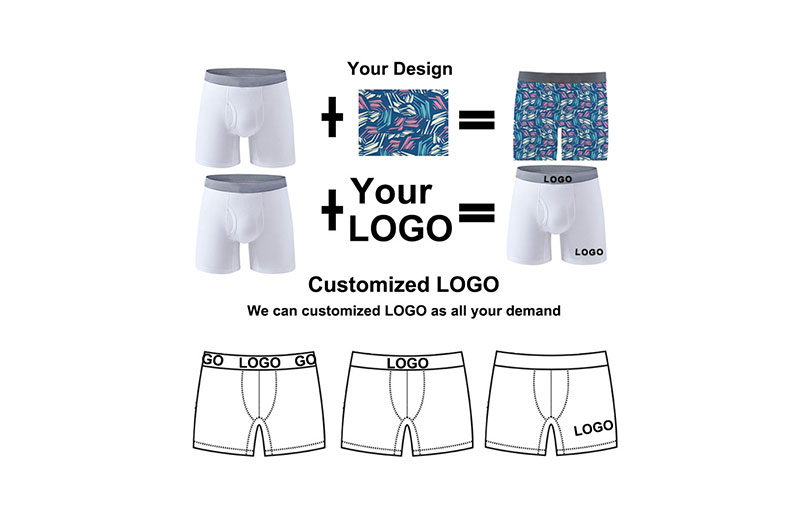
Woven labels, printed labels and where each belongs
The label type is chosen against durability and finish rather than preference. A woven main label is the most durable attachment and is usually placed inside the back neck or a seam. A printed neck label applies the brand to the fabric itself, producing a flatter finish and removing a sewing operation, and it behaves differently on a stretch knit because it is applied to the fabric rather than attached to it. A care and content label is normally placed inside a side seam or hem, where it stays legible and does not irritate.
Two decisions belong with the type. The position, specified as a measurement rather than as a description, because a neck label placed slightly high becomes visible above a crew neckline. And the order in which several labels are sewn, because a set that is assembled in the wrong sequence sits incorrectly or leaves a label hidden.
Where a programme uses more than one label, the set is worth specifying as a set. Three labels sourced from three suppliers produce three lead times and three approvals, and the point at which a missing component is noticed becomes the assembly station rather than the artwork stage. Consolidating the set with one supplier, or with the factory assembling the garment, removes two approval cycles at the cost of some control over each individual item.
Hangtags, barcodes and retail partner requirements
Hangtags are retail-facing and therefore partner-facing. The requirements come from the sales channel rather than from the market regulator, and they typically cover the barcode and its format, the position of the price information, and sometimes the material of the tag itself. Where a programme sells through several channels, the tag may need a different barcode for each, which is a version count rather than a design choice.
Two practical points are worth fixing early. The barcode has to scan to the correct product and be positioned where the retailer expects to find it, which is a placement specification rather than a printing one. And the attachment method has to suit the fabric, because a tag gun punctures a fine knit in a way that a looped attachment does not, and the puncture may be visible after the customer removes the tag.
Where the tag carries a brand mark that is registered, the mark should match the registered form rather than a variation, since the framework for protecting marks internationally is published by the World Intellectual Property Organization. That is a branding question with a compliance edge, and it is easier to settle before the artwork is approved than after the tags are printed.
Packaging: polybags, cartons and sustainability rules
Packaging in a private label programme carries three obligations. Information, where the market or the channel requires something to appear on the bag or the carton. Material restrictions, where a market limits or regulates what packaging may be made of. And obligations that fall on the seller rather than the maker, such as registration for packaging placed on a market, which is a duty of the brand rather than of the factory.
The compliance position is therefore arrived at by combining the market of sale with the sales channel, and it changes more often than the garment specification does. The practical approach is to state the destination in the packaging specification and to ask the supplier or converter which requirement list it works to, then to review that list on a cycle rather than once.
Two operational points belong in the same specification. The polybag has to carry whatever warning or recycling information the market requires, and the carton has to satisfy the channel’s handling expectations as well as the freight mathematics, since carton dimensions set the cubic volume and the volume sets the freight. The documents that have to accompany an imported consignment, and the labelling obligations that go with them, are set out in this guide to labels, duties and documentation for wholesale clothing imports.
Sourcing labels and trims: the lead times that delay production
Labels are the smallest components with the longest relative lead time, because each version is a separate print or weave run with its own setup. A programme with four label versions has four runs, and the run that is approved last determines when the labels arrive.
Three lead times sit inside a label order. The artwork proof and its approval, which is a buyer-side decision and therefore the one most often on the critical path. The production run itself, which is short once the proof is signed. And the delivery, which is usually fast but not instantaneous, and which becomes the constraint exactly when the garment order is running to a fixed date.
The same logic applies to trims and to packaging, and the mitigation is the same in each case: put the artwork approvals early in the calendar rather than after the sample is approved, because the artwork does not depend on the fit. Where a programme is running a short production window, the label proof is one of the few approvals that can genuinely be taken in parallel with sampling.
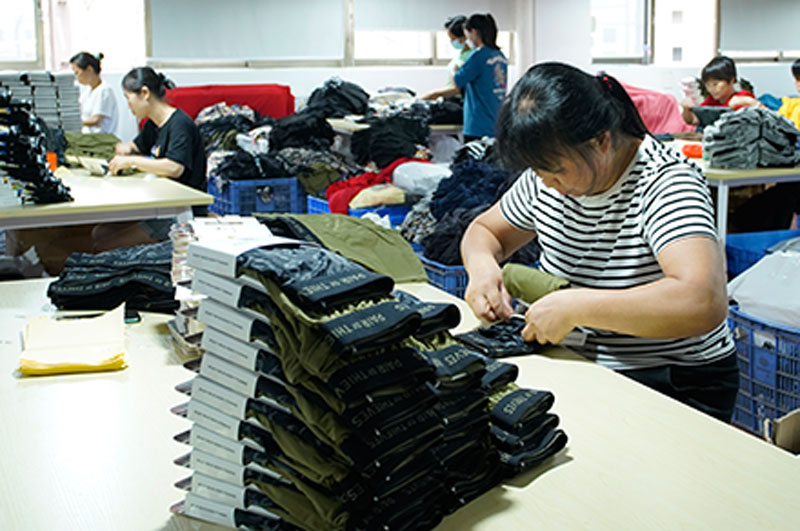
Approval workflow: who signs off the label artwork
Label artwork needs a named approver and a version number, and both matter more than the process around them. The named approver prevents an approval by silence, which is the most common way a wrong version reaches print. The version number prevents the most common label failure of all, which is printing an old version because the file in circulation was not the current one.
A workable sequence has four steps. The market requirements are confirmed and written into the specification. The wording is drafted against those requirements and checked for the fibre terminology, the care instruction and the origin statement. The artwork is proofed with the version number visible and approved in writing by the named approver. And the approved version is recorded against the order so that a reprint uses the same file.
The last step is the one that pays across a season. Where the approved version is recorded, a reorder can be placed without reopening the artwork, and a supplier change does not restart the approval. Where it is not recorded, every order carries the risk of a reprint, and a reprint of a label run is one of the few production errors that cannot be reworked at all.
Conclusion
Private label compliance lives in the label, the care text, the origin statement and the packaging, and each of those is set by the market of sale rather than by the factory. Confirm the fibre terminology and the care presentation against the market requirement, settle the origin statement with the same evidence as the composition, choose label types against durability and finish, and put the artwork approvals on the calendar before the sample rather than after it. Then record the approved version against the order, so that the next order does not have to decide anything again.
FAQ
What has to be on a private label garment?
Fibre composition using recognised terminology, care instructions appropriate to the material, and a country of origin statement where the market requires it, plus whatever information the packaging rules require. The specifics are set by the market of sale.
Why does selling into two markets increase label costs?
Because the fibre terminology, the language of the care text and sometimes the presentation differ, and each version is a separate print or weave run with its own setup and minimum. Two markets can mean two label sets rather than one.
Who is responsible for packaging compliance?
The seller who places the product on the market, which for private label is the brand. Some obligations, such as registration for packaging placed on a market, fall on the brand rather than the manufacturer, so they cannot be delegated with the order.
What is the most common label failure?
Printing an old version of the artwork. Where the approved version carries a number and is recorded against the order, a reprint uses the same file, and the failure becomes detectable at the proof stage rather than at the packing table.
Next step. If you are launching a private label range, send the markets you sell into and the label set you plan. The team can confirm what each market requires, which versions are needed, and how the artwork approvals fit the production calendar.
