
Most factory questionnaires are too long and too shallow. Fifty questions produce fifty agreeable answers and none of them change the decision. A shorter set, chosen because each answer narrows the field, does more work, and the point of the first conversation is to establish three things: what the factory can actually make, what it will commit to in writing, and what it does when the first problem appears.
Questions to Ask a Clothing Manufacturer: what you are trying to establish
The questions that matter establish category fit, commercial threshold and how problems are handled; everything else is detail that can wait until a sample is being quoted.
Category fit is a question about equipment, not about willingness. A factory that runs circular knitting machines and a flatlock line can sew a knit garment, and the same factory may be unable to hold a woven jacket’s seam allowance. When a supplier answers “yes, we can do that” to every category, the answer tells you the supplier is quoting rather than assessing.
Commercial threshold is the second objective, and it is usually the reason an enquiry ends. The threshold is set by the smallest quantity that keeps a line and a fabric booking economic, so it is not negotiable in the way a price is. Knowing it early prevents a month of development on an order that was never viable at the factory you chose.
The third is how the factory behaves when something has to be corrected. That cannot be asked directly, because every supplier will say the right thing, so it has to be inferred from specific questions about the last time it happened. A buyer who learns to read those answers is choosing a working relationship rather than a price list.
Capability questions: category, equipment and process coverage
Capability questions ask the factory to describe its own floor. What is the main product category by volume, not by ambition. Which processes happen on site and which are subcontracted, because a factory that cuts on site but outsources dyeing has two schedules to manage and one of them is not under its control. How many production lines run, and whether they are dedicated to a category or switched between them.
Three follow-ups convert a claim into evidence. Ask for the machine list by type and count, since a flatlock line, a coverstitch machine and a bartack machine each enable a different construction. Ask which steps in your specific garment would be done in-house, which makes the answer concrete rather than general. And ask for two examples of similar work with the construction detail that was difficult, because a factory that cannot name a difficulty has probably not made the garment.
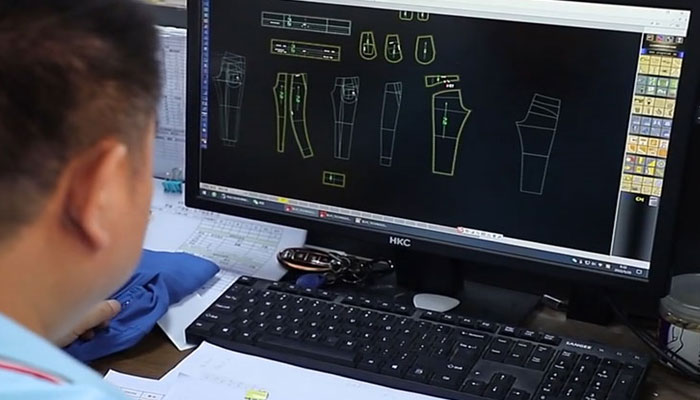
The pattern and sampling room belongs in this section rather than in the commercial one. Whether patterns are drafted in-house and in what software decides how quickly a fit comment can be turned around, and whether grading is done by the factory or supplied. Development scope across those steps is set out in this overview of apparel design and development.
Commercial questions: minimums, quoting structure and payment terms
Minimums should be asked in three parts because they behave differently: per style, per colour and per size. The binding number is usually the fabric minimum, which can be higher than the sewing minimum and which sets the real threshold for a first order. Ask what the current minimum is for your category and whether it changes with the fabric chosen.
The quoting structure matters as much as the number. Ask for the delivery term the price is quoted on, because a price quoted ex-works and a price quoted with freight and duty included are not comparable; the ICC Incoterms rules define what each term includes. Then ask what sits outside the quoted price: sample charges, mould or print-setup costs, testing, and packaging above the standard specification.
Payment terms close the section. The deposit percentage, the point at which the balance falls due, and the instrument are three separate facts. A supplier that will only discuss payment after the specification is agreed is normal; a supplier that quotes and asks for a deposit in the same message has skipped the part where the order is defined.
Technical questions: materials, construction and tolerances
Technical questions establish who owns the specification. Ask whether the factory sources fabric against a named construction and weight or whether it proposes from its own stock, because the two routes produce very different lead times. Ask what tolerance it works to on fabric weight, and how it verifies the weight of an incoming roll.
On construction, ask which method it would use for the seams that carry load and how the method changes with the fabric weight. On measurements, ask what tolerance the pattern room applies at the base size and whether the factory expects the buyer to supply the grade or to calculate it. Where the buyer cannot state a tolerance, the factory will apply its own, and a garment made to an unstated tolerance is difficult to reject.
Material testing belongs here too. Ask which tests the factory routinely runs and which are sent out, and request the test scope rather than a pass or fail statement. The neutral vocabulary for physical testing is published by the ASTM standards programme for textiles, and testing houses publish the range they cover, as Intertek’s textiles and apparel testing range illustrates.
Capacity and scheduling questions
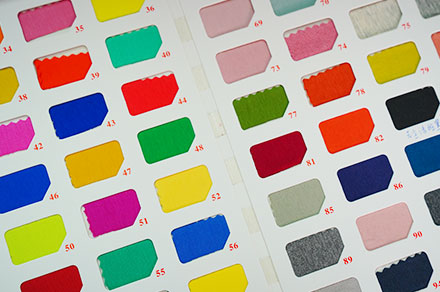
Capacity questions are about time, not about size. Ask what the current order book looks like and where your order would sit in it, because a factory can be large and still busy. Ask how the production calendar behaves around the Chinese New Year shutdown and the two seasonal peaks, since an order placed against a peak will move unless the factory has said otherwise.
Separate the two lead times: sampling and bulk. A sample round typically involves a pattern room and a small line, while bulk involves a fabric booking and a production slot, and a factory that quotes one figure for both is usually quoting the simpler of the two. Ask what the figure excludes, which is normally the fabric lead time.
One question is worth asking every time. Would this order run on one line or be split across two, and if it splits, when. The answer determines whether the order will be dimensionally consistent, because two lines set up from the same specification can still drift apart, and the drift is only visible at final inspection.
Compliance and documentation questions
Compliance questions should be answered with a certificate rather than an adjective. Ask which social audit framework the factory is assessed under, who the certificate is issued to, and when it expires, because a certificate held by a trading entity does not necessarily cover the sewing floor making your order. The frameworks that publish their scope include amfori for BSCI and Sedex for the SMETA assessment.
Material claims follow the same rule. Where a fabric is described as tested or certified, ask for the certificate number and the issuing body, and confirm that the scope covers the material in your garment rather than a comparable one. OEKO-TEX Standard 100 is the common reference for harmful-substance testing, and its certificate names the articles it covers.
Documentation is the last part of the section. Ask what arrives with the shipment: the packing list, the invoice, the certificate of origin where one is required, and the inspection report. A buyer who names the documents before the order is placed does not have to reconstruct them at the port.
Questions about how problems are handled
Problem questions are the ones that separate factories, and they work best when they are specific rather than hypothetical. Ask when the first-off check happens and who signs it off. Ask what the factory does when a measurement drifts mid-run. Ask who the buyer’s contact is once the order is in production, and whether that person sits on the floor or in an office.
Then close the loop. Ask what happened the last time a shipment failed the buyer’s inspection, and what changed afterwards. A factory that can describe a corrective action, with the change that followed and the evidence that it worked, has a working quality system. A factory that has never had a failure, or cannot remember one, is either very good or not measuring.
The structure of a corrective action is the same one used in social compliance, where a finding is closed rather than recorded, and the programmes that publish consequence structures are useful models. The wider sequence, from specification to reorder, is described in this guide to factory QC that protects the buyer.
Reading the answers: the signals that matter more than the words
| Question | Answer that indicates a real factory | Answer that indicates a sales desk |
|---|---|---|
| Can you make this category? | Names the machines and the process, and the steps it would outsource | Yes, we make everything |
| What is the minimum? | Separates style, colour and fabric minimums | One number, quoted immediately |
| Which audit applies to your site? | Names the framework, the certificate holder and the expiry date | “We are certified” with no number |
| What happens if goods fail inspection? | A described process with a decision point | “It will not happen” |
| Who answers a technical question? | A second person, or the same person after checking | Instant answers to everything |
The signals are mostly about specificity and response behaviour rather than content. A supplier who asks for the tech pack before quoting is assessing. A supplier who quotes a price before the specification exists is guessing, and the guess will be revised after the order is placed, when the buyer has the least leverage. A supplier who answers a technical question instantly without checking is answering from memory, which is a reasonable way to describe a standard method and a poor way to describe a tolerance.
Response timing is informative but should be read carefully. A slow reply during a national holiday says nothing about capability, while a fast reply that ignores the technical content of the question says something about attention. The most useful signal is the follow-up question, because a factory that asks about your fabric and your target market is trying to price the work rather than the enquiry.
A short question set you can reuse for every supplier
Ten questions cover the ground if they are asked as a set and the answers are recorded. Which category is your main volume. Which processes are on site. What is the minimum per style, colour and fabric. What delivery term is the price quoted on, and what sits outside it. What are the sample and bulk lead times. Who owns the pattern and the grade. Which audit framework covers the site making my order. What documentation ships with the order. What happens if the goods fail inspection. And who answers technical questions once the order is running.
The set works because each question has a factual answer that can be compared between suppliers, which is what makes a shortlist a decision rather than an impression. Record the answers in one table rather than in a message thread, because the comparison is the point. Where the answers point to a workable supplier, the next step is the order structure itself, and the questions that decide viability are set out in this explanation of factory minimum order quantity.
Conclusion
A good question set is short, comparable and asked before the price arrives. It establishes whether the factory makes this category, what its real threshold is, and how it behaves when something has to be corrected. The answers matter less than their specificity: a factory that names machines, certificates and process steps is describing a floor, while one that agrees with every premise is describing an intention. Record the answers side by side, and the shortlist decides itself.
FAQ
How many questions should I ask a clothing manufacturer?
About ten, chosen because each answer narrows the field. A long questionnaire produces agreeable answers rather than comparable ones, and the detail questions belong in the sample discussion once a supplier has passed the first set.
What is the most revealing question?
Asking what happened the last time an order failed inspection. A factory that can describe the corrective action and the change that followed has a working quality system; one that cannot remember a failure is either very good or not measuring.
Should I ask about MOQ first or last?
Early, because the fabric minimum can make an order unviable regardless of everything else. Ask it per style, per colour and per fabric, since the fabric number is usually the binding one.
How do I verify a compliance claim?
Ask for the certificate number, the issuing body, the certificate holder and the expiry date, then confirm the scope covers the site and the material in your order. A framework name without a certificate is a claim rather than a fact.
Next step. If you are comparing clothing manufacturers, send the questions you have and the category you are sourcing. The team can confirm which process steps would run in-house, which questions to add for your construction, and what a first-order quote would need to include.
